
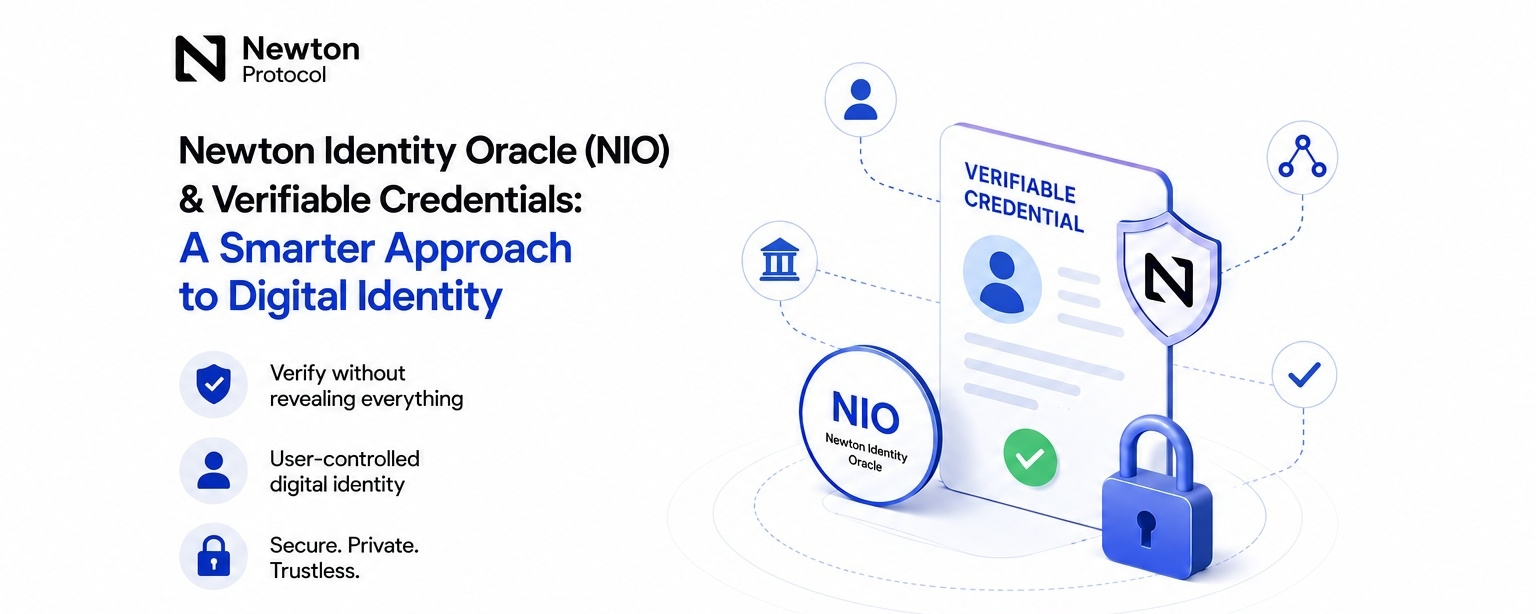
Digital identity is becoming one of the biggest challenges in Web3. Wallet addresses alone can't prove whether a user, organization, or AI agent is authorized to perform a specific action. At the same time, people don't want to expose sensitive personal information just to access decentralized applications.
@NewtonProtocol addresses this challenge through the Newton Identity Oracle (NIO) and Verifiable Credentials (VCs). Instead of relying on centralized identity systems, NIO enables users to prove that they meet specific requirements using cryptographic verification. This allows applications to confirm permissions and compliance without revealing unnecessary personal data.
Verifiable Credentials act as trusted digital proofs. They can verify things like user authorization, compliance status, or delegated permissions while giving users control over what information they choose to share. This creates a balance between privacy and trust.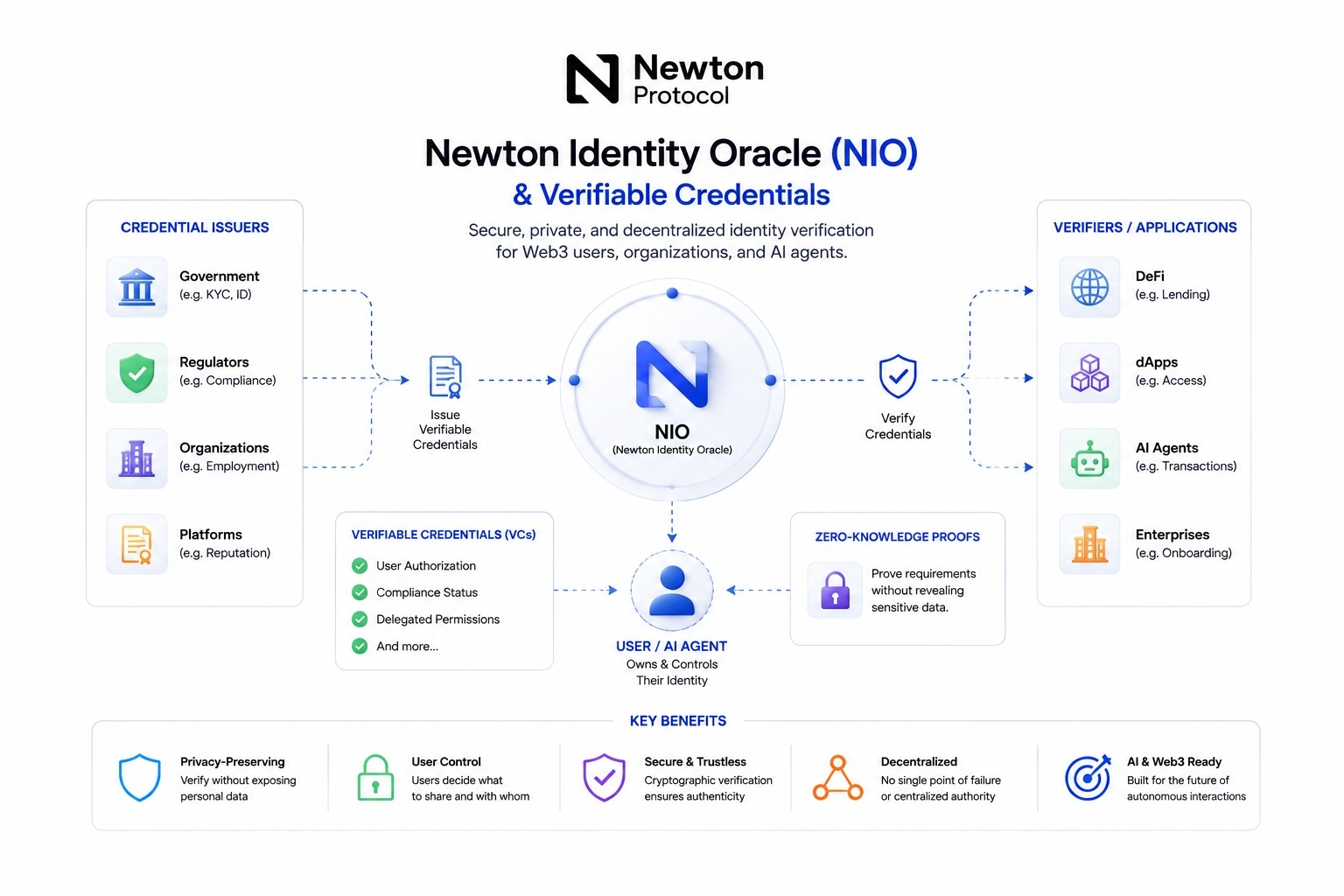
The importance of this approach will only grow as AI agents begin interacting with blockchain networks. AI systems need clearly defined permissions before executing transactions, and NIO helps ensure every action is verified before it happens. This reduces the risk of unauthorized activity while keeping automation secure and transparent.
By combining decentralized identity with verifiable credentials, Newton Protocol is building infrastructure that supports secure authentication, privacy-preserving verification, and trusted onchain interactions. It's a practical step toward making Web3 safer, more compliant, and ready for large-scale adoption.
