
@Lorenzo Protocol DeFi has always had an awkward relationship with traditional finance. It borrows the language of markets—yield, spreads, liquidity—then tries to rebuild the plumbing while acting like the old discipline is optional. For years that gap was masked by incentives: if you dangled enough tokens, people tolerated unclear risk, vague sources of return, and products that changed shape every few weeks. Lately, the mood has shifted. After repeated failures and a long stretch of “risk-free” promises that didn’t survive normal volatility, more people are asking for products that behave predictably and explain themselves.
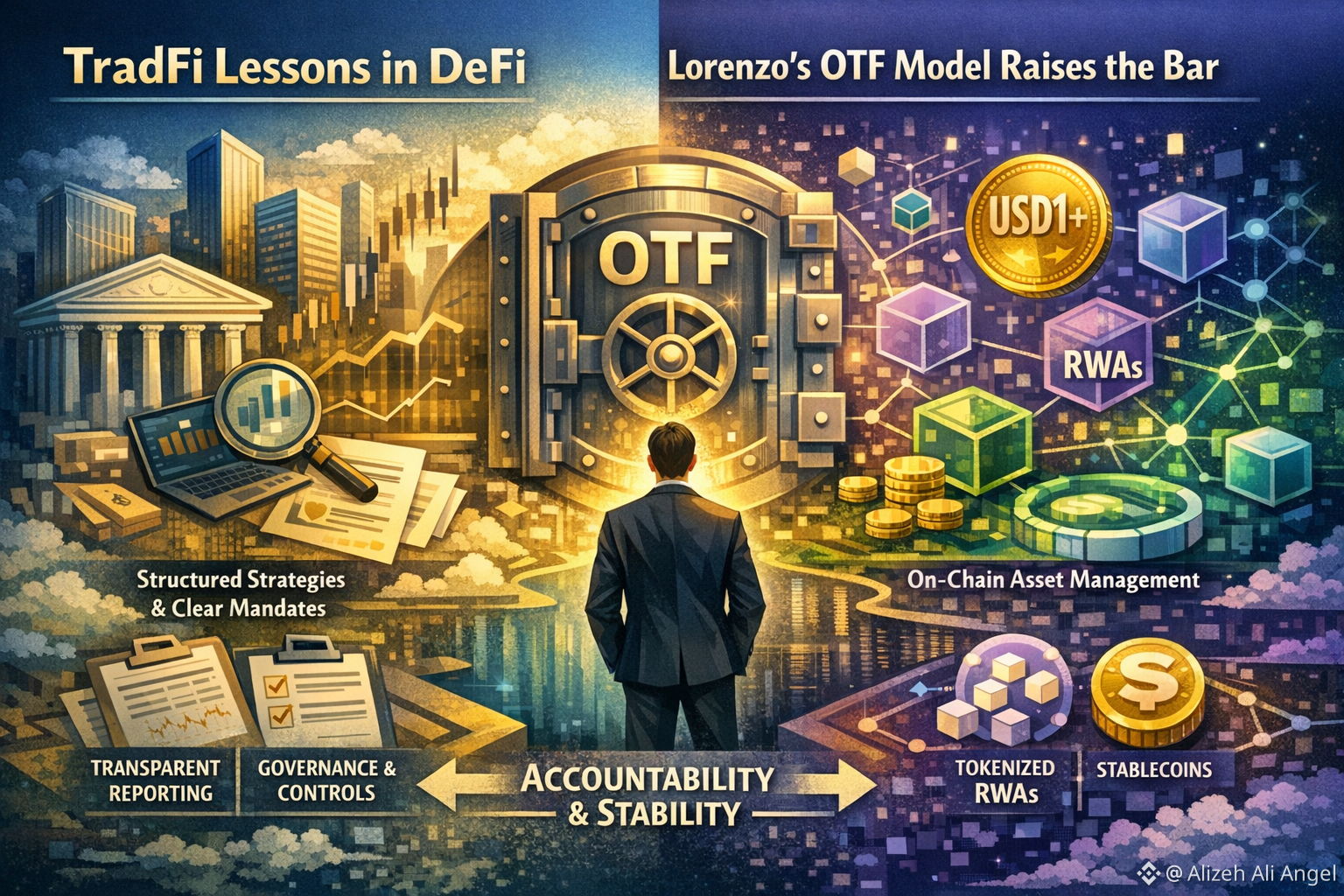
That’s why Lorenzo’s OTF model is getting attention now. In Lorenzo’s world, OTF stands for On-Chain Traded Fund: a token that represents shares in a strategy, with explicit rules around deposits, accounting, and redemptions. Binance Academy frames Lorenzo as an on-chain asset-management platform that routes capital through vaults and issues OTF tokens so users can access strategies like quantitative trading, volatility approaches, and structured yield without stitching the system together themselves.
The acronym is also an accidental tell. In the European market structure, “OTF” commonly refers to an organised trading facility under MiFID II—an attempt to bring certain kinds of trading into a clearer framework rather than leaving them in the shadows. ESMA defines an OTF as a multilateral system, distinct from a regulated market or MTF, where third-party interests in non-equities can interact to form contracts. The UK regulator adds a nuance that matters: compared with MTFs, execution on an OTF is discretionary. Lorenzo isn’t a regulated venue, but the parallel is useful as a reminder that “structure” is a real design choice, not a cosmetic label.
What feels most TradFi about Lorenzo isn’t the vocabulary; it’s the insistence on boundaries. In asset management, mandates matter. A fund says what it will do, what it won’t do, how it measures itself, and how investors get in and out. DeFi has often treated strategy as a moving target, updated whenever a new pool appears or a rate spikes. The OTF framing nudges the culture toward something steadier: the strategy is the product, and the token is the receipt. That shift sounds small, but it quietly turns “yield hunting” into “portfolio exposure,” which changes how people think about time horizons and accountability.
USD1+ OTF is Lorenzo’s clearest example so far. In its launch write-up, the team describes a “triple-source” approach that blends tokenized real-world assets, quantitative trading, and DeFi opportunities, with the whole lifecycle—funding to settlement—happening on-chain. Depositors receive a non-rebasing share token whose redemption value is meant to rise over time, rather than constantly adjusting the wallet balance. I’m drawn to this less for the exact recipe and more for the discipline it implies: if returns come from multiple engines, you have to explain each engine, and you have to admit when one of them is stalled.
The timing isn’t accidental. Tokenized real-world assets keep reappearing as crypto tries to anchor yields to something other than token emissions, and stablecoins are increasingly treated as the base asset for saving, paying, and settling. Lorenzo’s own site leans into “institutional-grade on-chain asset management,” which can read like marketing until you remember who’s still missing from DeFi: cautious allocators who need repeatability more than excitement. In late 2025, that demand is obvious across the ecosystem: fewer people want cleverness, more people want a process they can evaluate, monitor, and exit without drama.
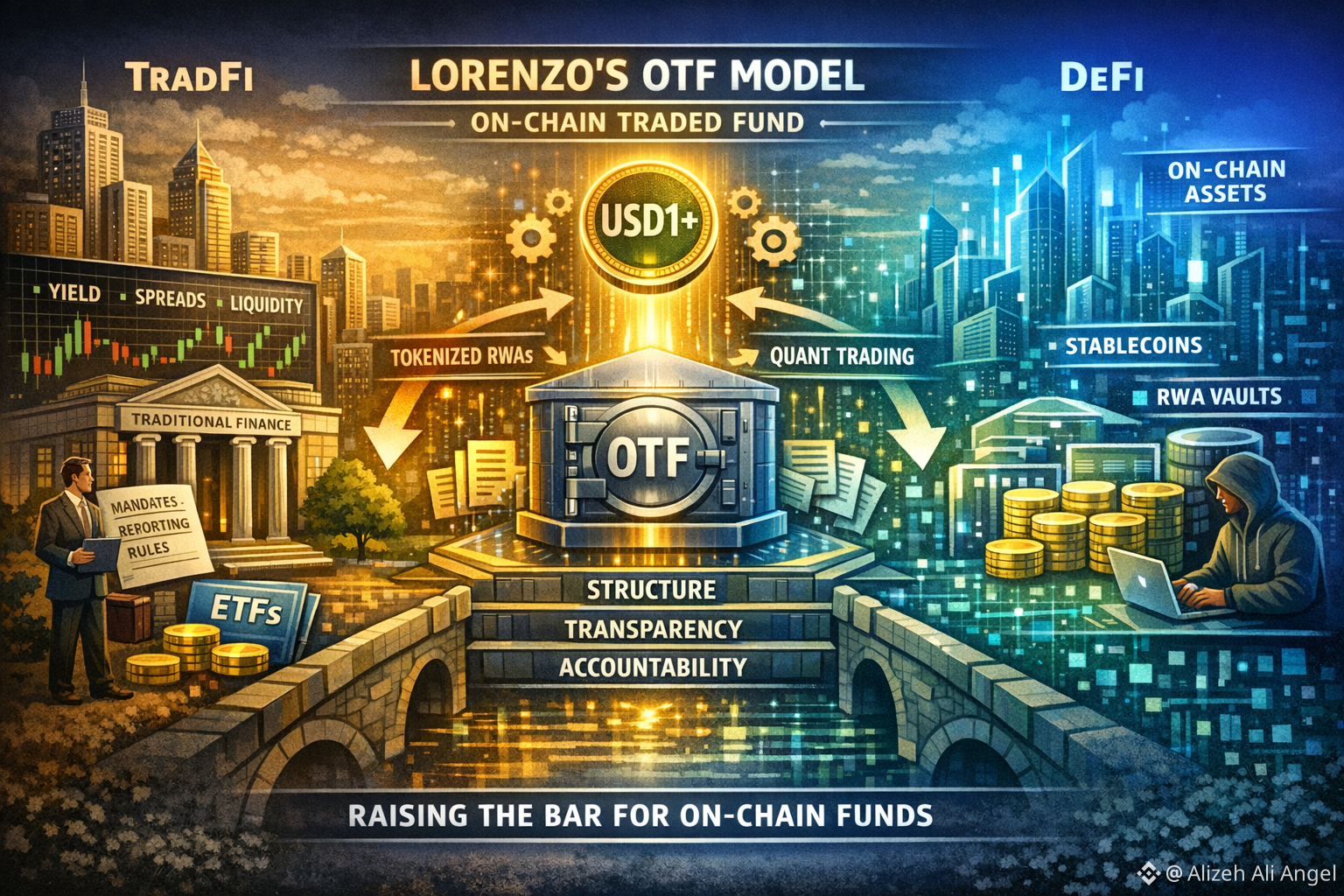
There’s another angle that doesn’t get enough airtime: distribution. ETFs became infrastructure because brokers and platforms could integrate them easily, and because the wrapper was consistent across managers. Lorenzo is explicitly trying to make strategy tokens composable so wallets, payment apps, and RWA platforms can offer fund-like exposure without building bespoke plumbing. In practical terms, it’s a TradFi lesson paid for over decades: standardization isn’t where ideas go to die—it’s how a good idea becomes something ordinary people can actually rely on.
And none of that makes the hard problems disappear, which is why I’m cautious about acting like it does. Packaging risk doesn’t eliminate it; sometimes it hides it. The history of structured products is basically a warning label about wrappers that looked simple until stress arrived. So the bar for on-chain funds should be higher than a clean token interface. It should include plain-language reporting of exposures, clear statements about leverage and liquidity assumptions, and governance rules that prevent conflicts of interest—especially when strategies touch off-chain venues or real-world assets.
What I find promising about Lorenzo’s OTF model is that it makes those expectations harder to dodge. Once you call something a fund, even an on-chain one, you invite uncomfortable questions about strategy drift, drawdowns, and who is accountable when the model breaks. DeFi needs more of that discomfort and less of the reflex to wave away criticism as noise. If OTF-style products push the space toward boring habits—mandates, reporting, redemption logic—then the bar really has been raised, and in a way that serious capital can recognize. It’s a healthy direction, even if progress stays slow.

