

Bloomberg is once again sounding the alarm on Bitcoin, reporting that $BTC is on track for its first annual decline without any major regulatory ban or headline grabbing scam acting as the trigger. On paper, that narrative looks bearish but context matters.
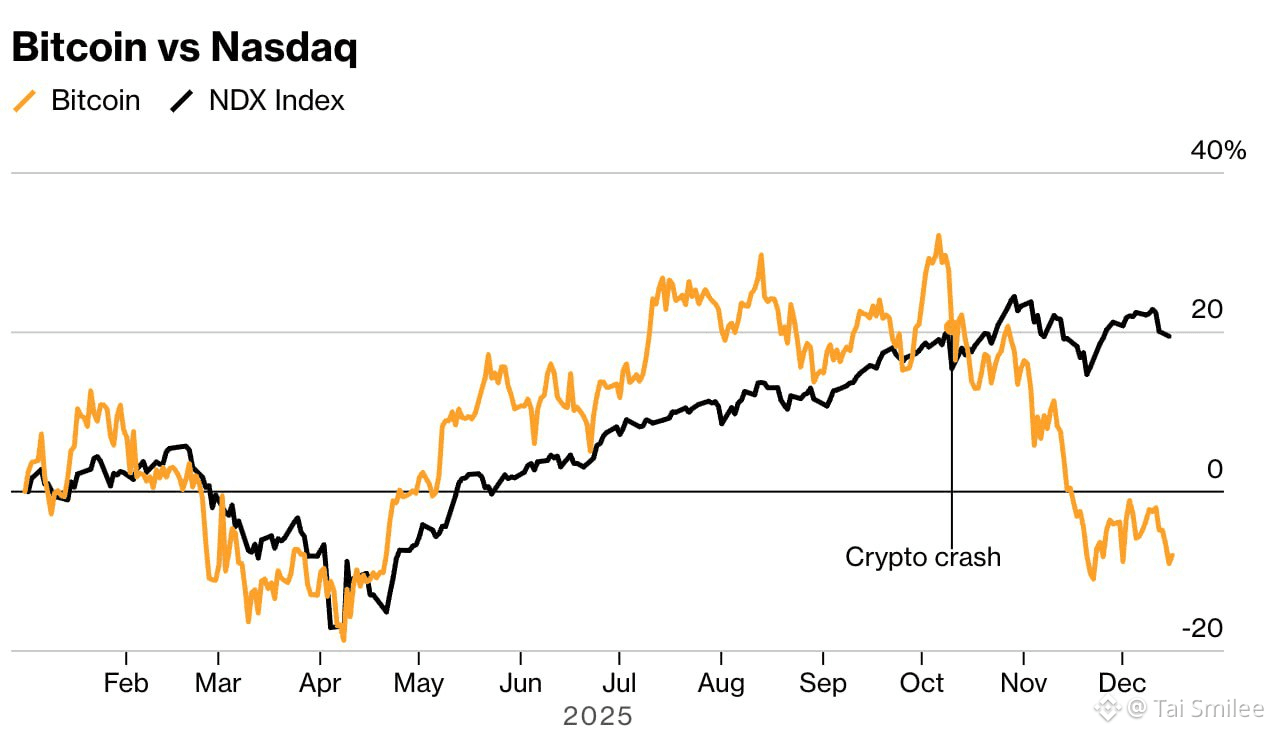
Here’s what’s happening beneath the surface:
On October 11, the crypto market saw tens of billions of dollars in liquidations, yet this extreme event is framed as “normal market behavior,” not systemic risk.
Bitcoin’s correlation with the S&P 500 is breaking down, signaling that BTC may be decoupling from traditional risk assets rather than simply following equities.
Bitcoin ETFs have experienced notable outflows, adding short-term selling pressure and feeding into negative sentiment.
Looking at the Bitcoin vs Nasdaq chart, the divergence becomes clear. While the Nasdaq continues to hold up relatively well, Bitcoin has already gone through a sharp drawdown — a classic example of crypto front-running macro stress or absorbing fear earlier than traditional markets.
On the surface, this all looks concerning. But seasoned market participants know a familiar pattern:
When mainstream financial media confidently declares Bitcoin “dead,” it often marks late-stage bearish sentiment — not the beginning of the end.
Historically, periods of:
Media pessimism
ETF outflows
Weak correlation narratives
Heavy liquidations
have often occurred near macro bottoms or accumulation zones, not long-term tops.
This doesn’t mean price must reverse immediately. Volatility and further downside are always possible. But it does suggest that fear is already well priced in, while long-term conviction quietly builds.
In crypto, maximum doubt rarely appears at cycle peaks — it shows up near turning points. Bloomberg burying Bitcoin again may say more about sentiment exhaustion than about Bitcoin’s future.
