

On Jan 27, 88.9 million $XPL (~$11M) quietly entered circulation. That alone isn’t dramatic.
What is dramatic is what comes next.
@Plasma has been one of the most hyped infrastructure plays of late 2025 — and for good reason.
It’s a purpose-built L1 for stablecoin payments, with:
Sub-second settlement
Bitcoin-level security
Zero-fee USDT transfers
Full EVM compatibility
Backing from Tether, Bitfinex, and major industry players
The launch was explosive:
$50M raised at a $500M valuation
1B XPL (10% supply) initially diluted
$2B in deposits on Day 1
Price peaked at $1.6, delivering ~32x returns to early buyers
Then reality hit.
Six weeks later, XPL was down over 90%.
Where Things Stand Now
Price: ~$0.12
TVL: $3.26B (down from $6.35B)
Activity: ~40,000 USDT tx/day
Revenue: ~$295K/day
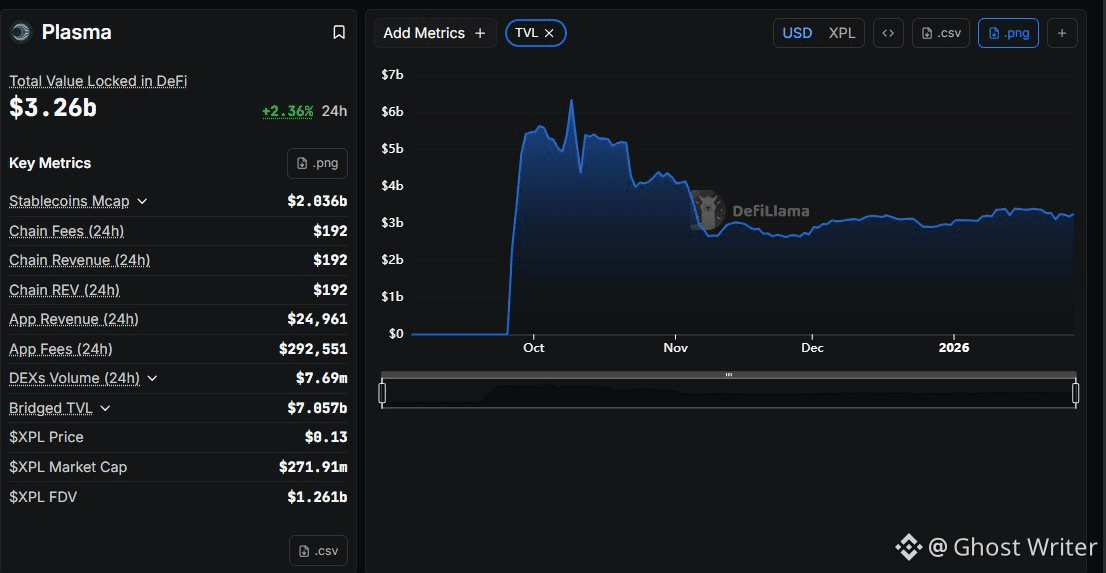
The chain works. The product exists. Usage is real — but token supply is about to explode.
The 2026 Unlock Problem
This year alone, Plasma faces ~3.55 billion $XPL in new supply:
88.9M monthly for ecosystem
883M one-time team unlock (Sept) + 69.5M monthly after
833M one-time investor unlock (Sept) + 2.38M monthly after
500M annual inflation
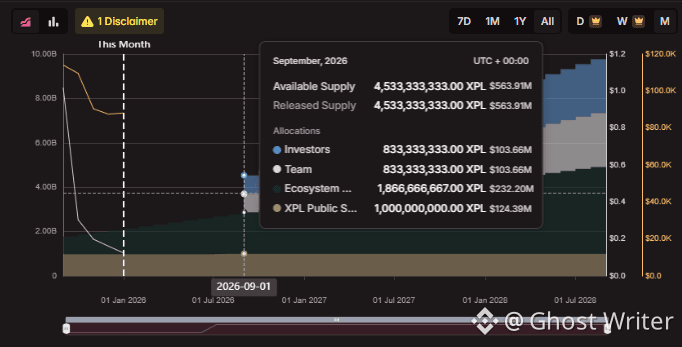
Result: circulating supply more than doubles in a single year.
At current prices, Plasma’s ~$295K daily revenue can burn ~700M $XPL annually.
That’s not enough.
To neutralize selling pressure, Plasma needs ~5x revenue growth — minimum.
What Must Change
For XPL to reprice meaningfully, Plasma needs:
Millions of daily payment transactions
Staking that locks up 40–50% of the supply
DeFi apps that require holding $XPL
Deep partner integrations that drive real demand
A sustainable fee model (without killing its zero-fee USP)
Conclusion
Plasma’s tech and vision are strong.
But tokenomics don’t care about narratives.
Until supply pressure is absorbed by real utility and higher fees, $XPL is structurally capped in the next 12–24 months.
This isn’t a dead project.
It’s a timing problem — and the clock is ticking.