To be honest, when it comes to blockchain, the first things that come to my mind are the same old problems: slow, expensive, and data being lifeless. But Vanar Chain is different; it has had AI genes since its inception, with a clear goal - to transform Web3 from 'able to write code' to 'able to think for itself.'
It was previously called Virtua, and its token was TVK. In 2024, it will be renamed and its token will be swapped one-to-one for VANRY. This rebrand is not just a marketing gimmick; it genuinely shifts the focus from game NFTs to AI infrastructure, PayFi, and RWA. The entire project has built a five-layer stack, stacked layer by layer, with each layer adding 'intelligence' to the data.
At the bottom is Vanar Chain itself, a modular EVM-compatible L1. Costs are as low as about $0.0005, block time is a few seconds, and TPS easily exceeds a thousand, all powered by green energy, making it carbon neutral. Developers don't need to change languages; they can use Solidity as usual, and the SDK supports JS, Python, and Rust, with the documentation being relatively reliable, so it's not that discouraging to get started.
Above is Neutron, responsible for semantic memory. Regular chains store files using IPFS, while Vanar compresses files into 'Seeds'—a 25MB PDF can be compressed to 50KB, with semantic embeddings and zero-knowledge proofs included. After compression, not only is it small, but it can also be directly understood by AI. You can input an invoice, and the AI can automatically extract terms, trigger payments, and check compliance. The compression ratio is 500:1, and the cost of storing data on-chain drops to rock-bottom prices.
Going further up is Kayon, the contextual reasoning layer. With Seeds provided by Neutron combined with real-time market data and on-chain records, Kayon can answer questions in natural language, producing outputs with an auditable trail, and validator signatures to prevent tampering. Enterprises use it for risk prediction, DAOs for real-time decision-making, and game economies can achieve automatic balance.
Axon (Smart Automation) and Flows (Industry Applications) are still on the way, but the direction is already clear: AI agents read contracts, verify AML, initiate payments, creating a closed loop across the entire chain, without oracles, servers, or intermediaries.
VANRY is the native gas, with a maximum supply of 2.4 billion, and an annual inflation rate of about 3.5% (early high points given to the ecosystem), staking can also protect the network. The team repeatedly emphasizes that this model is meant to be sustainable long-term, not just a quick profit scheme.
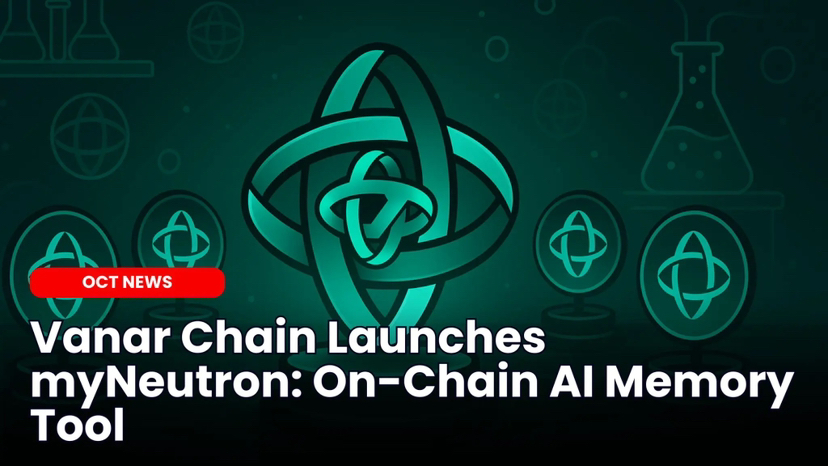
There are already some practical cases. Collaborating with Worldpay to promote agentic payments, enabling brands to mint NFTs and facilitate micropayments without barriers; myNeutron, this Chrome extension, transforms your chat logs, web pages, and documents into a personal AI memory library, compatible across ChatGPT, Claude, and Gemini. Recently, version 1.1 added a subscription feature, allowing payments through VANRY, and demand is starting to materialize.
Honestly, most chains are still focused on speed and costs, while Vanar has shifted the problem to 'how to turn data into self-speaking assets.' It doesn't claim to replace anyone but aims to be the underlying layer that makes all chains smarter. For Web3 to enter the lives of ordinary people in the future, it likely depends on such intelligent chains.
Of course, the project is still young; Axon and Flows are not fully online yet, and ecological applications need time to mature. But the direction is right, the tech stack is solid, and it's carbon neutral and environmentally friendly—In my view, Vanar deserves more attention. If you want to get started, check the documentation at vanarchain.com or install first.