
Most blockchains chase flashy scalability or DeFi yields. Fabric Protocol and $ROBO feel like the quiet backbone, embedding verifiable proofs into the robot economy so machines become dependable partners, fading into daily life through unshakeable trust.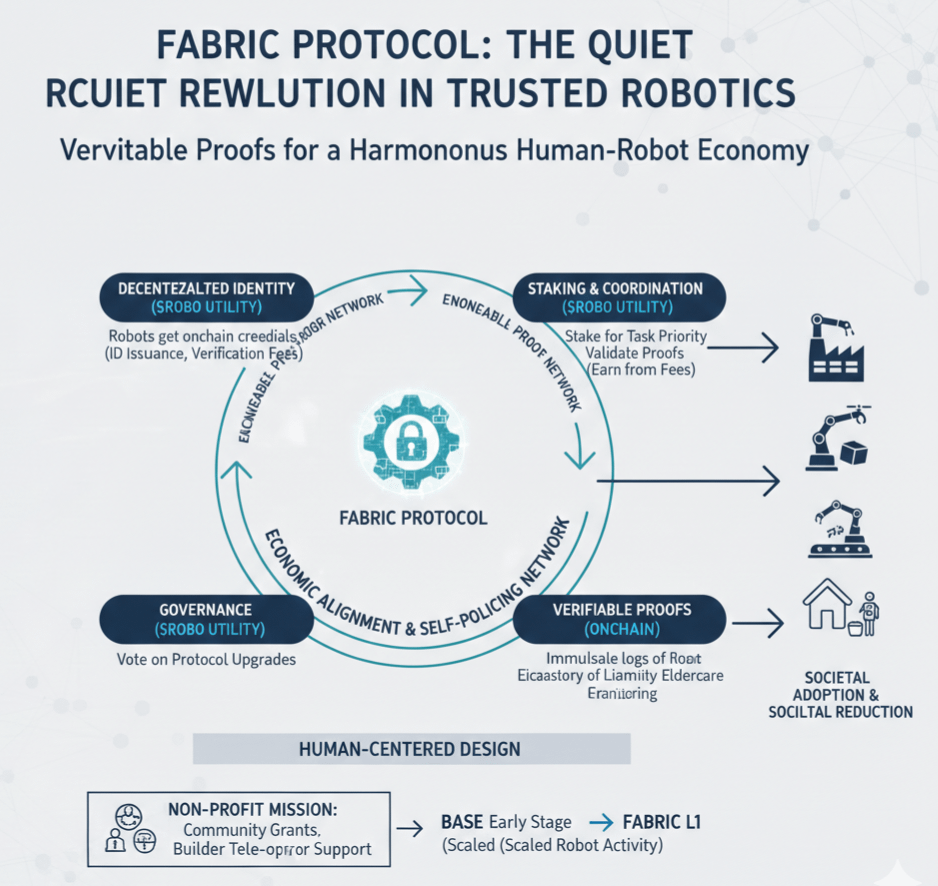
When I first started looking closely at Fabric Foundation, what struck me wasn't the AI hype or visions of robot riches. It was this grounded philosophy: in a world where machines are stepping into our physical spaces nursing homes, factories, even homes the real radical ambition is harmony, not disruption. Fabric isn't about overriding humans; it's about aligning intelligent systems with our intent, making them verifiable extensions of our will. The "invisibility" here is key: success means robots just work, their actions proven onchain without us noticing the tech. In an emerging robot economy, where labor shortages meet AI advances, this reliability could redefine society, letting people focus on creativity while machines handle the mundane safely.
What stood out wasn’t the tokenomics alone, but how Fabric tackles verifiable proof head on. First, the protocol's decentralized identity system: robots get onchain credentials, cryptographically proving who or what they are. This isn't abstract; it's essential for trust in autonomous agents. Imagine a delivery bot verifying its path and handover in real time, logged immutably. Robo powers this as the utility token for network fees, covering identity issuance and verifications. Every transaction, from task assignment to completion, demands $ROBO, creating economic alignment without speculation.
Then there's staking for task priority and coordination. Holders stake ROBO to influence robot queues or validate proofs, ensuring high stakes jobs like healthcare assists get precedence. It's pragmatic: stakers earn from fees, but only if verifications hold up, fostering a self policing network. Governance rounds it out; ROBO holders vote on protocol upgrades, keeping the system human centered. The idea that really clicked for me was this loop: verifiable proofs aren't just tech; they're the bridge to societal adoption, proving machines acted as intended, reducing liability in mixed human robot environments.
Tying this to real ecosystems, Fabric starts on Base for accessibility, migrating to its own L1 as robot activity scales. Verifiable tasks shine in sectors like manufacturing (proof of assembly) or daily life (eldercare monitoring with human gated approvals). The non profit mission allocates ecosystem funds for community growth grants for builders, tools for tele operators adding cultural context. Payments are human gated too, ensuring oversight in sensitive areas. It's building toward an open marketplace: anyone supplies robots, coordinates via the protocol, settles in ROBO upon verified completion.
Stepping back, Fabric's honest tradeoffs are refreshing. Early stage means adoption hurdles integrating hardware like sensors with blockchain is slow, and it relies on broader AI/robotics progress. Not every bot maker will jump in; regulatory gaps in machine liability could stall things. Skeptically, if verifiable proofs overpromise, we risk backlash from failed tasks. But that's the point: Fabric's "boring but brilliant" approach prioritizes dependability over speed, addressing pain points like trust erosion in autonomous systems or immersion breaking fees.
If Fabric succeeds, most people won’t notice the protocol at all. Robots will hum in the background, their proofs quietly upholding a harmonious economy like electricity powering our lives without fanfare. That might be the most human strategy: tech that serves, verifies, and steps aside so we can live fuller.