

I’ve traded through enough cycles to know when a narrative is just liquidity bait and when it’s trying to solve a structural bottleneck. Most AI-crypto projects today are tokenized wrappers around inference APIs. They ride volatility, they farm engagement, and when market beta drops, they bleed because there’s no economic gravity underneath them. Mira Network is different not because it says “decentralized AI,” but because it’s targeting the reliability layer. That’s not a surface-level distinction. It’s a structural one.
The real constraint in AI right now isn’t speed or model size. It’s trust. Every serious trader I know uses AI tools for research summaries, code generation, even parsing on-chain anomalies but nobody delegates capital decisions blindly. Why? Because hallucination risk isn’t cosmetic. One fabricated citation in a legal contract or one misread dataset in risk modeling can cost millions. Mira’s core design breaking AI outputs into verifiable claims and pushing them through distributed validation attacks that specific bottleneck. That’s the first time I’ve seen an AI crypto project focus on epistemic guarantees instead of compute throughput.
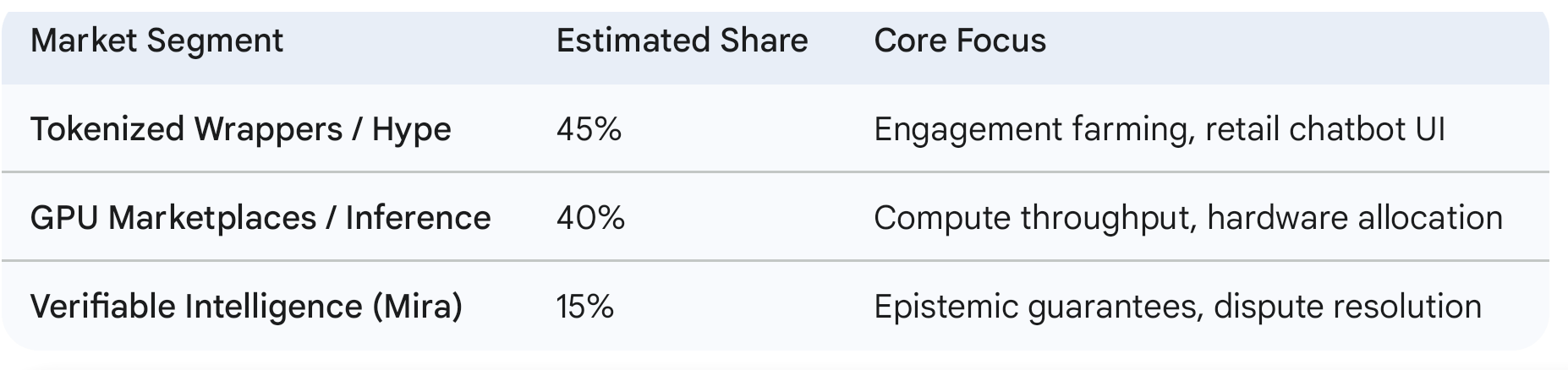
Here’s what makes this interesting from a market structure perspective: Mira doesn’t try to outcompete base models. It sits above them. It decomposes outputs into atomic claims, then routes those claims across independent AI validators. Think of it less like inference and more like dispute resolution. In crypto terms, it feels closer to optimistic rollups than to GPU marketplaces. The claim is assumed valid, but economically challenged and verified through distributed consensus.
That matters because it changes the revenue logic. Most AI tokens rely on demand for inference. Mira’s demand driver is something subtler the need for verified AI outputs in high-stakes environments. Financial reporting, DAO governance proposals, automated contract drafting, risk scoring for lending protocols. These aren’t retail chatbot use cases. They’re capital-critical surfaces.
From a token economics lens, the real question isn’t “Will people use AI?” That’s obvious. The question is: Who pays for verification? If verification cost is denominated in the network token and tied to economic staking, then usage directly creates token sink pressure. But only if incentives are aligned correctly.
I’ve watched too many protocols collapse because validator rewards were pure emissions without fee-backed sustainability. If Mira’s validators stake tokens to challenge or attest to claims, and if incorrect validation leads to slashing, then you have a real game. Not cosmetic staking but risk-weighted participation. The network only works if validators have skin in the game. Otherwise it becomes social consensus theater.
What I’m particularly watching is how the network handles validator collusion risk. In low-volume environments, collusion is cheap. In high-volume environments, coordination cost rises. The economic security threshold depends on how much value flows through the verification layer. If enterprises or large DeFi protocols begin routing critical outputs through Mira, the cost to attack rises proportionally. That’s when the token transitions from speculative asset to security budget.
Now zoom out to macro positioning. Capital rotation right now is selective. Liquidity isn’t chasing broad AI hype the way it did during early narrative waves. Funds are looking for infrastructure plays with measurable demand curves. You can see this in how on-chain liquidity concentrates capital is sticky around real yield, protocol revenue, and defensible primitives. If Mira can show consistent verification volume growth, wallet distribution expanding beyond insiders, and declining reliance on emissions, that’s when serious capital pays attention.
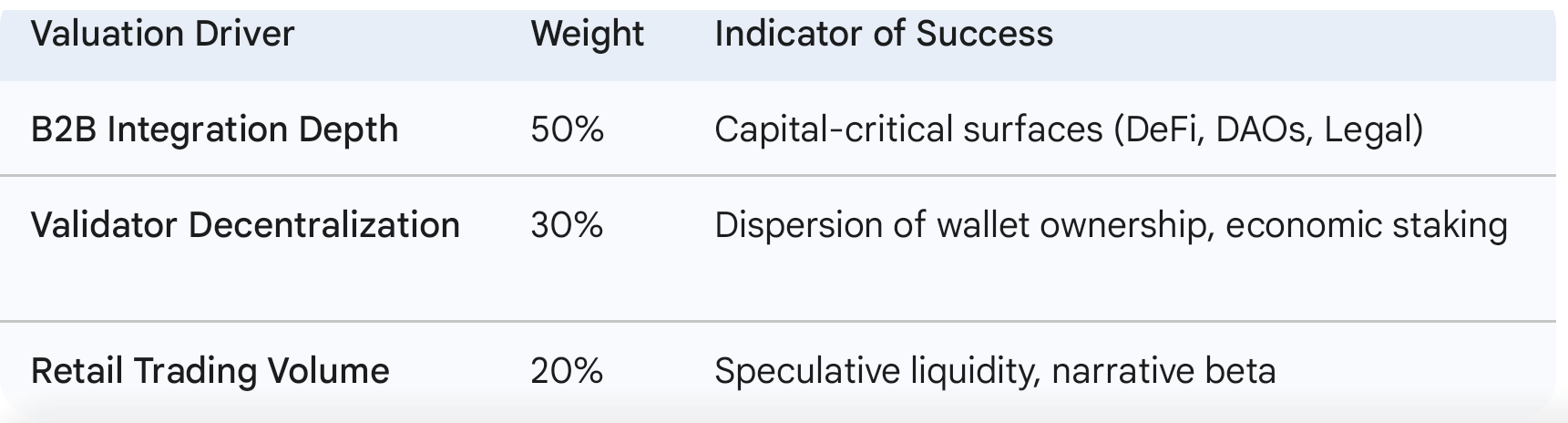
I personally track wallet behavior closely in early-stage protocols. If you see heavy concentration in the top 20 wallets with low transactional churn, that’s venture parking. If you see gradual dispersion, repeated small fee payments, and staking participation from mid-sized wallets, that signals organic usage. Mira’s long-term valuation will correlate more with validator distribution metrics than with daily trading volume.
Another angle most people miss: verification latency. Breaking outputs into claims and running distributed checks introduces time cost. In low-frequency use cases, that’s fine. In high-frequency trading systems, it’s not. If Mira wants to penetrate DeFi automation or autonomous agents executing capital flows, verification time must be predictable and bounded. That’s not a marketing challenge. That’s a systems engineering constraint. And traders like me care about that because latency risk translates into financial risk.
Let me give you a personal example. During a volatility spike last cycle, I tested an AI agent to monitor liquidation clusters and propose delta hedges. It was fast but occasionally wrong in subtle ways. A single hallucinated liquidation threshold could skew position sizing. If that agent’s outputs were claim-verified before execution, I’d trade larger size with lower cognitive overhead. That’s the psychological premium Mira is trying to monetize confidence.
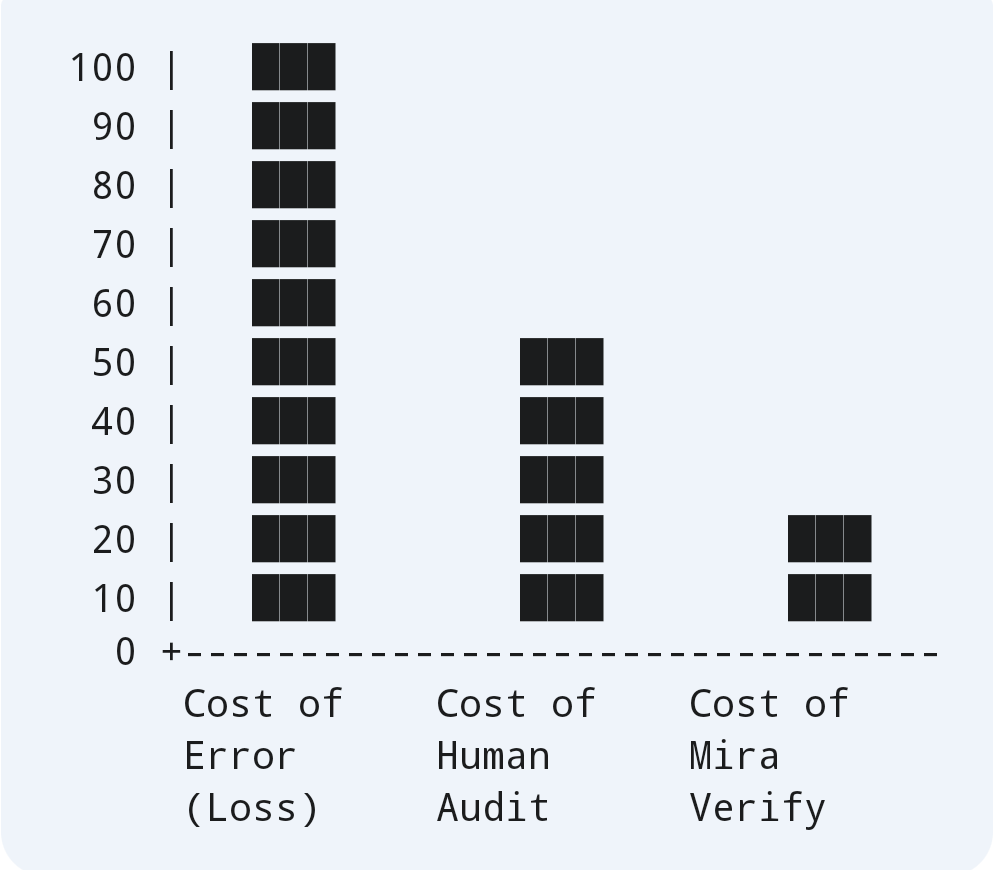
But confidence only becomes durable value if the cost of verification is lower than the cost of error. That’s the adoption equation. If verifying an AI-generated legal contract costs less than a human audit while maintaining reliability, Mira wins. If it’s expensive and slow, it becomes academic.
From a systems design standpoint, the distributed model approach is also interesting because it implicitly acknowledges model bias. Instead of assuming one superior AI, it treats intelligence as adversarially balanced. Independent models checking each other reduces correlated failure. In financial terms, that’s portfolio theory applied to cognition.
Now let’s talk stress scenarios because every protocol looks good in a calm market. What happens when token price drops 60%? If validator rewards are denominated in the token, their real income drops. Do they exit? Does security weaken? Sustainable networks design fee-backed incentives that cushion price volatility. I would want to see verification demand that isn’t reflexively tied to speculative cycles.
There’s also a competitive layer forming. If large centralized AI providers introduce internal verification layers with enterprise guarantees, they remove the need for decentralized alternatives unless decentralization itself is the selling point. That’s where blockchain consensus becomes more than ideology. It becomes auditability. On-chain verification logs create immutable trails. For DAOs and transparent financial systems, that’s a feature centralized AI cannot replicate credibly.
Another point traders overlook: narrative elasticity. AI tokens spike on headlines. But reliability infrastructure doesn’t pump on flashy demos. It compounds slowly with integration announcements and usage data. That means price action may lag narrative excitement. For long-term positioning, that’s attractive. For short-term momentum trading, it’s less obvious.
If I were modeling Mira’s valuation framework, I wouldn’t compare it to GPU marketplaces. I’d compare it to decentralized oracle networks. Both convert off-chain uncertainty into on-chain certainty. The difference is that Mira verifies cognition instead of price feeds. That’s a bigger philosophical leap, but economically similar. The token secures truth claims.
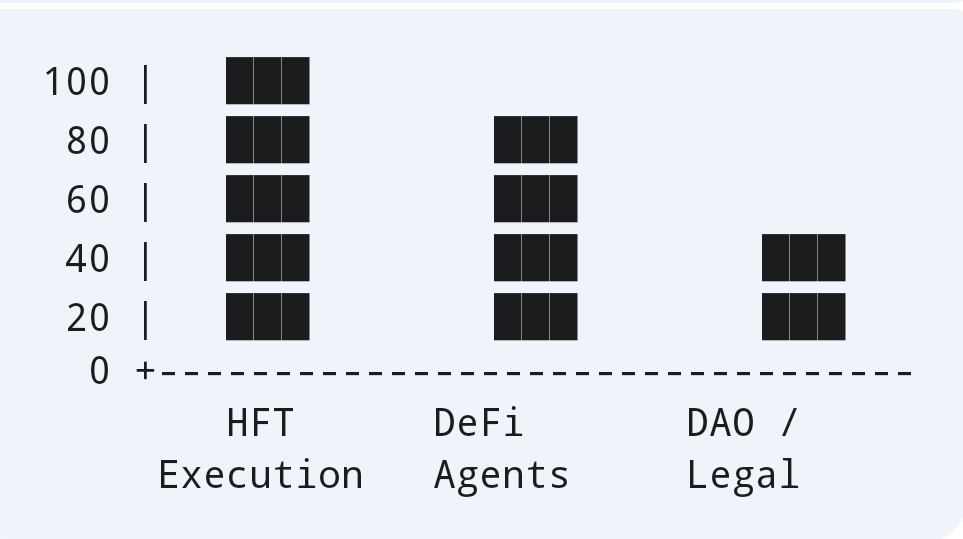
There’s also a deeper implication. As autonomous agents begin transacting on-chain not humans, but AI systems the need for machine-verifiable truth increases. Humans tolerate ambiguity. Autonomous systems cannot. Mira could become middleware between AI agents and capital pools. That’s not a 6-month catalyst thesis. That’s a 3-5 year structural play.
Still, I stay cautious. Early-stage networks often underestimate the complexity of coordination incentives. Validators must be rewarded enough to participate, but not so much that emissions crush price. Users must pay enough to secure the system, but not so much that they bypass it. That equilibrium is fragile.
Emotionally, I’m drawn to projects that attack invisible bottlenecks. Reliability isn’t sexy, but it’s fundamental. In every bull market, speculation outpaces infrastructure. In every bear market, infrastructure that solves real problems survives. I’ve learned to position around that cycle.
Mira Network sits in a category that doesn’t yet have clean valuation comparables. That makes it risky. It also makes it asymmetric. If verified AI becomes a prerequisite for capital-critical automation, the verification layer captures durable value. If AI reliability improves natively and decentralized verification becomes redundant, demand shrinks.
Right now, what I’m watching isn’t price candles. It’s integration depth. Are serious protocols experimenting with verified outputs? Are developers building tools on top of the verification layer? Are validators economically rational or purely speculative?
Because in crypto, narrative gets you listed. Usage keeps you alive.
Mira is betting that the next wave of value won’t come from generating more AI output but from proving that output can be trusted without asking anyone to take it on faith.
And if there’s one thing markets consistently reward over time, it’s removing the need for trust while preserving the ability to act.
