
When I first started using AI tools seriously I was impressed by how fluid everything sounded clean answers structured responses almost no hesitation but over time I noticed something that bothered me it was not the occasional mistake it was the confidence behind the mistake
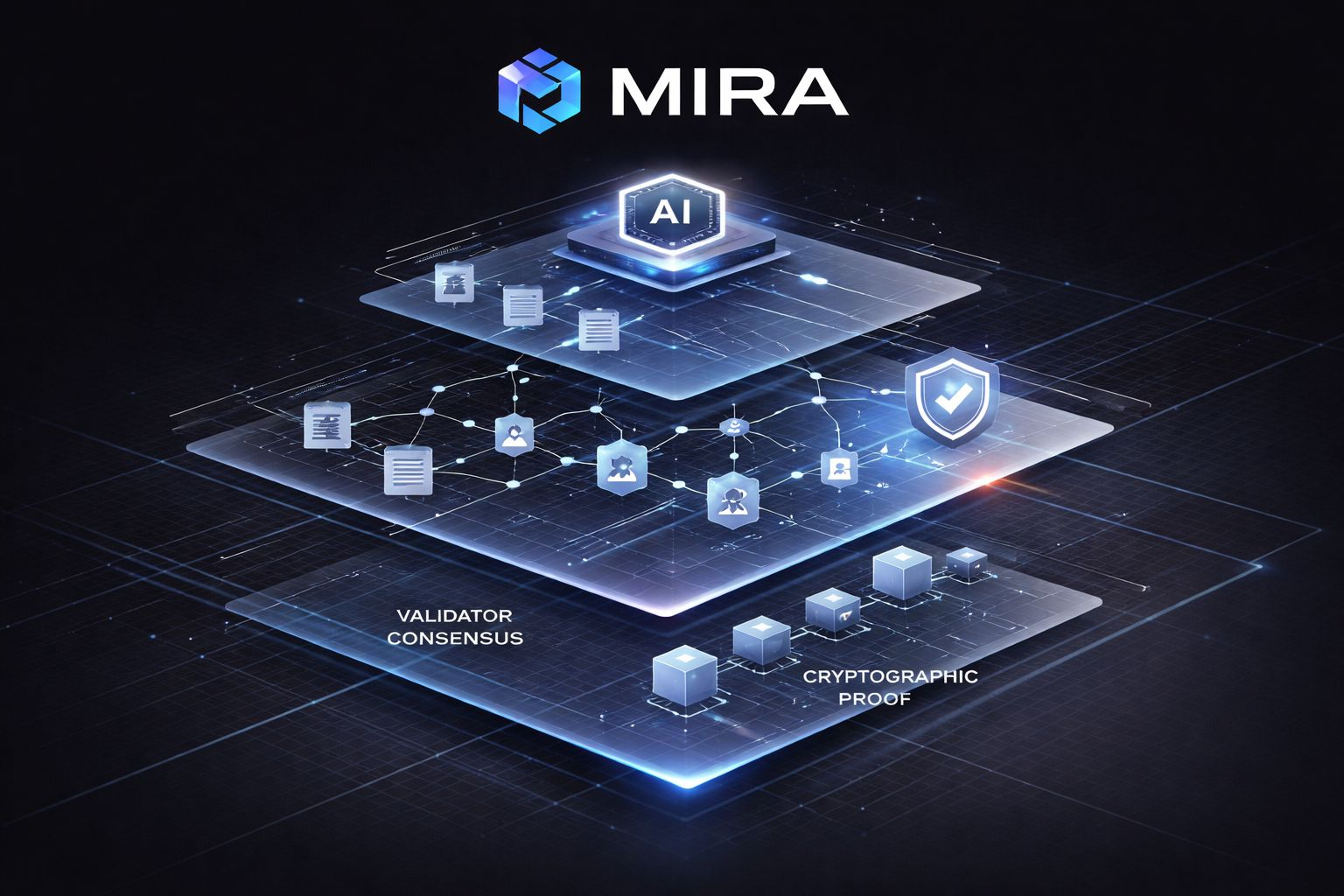
That is where Mira Network started to feel relevant to me because instead of trying to make one model smarter it tries to make outputs verifiable
Most AI systems today operate on a simple pattern you ask something the model responds and you either trust it or manually check it yourself the responsibility stays with the user and that does not scale well once AI systems begin handling more serious tasks
Mira approaches it differently by breaking generated content into individual claims and sending those claims across a distributed network of validators which can be independent AI systems they evaluate each claim separately and consensus is reached using blockchain coordination and economic incentives
That means you are not trusting one model you are trusting a distributed verification process where validators have something at stake and inaccurate validation has consequences
The more I think about autonomous AI agents managing funds executing workflows or generating research used in important decisions the more I realize that probably correct is not enough you need outputs that can be audited and verified
Mira assumes hallucinations will continue to exist and builds around that reality instead of pretending larger models will eliminate the issue completely
Of course there are open challenges like scalability latency and ensuring validator diversity but the direction feels logical intelligence without verification cannot safely move into high stakes environments
For me Mira is less about AI hype and more about building the trust layer that allows AI systems to operate with accountability and that shift feels necessary as autonomy increases