
The more I use AI in real workflows not demos, not toy prompts, but decisions that actually matter the less impressed I am by how intelligent it sounds. Today’s models can write like experts and reason like analysts.
But would you let them execute something irreversible without checking it?
Probably not.
That hesitation is the real bottleneck. Hallucinations aren’t rare glitches they’re structural. Models predict patterns; they don’t verify truth. And when they’re wrong, they’re often wrong confidently.
Verification > Bigger Models
What makes Mira Network interesting is that it doesn’t try to build a “smarter” model. It builds a decentralized verification layer that sits between AI output and user trust.
Instead of treating an AI response as one block of text, Mira decomposes it into individual claims. Those claims are validated by a distributed network of independent AI validators. Consensus is coordinated on-chain, backed by economic incentives.
Validators stake value behind their judgments. Validate false claims? Risk penalties. Verify correctly? Earn rewards.
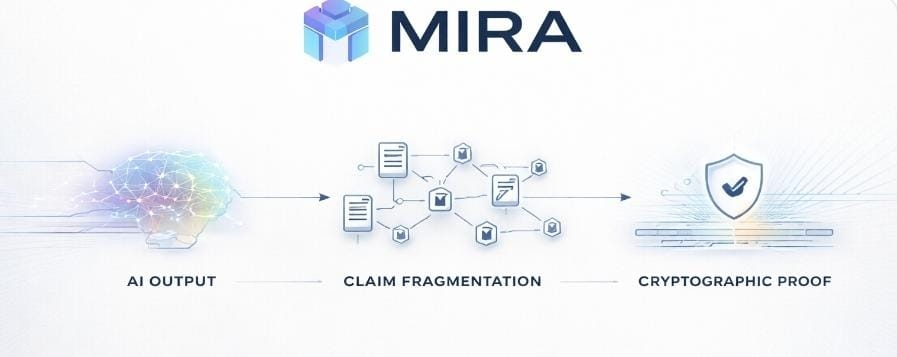
Accuracy becomes economically aligned.
From Suggestion Engine to Decision Infrastructure
As AI agents begin managing capital, approving transactions, or influencing governance decisions, “mostly correct” won’t cut it. Trust can’t rely on a single provider or brand reputation.
Mira turns AI output into something auditable and contestable transparent claims, distributed validation, recorded consensus.
Bullish With Realistic Hedging
This isn’t a magic fix. Claim granularity, validator bias, and collusion risks are real design challenges. Incentives must stay strong. Governance must evolve.
But the thesis is powerful: intelligence without verification doesn’t scale safely.
If AI is going to act not just suggest accountability infrastructure becomes essential.
Not louder AI.
More reliable AI.
That’s a narrative worth being bullish on.