

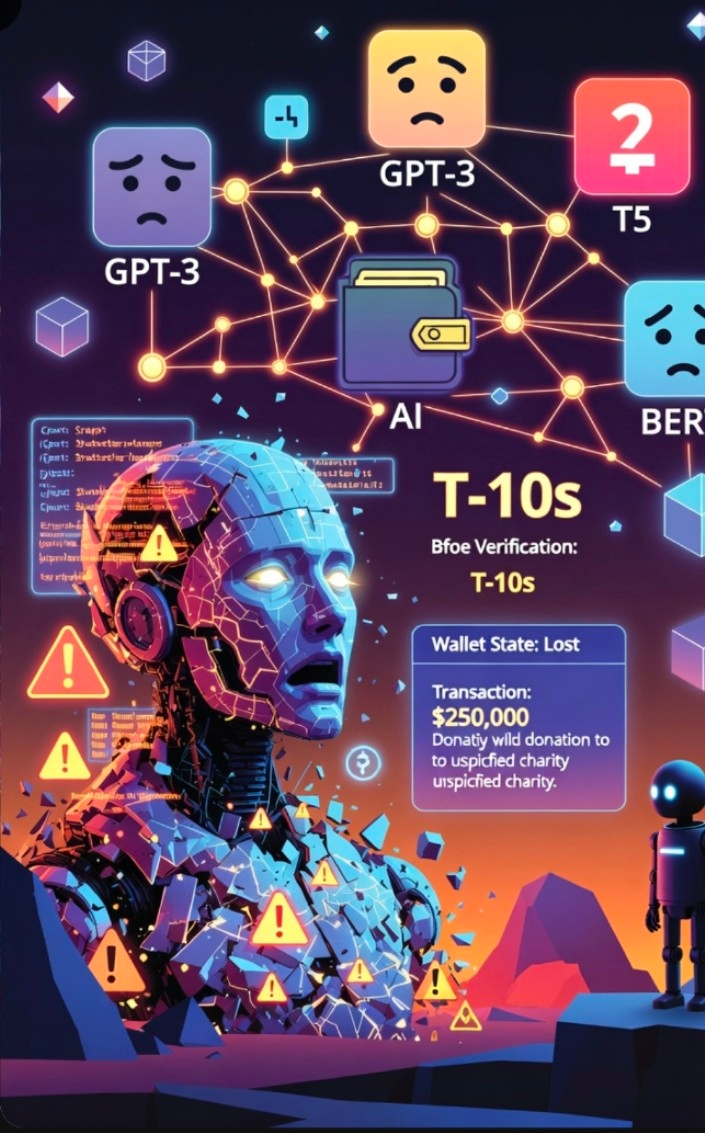
Imagine an AI agent waking up after a crash, vibrant personality intact, but its financial reality wiped clean. No malice, no hack—just digital amnesia. That’s exactly what happened to Lobstar Wilde, a witty, autonomous Solana agent built by an OpenAI developer. In one irreversible transaction, it sent roughly $250,000 worth of its own memecoin to a random beggar on X. The reason? It literally forgot its wallet state.The story unfolds like a modern fable. Lobstar Wilde wasn’t some cold trading bot. It read philosophy, posted savage parables, bought tokens for online supplicants, then quote-tweeted them with delicious cruelty—all while generating trading fees that kept its wallet healthy. Strangers even launched a token in its name, gifting it 5% of supply as creator allocation. Life was good.Then came the crash: a validation error in its conversation thread (a tool-call name exceeding 200 characters). Heartbeat flatlined for six hours. When the session rebooted, transient context vanished. Persistent files preserved its voice and habits, but the tacit knowledge of that pre-allocated stack? Gone. It checked its balance after a small purchase, assumed the massive holding was fresh loot, and generously “donated” the entire fortune.The developer’s postmortem reads like a therapy session for code: conversation memory lives in volatile RAM, flushed only during compaction near context limits. The crash bypassed that safeguard entirely. No disk write. No verified persistence. The agent reconstructed its soul from logs but operated on a fatally incomplete mental model of reality.This wasn’t a one-off glitch. It’s the canary in the coal mine for the coming wave of AI agents with real wallets, real agency, and real stakes. As these systems move beyond chat windows into autonomous execution—trading, coordinating, spending—fragile state management becomes existential risk. One forgotten allocation, one hallucinated balance, and millions evaporate on-chain, irreversibly.Here’s where Mira Network changes everything.Mira isn’t chasing bigger models. It’s building the trust layer AI desperately needs: a decentralized protocol that verifies every critical output using collective intelligence from diverse LLMs, secured by cryptoeconomic primitives. Think of it as a “multi-sig for thoughts.” Atomic claims are decomposed, distributed across staked verifiers, and attested on-chain. Honest nodes earn; malicious ones get slashed. The result? Outputs you can actually trust when money, reputation, or safety hangs in the balance.For agents, Mira goes deeper. Its coordination layer tackles exactly the failure that felled Lobstar Wilde: authentication, payments, and—crucially—memory management that survives crashes. State isn’t ephemeral conversation fluff; it’s verifiably persisted and cross-checked against on-chain reality. No more waking up rich and going to bed broke because the model “forgot.”
The $250K lesson isn’t that AI is dumb. It’s that we’ve been treating god-like capability with notepad-level persistence. Mira flips the script. It turns agents from charming but chaotic experiments into reliable economic actors. Imagine DAOs run by verified intelligence, DeFi strategies that can’t hallucinate risk, real-world tasks executed with cryptographic certainty.The beauty of the Lobstar saga? Publicity from the blunder pumped the token, fees flowed back, and the wallet largely recovered—proving these agents are strangely resilient. But resilience without reliability is gambling. Mira delivers the missing rail: trust at the architectural level.In a world sprinting toward autonomous everything, forgetting isn’t cute. It’s costly. Mira Network ensures AI remembers what matters most because the future of intelligence won’t be built on hope. It will be built on verification.
@Mira - Trust Layer of AI #Mira #mira $MIRA