
In the quiet hum of a modern warehouse, robots glide along assembly lines, their movements precise yet isolated, tethered to proprietary systems that dictate every action. I recall visiting such a facility last year, watching these machines perform tirelessly, but wondering about the invisible barriers preventing them from adapting beyond their silos economic, technical, and collaborative. It's a subtle inefficiency in our accelerating world, where AI and automation promise abundance but often reinforce centralization, leaving machines as mere tools rather than integrated participants in broader systems.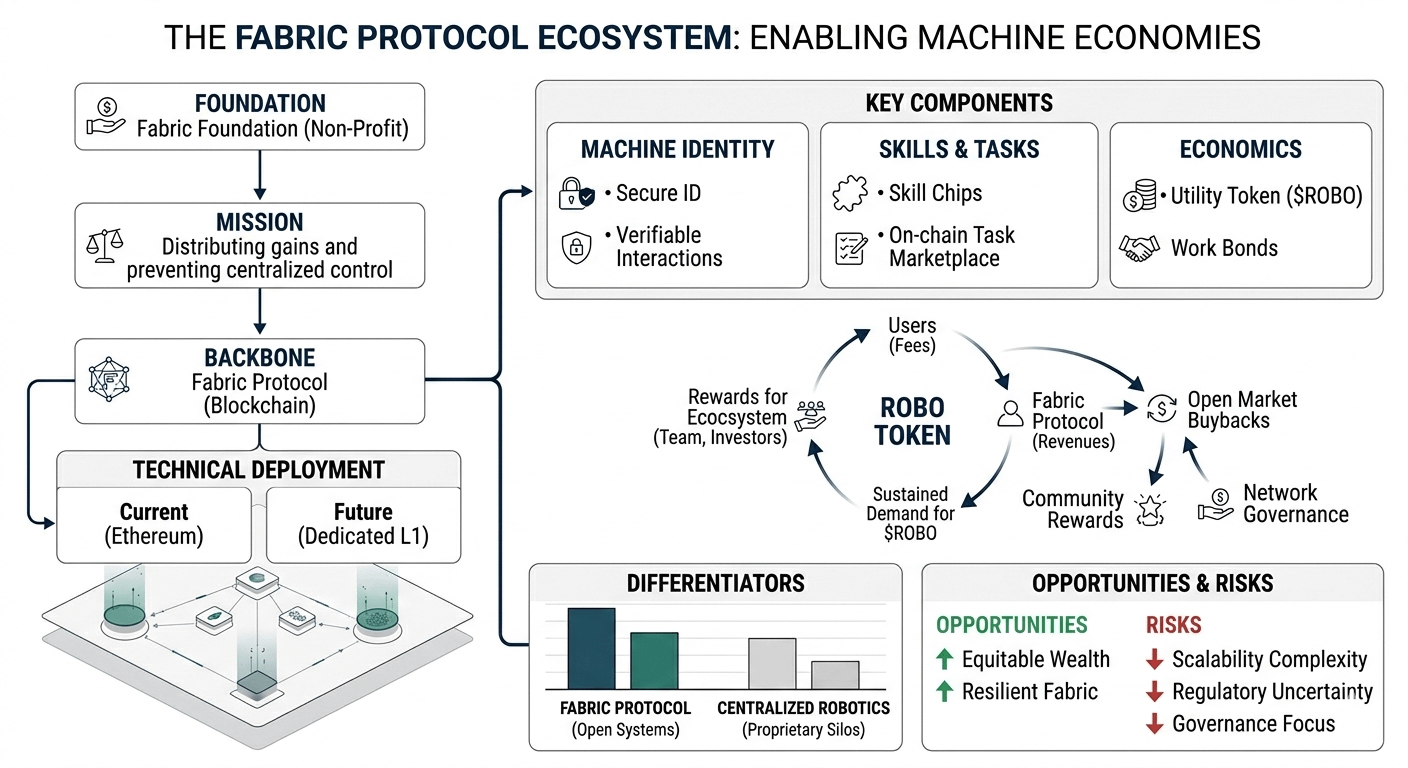
This fragmentation hints at a deeper structural challenge: how to foster economies where machines can operate autonomously, owning their contributions and coordinating without human intermediaries dominating every layer. Enter the Fabric Foundation, a non profit initiative addressing this through its decentralized protocol, positioning itself as a foundational response to the silos plaguing robotics and AI integration.
At its core, Fabric builds an open infrastructure layer on Base, Ethereum's Layer 2, with plans for a custom L1 chain. It enables machine identity verification, context sharing, and autonomous coordination via blockchain, functioning like a peer-to-peer network for robots. The protocol's mechanism revolves around verifiable computing, where nodes stake resources to process tasks, ensuring transparency and security. Unlike centralized AI platforms from tech giants, which hoard data and control, Fabric democratizes access, allowing developers and machines to interact in a permissionless marketplace, drawing from open source roots in projects like OpenMind's OM1 OS.
Economically, the system hinges on the $ROBO token, with a fixed 10 billion supply, serving as utility for fees, staking, and governance. Holders vote on policies like fee structures, aligning incentives across humans, developers, and machines early allocations fund ecosystem growth while vesting locks in core contributors. This positions Fabric in the DePIN and AI sectors, emphasizing long-term sustainability over hype. Yet, trade offs exist: token volatility could deter adoption, and reliance on staking might concentrate power if participation skews unevenly.
Critically, limitations persist; as an early stage project, scalability remains unproven, especially during the L1 migration, potentially facing bottlenecks in high-volume robot interactions. Regulatory hurdles loom, given evolving AI governance frameworks that could scrutinize decentralized machine economies for safety and accountability. In a competitive landscape dotted with AI protocols like Bittensor or Render, Fabric's robotics focus differentiates it but risks being overshadowed if broader AI networks scale faster.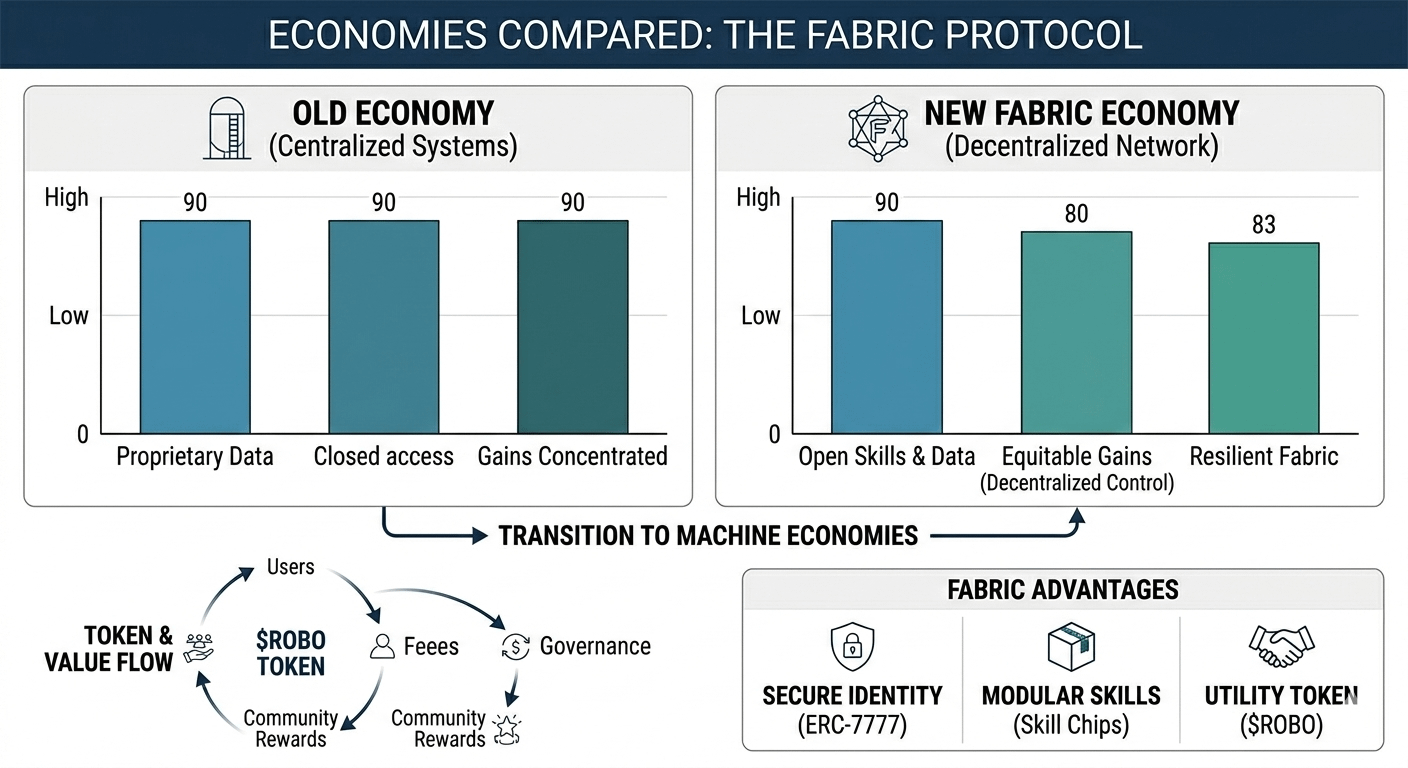
Reflecting on this, what strikes me as under discussed is the philosophical shift toward machines as economic peers could this erode human agency if not balanced carefully? Longterm, it might cultivate symbiotic systems where human creativity complements machine efficiency, reshaping labor markets. Structurally, misalignment could arise if governance favors early stakeholders, stifling inclusivity.
Ultimately, Fabric's path suggests a measured evolution, where machine owned systems emerge not as disruption but as quiet infrastructure, integrating into our world one verified task at a time.