
Artificial intelligence is moving fast, but one major problem still holds it back: trust. AI systems can generate answers confidently, even when those answers are incomplete or incorrect. As AI becomes more involved in finance, education, healthcare, and decision-making, this weakness becomes risky. This is exactly where @Mira - Trust Layer of AI MiraCoin (MIRA) enters the picture, offering a blockchain-based solution focused on accuracy, transparency, and verification.
What Is MiraCoin?
Mira is a decentralized network designed to check and confirm AI-generated information before it is used or shared. Instead of trusting a single AI model or centralized system, Mira uses multiple independent verifiers to review AI outputs and confirm whether the information is reliable.
MiraCoin (MIRA) is the native token that powers this system. It supports network operations, rewards contributors, and gives users a role in shaping the future of the protocol.
Why Mira Is Gaining Attention on Binance
Right now, AI-focused crypto projects are trending across major exchanges, and Mira stands out because it tackles a real technical problem, not just a narrative. While many AI tokens focus on computing power or automation, Mira focuses on truth and verification—a topic that is becoming more important as AI-generated content floods the internet.
Binance users are paying attention because Mira aligns with two strong trends at once:
The growth of artificial intelligence
The need for decentralized trust systems
This combination makes Mira relevant not only for traders but also for developers and platforms building AI-powered products.
How Mira Works Behind the Scenes
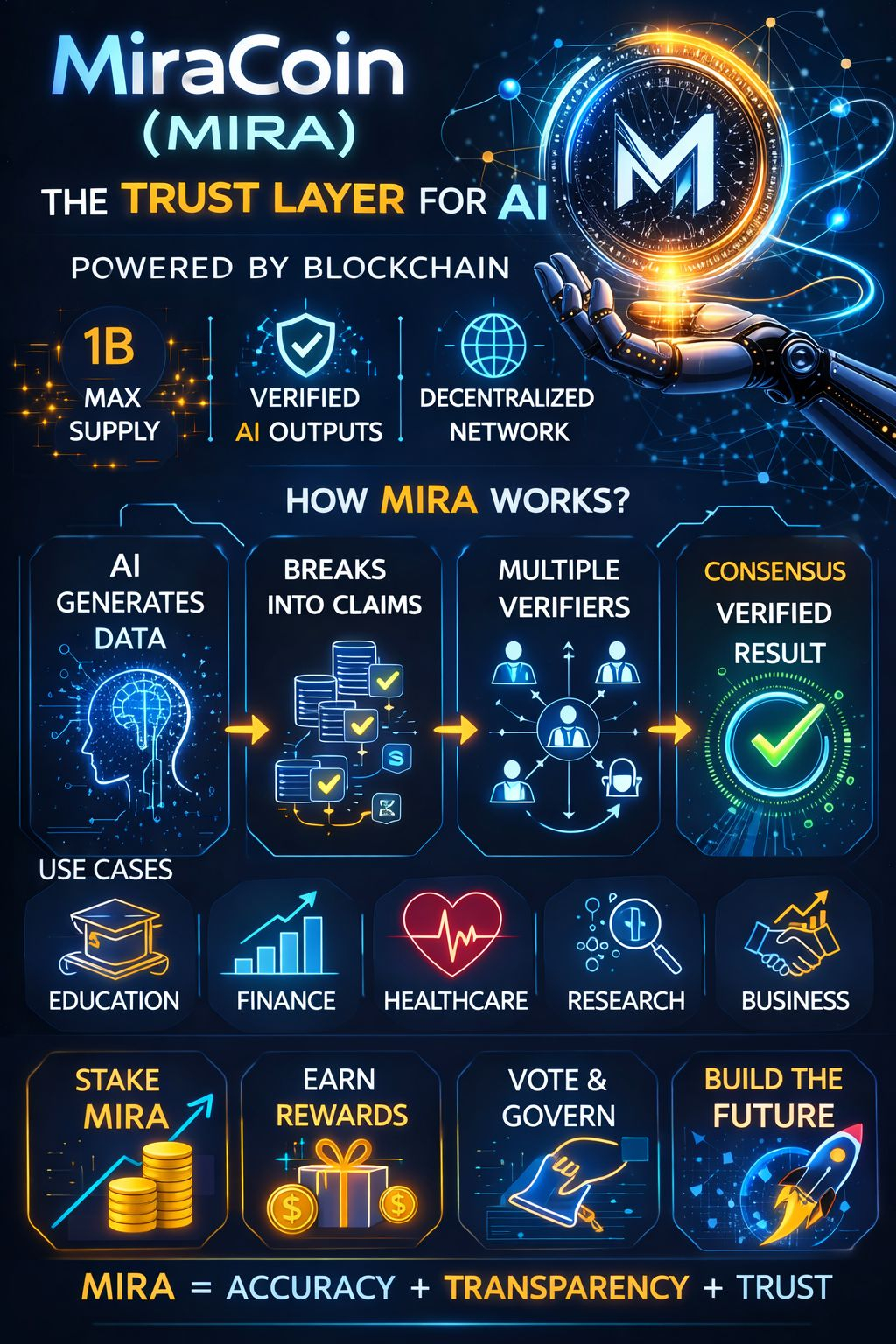
Mira’s system is built around a simple but powerful idea: don’t trust one source—verify with many.
Step 1: Breaking Down AI Outputs
When an AI produces a response, Mira separates that response into smaller statements. Each statement can then be checked individually. This prevents users from accepting an entire AI answer as correct when only parts of it may be accurate.
Step 2: Independent Verification
These individual statements are reviewed by different verifier nodes across the network. Each verifier works independently, using its own logic or models. This diversity reduces bias and lowers the chance of coordinated errors.
Step 3: Reaching Consensus
Once enough verifiers agree on the accuracy of a statement, the network records the result. Verified outputs become more trustworthy, while incorrect claims are filtered out.
This process creates a transparent and tamper-resistant verification layer for AI-generated data.
The Role of MIRA Token
MIRA is not just a tradable asset; it has practical roles inside the ecosystem:
Staking: Verifiers stake MIRA to participate in checking AI outputs, encouraging honest behavior.
Rewards: Contributors who help verify information accurately receive token rewards.
Access: Developers and platforms use MIRA to access Mira’s verification tools and services.
Governance: Token holders can vote on protocol upgrades, rules, and future development plans.
This structure keeps the network decentralized while aligning incentives toward accuracy and reliability.
Real Use and Long-Term Value
One of Mira’s strongest points is that it is designed for real-world use, not just speculation. Any application that relies on AI-generated information—such as research tools, education platforms, content moderation systems, or decision-support software—can benefit from verified outputs.
As regulations around AI grow stricter worldwide, tools that improve transparency and accountability are likely to become more valuable. Mira positions itself as infrastructure that helps AI systems meet those future standards.
Market Perspective: Stability Over Hype
From a market perspective, MiraCoin attracts interest because it is tied to functionality, not short-term hype. While price volatility is part of crypto, projects with clear utility often survive longer market cycles.
For Binance Square readers, Mira represents a category of tokens focused on building, not just trading. This makes it attractive to users who prefer long-term technology narratives over meme-driven movements.
Challenges to Watch
Like any early-stage technology, Mira still faces challenges:
Adoption depends on developers integrating the verification layer
AI verification at scale is technically complex
Market sentiment can affect short-term price movement
However, these challenges are typical for infrastructure projects and do not reduce the importance of the problem Mira is trying to solve.
Final Thoughts
MiraCoin is part of a new generation of crypto projects that aim to support AI responsibly. By combining blockchain transparency with decentralized verification, Mira addresses one of the most pressing issues in artificial intelligence today: how to trust machine-generated information.
For users on Binance Square, Mira is worth watching—not just as a token, but as a foundational tool for the future of AI-powered digital systems. As AI continues to grow, projects that improve accuracy and trust may become essential rather than optional.
#Mira #BinanceSquareTalks #CryptocurrencyWealth $MIRA
@Mira - Trust Layer of AI #Mira $MIRA
