
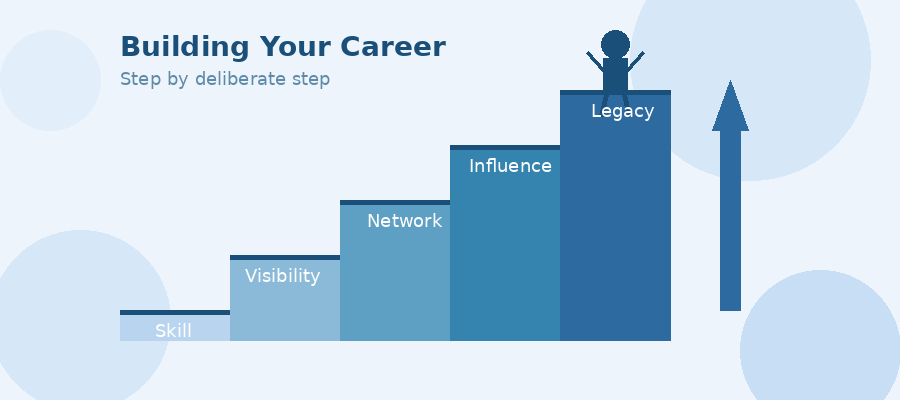
In a world where industries pivot overnight and job titles become obsolete before business cards run out, the most dangerous career strategy is building yourself around what is popular — rather than what is enduring. The professionals who consistently rise aren't chasing trends. They're laying foundations.
Stop Building a Resume. Start Building a Reputation.
Your resume is a snapshot. Your reputation is a film. Hiring managers, collaborators, and industry peers form lasting impressions not from what you list — but from how you show up, follow through, and elevate the people around you. The professionals with the most resilient careers are those who become known for something specific: a way of solving problems, a standard of communication, or a commitment to quality that others can count on.
This doesn't mean being rigid. It means being intentional. Ask yourself: if someone described you to a colleague they'd never met, what three words would they use? If you don't know the answer — or don't like it — that's your starting point.
The Compound Effect of Strategic Visibility
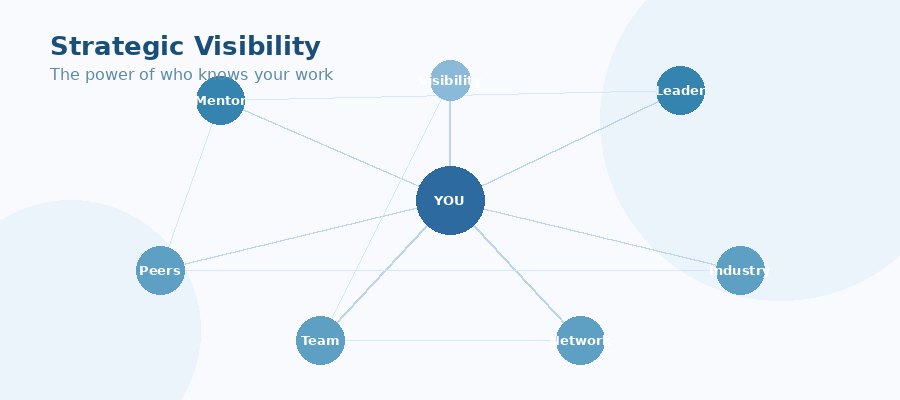
Talent alone doesn't create opportunity — visibility does. Yet visibility without substance is just noise. The sweet spot lies in showing your thinking, not just your outcomes. Share the process behind a decision. Write about what failed and what you learned. Offer a perspective on an industry shift before everyone else does.
Practical ways to build strategic visibility:
• Publish short-form reflections on LinkedIn after significant projects — what went well, what surprised you, and what you would do differently.
• Speak up in cross-functional meetings even when the topic isn't your domain. Curiosity signals leadership potential.
• Mentor someone one level below you. Teaching accelerates mastery and builds your internal network simultaneously.
• Request to present your team's work to senior leadership. Exposure compounds over time.
Adaptability Is a Skill, Not a Personality Trait
We often mistake adaptability for temperament — either you're wired for change, or you're not. The reality is more empowering: adaptability is practiced. It is built by regularly placing yourself in unfamiliar territory in controlled doses. Take on a project outside your comfort zone before you need to. Learn the adjacent skill before it becomes required. Build relationships across departments before you need a favor.
The professionals who thrive through disruption aren't those who saw it coming — they're those who had already made a habit of learning. They didn't adapt to change. They had been practicing adaptation all along.
Design Your Career in Chapters, Not a Single Narrative
The pressure to have a coherent, linear career story is one of the most limiting beliefs in professional culture. The most interesting careers — and the most capable professionals — are those who have authored multiple chapters. A chapter in operations, one in strategy, one in a startup. Each appears disconnected in the moment and richly textured in hindsight.
Give yourself permission to pursue a role that doesn't "make sense" on paper if it builds a capability you're missing. Patterns of growth matter more to sophisticated hiring leaders than perfect linear progression. They want to know: can this person operate in complexity? The answer is in your range, not just your depth.
The Bottom Line
Architecture requires a blueprint. So does a career. Know what you are building, understand the materials you are working with, and commit to quality in the foundations — not just the facade. Trends will come and go. Professionals who invest in depth, reputation, and adaptability don't just survive change. They become the ones others look to when it arrives.