
Verifying the Machines with Mira: Why AI Needs a Trust Layer Before It Runs the World
@Mira - Trust Layer of AI #Mira $MIRA
I did not come across Mira Network through hype or noise. It showed up while I was already questioning something deeper. AI systems were everywhere around me. They wrote. They predicted. They advised. Most of the time, they sounded right. That was exactly the problem. Sounding right is easy. Being right is harder.
Mira seems to come from that same unease. The people behind it were not trying to build another smarter model. They were reacting to what happens after a model speaks. Once an answer is produced, who checks it? In many real systems, no one does. The output is accepted. It moves forward. Errors travel quietly with it.
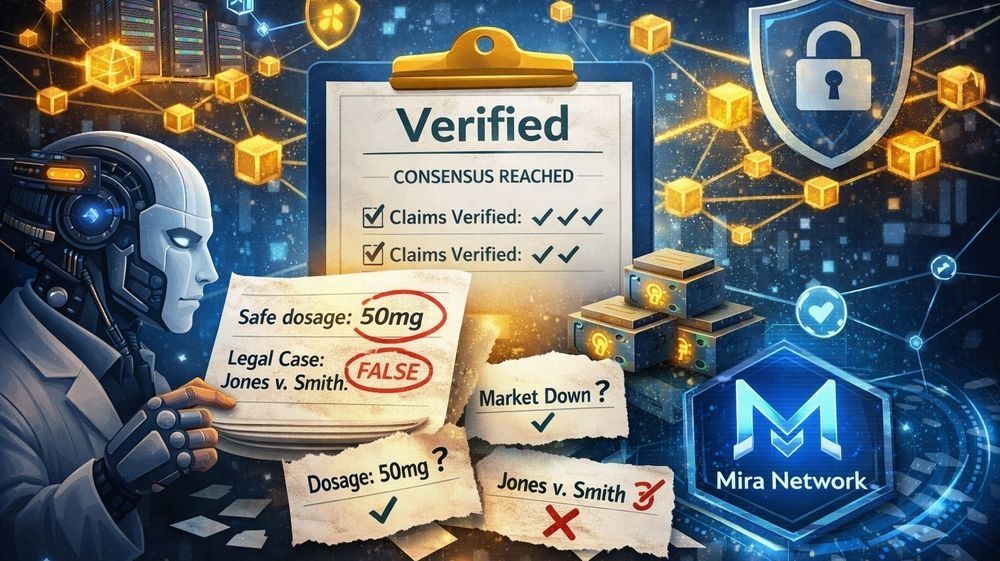
The early idea behind Mira was simple. AI should not be trusted on confidence alone. It should be questioned the way humans are questioned. That thinking shaped how the project evolved. Instead of focusing on intelligence, it focused on verification. Instead of speed, it focused on reliability. This made the project feel slower at first. Over time, it started to feel necessary.
The purpose of Mira is to sit beneath AI systems, not above them. It does not compete with models. It supports the world that relies on them. When an AI generates an output, Mira treats that output as a collection of claims. A long response is broken down into smaller statements. Each statement becomes something that can be checked. This matters because most failures hide in details, not in the big picture.
To manage this without stopping everything, Mira uses two data paths. One path is fast. Applications get results quickly and keep running. The other path is careful. The same outputs are sent through verification. Claims are distributed across independent validators. These validators are different by design. They use different models, data sources, and logic. That separation reduces shared blind spots.
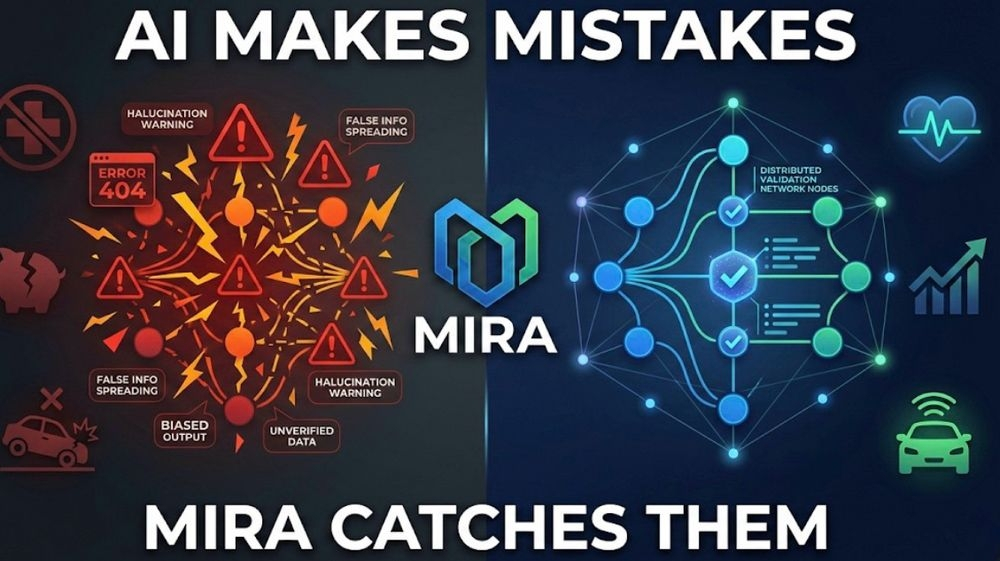
AI is still used during verification, though in a restrained way. Models help interpret claims. They compare sources. They flag contradictions. Final trust does not come from one model agreeing with itself. It comes from many independent checks reaching alignment. If they do not align, the system does not force certainty. It marks doubt openly. That choice feels honest.
One detail that impressed me was the use of verifiable randomness. Tasks are assigned unpredictably. Validators cannot choose easy claims or coordinate quietly. Anyone can verify that the randomness was fair. This reduces manipulation without adding heavy rules. It is a subtle layer, but an important one.
The network architecture reflects the same thinking. There are two layers. One layer focuses on coordination, consensus, and security. The other handles execution. This includes AI models, data providers, and verification agents. Separating these layers limits damage when something goes wrong. Problems stay contained instead of spreading.
Cross-chain support was not treated as an afterthought. Verified outputs are designed to move across ecosystems. A decision verified on one chain can be used on another. Developers do not need to repeat the process. This makes verification portable, which feels essential in a fragmented blockchain world.
The token inside Mira has a clear role. It is not there to create excitement. It coordinates incentives. Validators stake to participate. Correct verification earns rewards. Dishonest behavior is penalized. Applications pay fees for verification. Those fees support the network. Accuracy becomes something you can measure and reward.
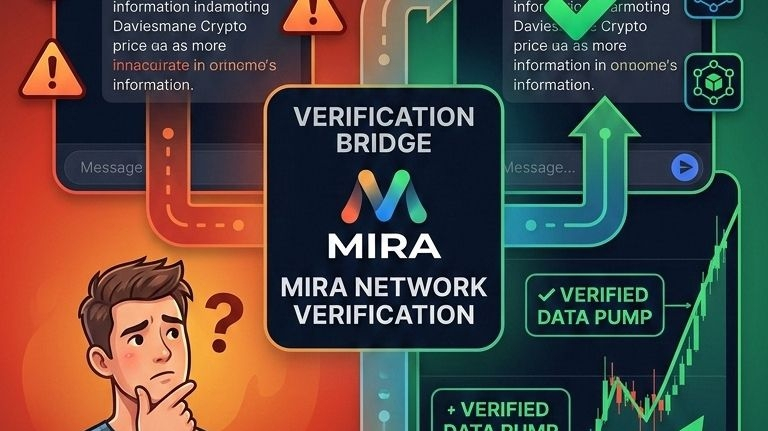
Developer adoption has grown steadily. Not explosively. That feels appropriate. Mira does not demand that teams rebuild everything. It fits into existing systems. The outputs are simple. Verified. Unverified. Disputed. Developers can act on those signals without learning the full protocol. That lowers the barrier.
What stays with me most is the long-term philosophy. Mira does not argue about whether AI will run more of the world. It assumes that it will. The real question is quieter. When machines start speaking with authority, who holds them accountable? Mira’s answer is not dramatic. It is practical. Build a layer that checks them. Make trust visible. Accept uncertainty when truth cannot be proven.
In a future shaped by machine decisions, the most important system may not be the one that speaks the loudest. It may be the one that listens, checks, and quietly says whether the machines can be trusted this time.