
The Meeting Point of AI and Blockchain
Artificial intelligence and blockchain are two of the most transformative technologies of our generation. AI brings speed, automation, and data-driven insights. Blockchain delivers transparency, decentralization, and verifiable trust.
For years, these innovations developed on parallel tracks. Now, they are beginning to intersect in meaningful ways. The convergence of AI and crypto is shaping what many consider the next phase of Web3 evolution.
Imagine AI as the brain and blockchain as the memory system. One thinks and analyzes, while the other records and verifies. When combined correctly, they can complement each other’s strengths and reduce each other’s weaknesses.
This is where Mira Network enters the conversation, positioning itself within the infrastructure layer that connects intelligent systems with decentralized verification.
Why AI Alone Is Not Enough
AI systems are impressive, but they are not flawless. They can generate useful insights, automate workflows, and interpret complex data. However, they can also produce hallucinations, biased outputs, or overconfident errors.
Think of AI like a brilliant student who sometimes guesses when unsure. The answer may sound polished, but it is not always accurate. In low-stakes environments, that might be acceptable. In financial or governance contexts, it becomes risky.
Web3 ecosystems require strong reliability standards. Decentralized applications often operate autonomously, and inaccurate data can create ripple effects across protocols and communities.
Without verification, AI remains powerful yet uncertain. The future of Web3 demands systems that combine intelligence with accountability.
How Mira Network Connects Intelligence with Consensus
Mira Network focuses on transforming AI outputs into verifiable information through decentralized validation. Instead of accepting a single AI response as final, the system breaks that response into structured claims.
For example, if an AI generates a market analysis, Mira can divide it into smaller statements. Each statement becomes a claim that independent validators can assess. This structured process allows accuracy to be evaluated piece by piece.
These validators participate in a blockchain-based consensus mechanism. When agreement is reached across the network, the claim gains credibility. This reduces reliance on one model and distributes trust across multiple participants.
It is similar to having multiple editors review an article before publication. The final version becomes stronger because it passes through collective scrutiny.
By bridging AI with decentralized consensus, Mira Network aligns machine intelligence with Web3 values.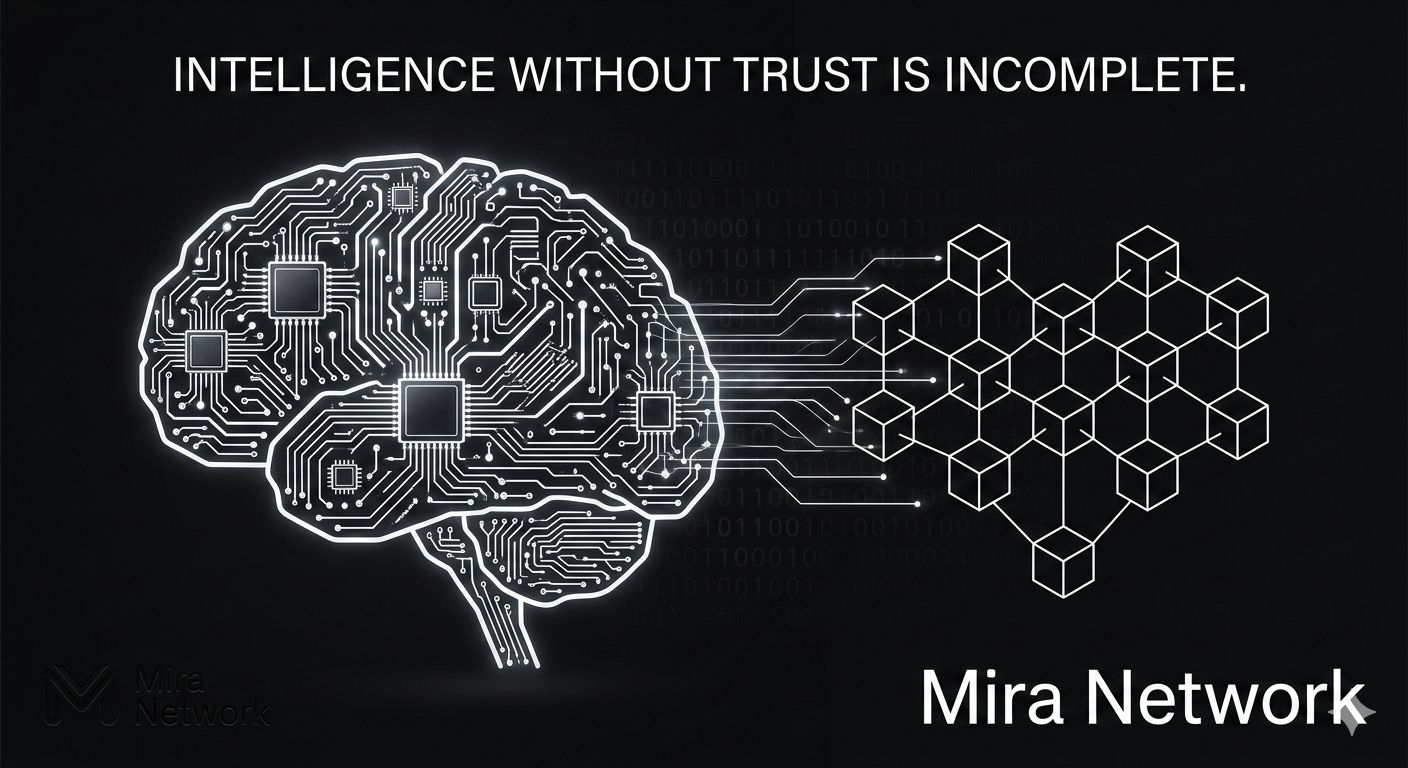
Incentives That Encourage Responsible Behavior
One of blockchain’s core strengths is incentive alignment. Participants are encouraged to behave honestly because the system rewards accurate contributions and discourages manipulation.
Mira Network applies this principle to AI verification. Validators within the network are economically motivated to evaluate claims responsibly. Accurate validation supports network integrity, while dishonest behavior faces consequences within the protocol’s design.
This approach transforms verification from a voluntary action into an economically reinforced mechanism. It is comparable to blockchain validators securing transactions by staking value. The structure itself promotes accountability.
When incentives support truthfulness, reliability becomes a built-in feature rather than an optional goal. This is essential for sustainable AI integration within decentralized ecosystems.
Practical Implications for Web3 Applications
The convergence of AI and crypto extends beyond theory. Decentralized applications increasingly rely on data interpretation, automation, and user-friendly interfaces powered by AI.
For instance, AI tools may summarize governance proposals, analyze on-chain metrics, or assist users in navigating decentralized platforms. In each case, accuracy matters. Verified outputs help prevent misunderstandings and reduce systemic risk.
Mira Network’s model can serve as a verification layer beneath these AI-driven features. By ensuring claims are validated before influencing decisions, the system supports more resilient infrastructure.
Consider it like installing a quality-control checkpoint in a factory. The products may look polished, but inspection ensures they meet standards before reaching the public.
This added layer of accountability strengthens trust without slowing innovation.
A Foundation for Autonomous Digital Systems
As Web3 evolves, autonomous agents and AI-driven tools are expected to play larger roles. These systems may manage data flows, automate interactions, or support decentralized decision-making processes.
Autonomy increases efficiency, but it also increases responsibility. If systems operate with minimal human intervention, their outputs must be reliable. Verification becomes even more critical in such environments.
Mira Network contributes to this foundation by embedding decentralized validation into AI workflows. Instead of relying solely on a single source of intelligence, the network distributes evaluation across independent participants.
This structure reduces single points of failure and aligns well with the decentralized philosophy of Web3. It ensures that intelligence is not only fast but also accountable.
When AI and blockchain cooperate, the result is not just smarter systems but more transparent ones.
Building Toward the Next Web3 Era
The next era of Web3 will likely be defined by deeper integration between intelligent automation and decentralized trust mechanisms. AI can interpret massive datasets in seconds. Blockchain can verify information without centralized oversight.
Together, they create a framework where insight and integrity coexist. Mira Network represents one approach to making that integration practical and scalable.
It is important to remain realistic and responsible. Technological progress does not eliminate all risks, and no system guarantees perfect outcomes. However, combining decentralized verification with AI outputs significantly improves reliability standards.
For communities exploring the AI and crypto convergence, infrastructure that prioritizes transparency and validation becomes essential. Trust grows when processes are open, incentives are aligned, and information is verifiable.
The future of Web3 will not be built on speed alone; it will be built on systems that prove their integrity through design.
When intelligence is validated by decentralized consensus, innovation gains stability, and a stronger, more confident Web3 ecosystem can continue to evolve.