

If you have spent enough time in crypto you start to notice a pattern. The strongest networks are not always the flashiest ones. They are the ones where incentives quietly push everyone in the right direction. Security is rarely just about encryption or consensus algorithms. It is about how people inside the system are motivated to behave.
That is where Mira Network stands out. Its Hybrid Incentive Mechanism is built around a simple idea. Reward useful behavior consistently and discourage weak performance before it becomes a real threat. It sounds obvious. In practice it is not.
Most blockchain networks rely heavily on traditional Proof of Stake. Validators lock tokens. They process transactions. If they act maliciously they risk losing part of their stake. This model has worked reasonably well across the industry. But it has limits. It mainly reacts after something goes wrong. It does not always push validators to operate at their best every single day.
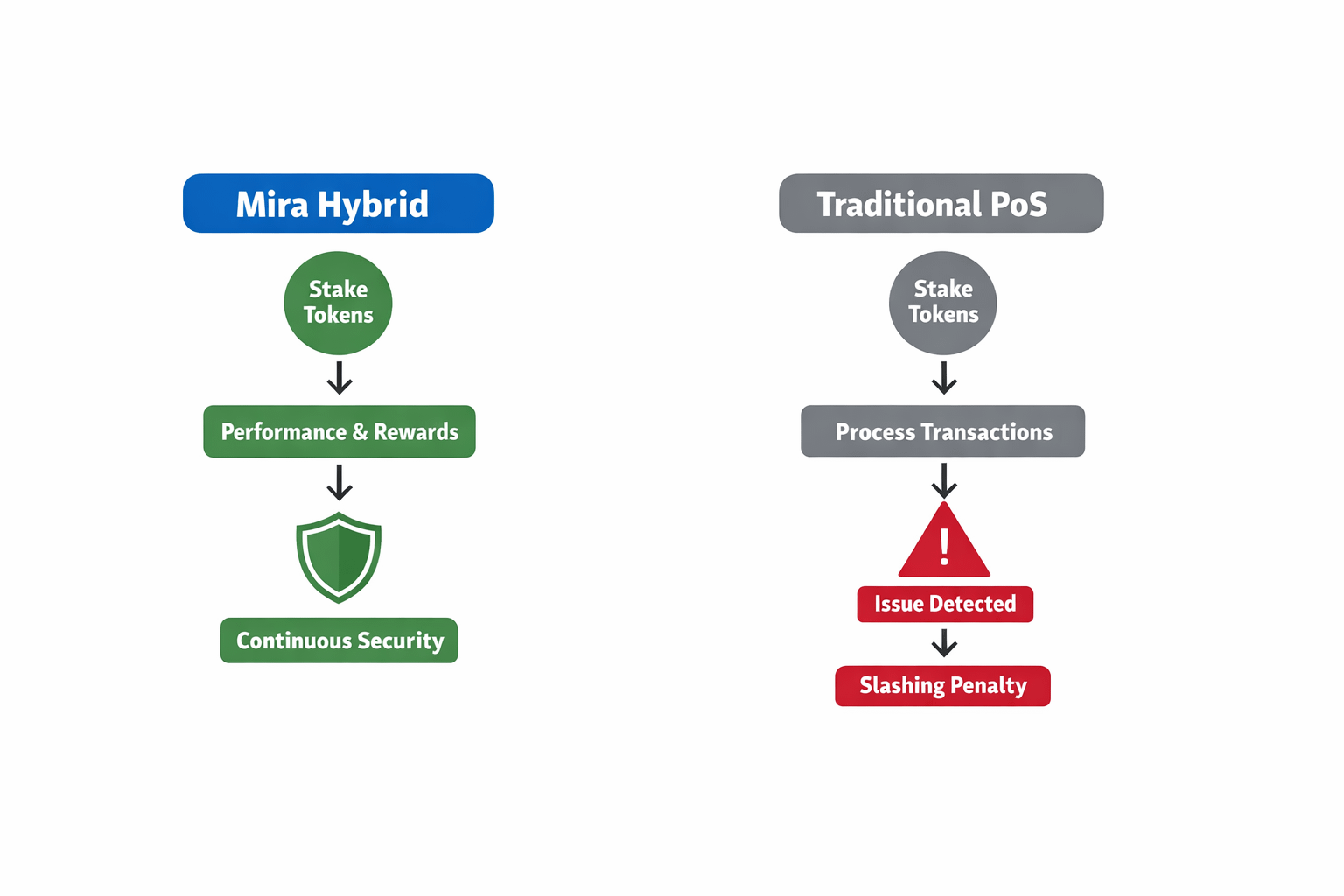
Mira takes a more balanced route. Staking still matters. Economic commitment still plays a role. But rewards are also tied to measurable performance. Things like uptime responsiveness and reliability are part of the equation. Validators are not just asked to show up. They are expected to perform.
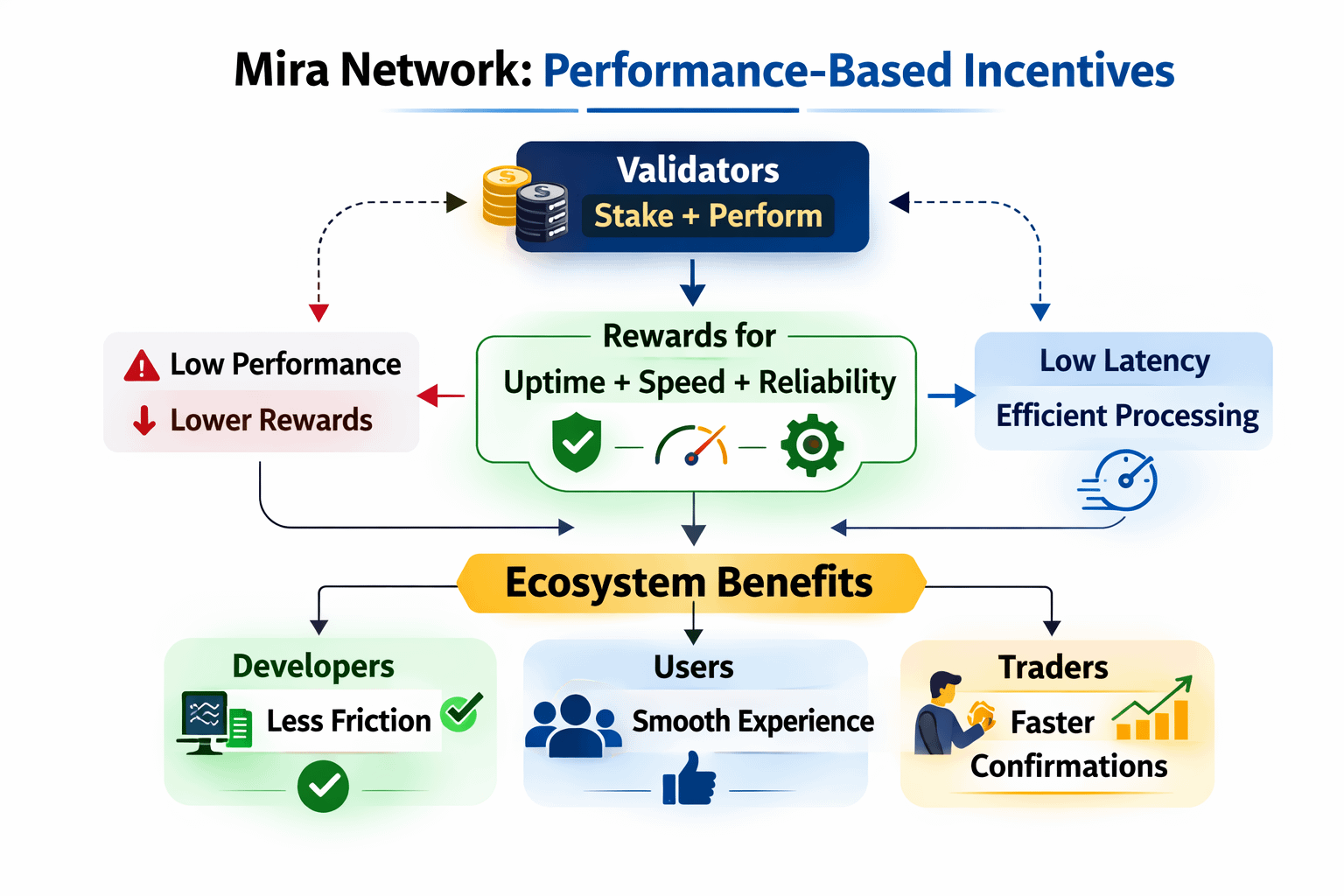
In simple terms security becomes an ongoing responsibility rather than a one time financial pledge. If a validator consistently keeps the network stable and fast it earns more. If performance slips rewards reflect that. This creates a steady pressure toward operational excellence.
From a developer’s perspective this matters more than people realize. One of the biggest frustrations when building on chain is uncertainty at the base layer. If validators are inconsistent or governance is messy developers end up writing extra safeguards into their applications. That slows everything down. It increases costs. It adds friction where none should exist.
By aligning incentives with performance Mira Network reduces that background noise. Builders can focus on shipping products instead of worrying about validator instability. The environment becomes more predictable. That predictability is valuable.
Speed is another piece of the puzzle. In trading and decentralized finance delays are expensive. If validators are motivated to keep latency low and transaction processing efficient the whole ecosystem benefits. Users experience smoother interactions. Traders get quicker confirmations. Developers build applications that feel responsive rather than sluggish.
There is also the issue of centralization. In many networks large validators dominate because rewards scale mainly with stake size. Over time power concentrates. That creates long term risk. Mira’s hybrid structure gives weight to performance not just capital. Smaller operators who maintain high reliability can remain competitive. That helps keep the validator set healthier and more balanced.
From an investor’s standpoint the model changes how security risk is distributed. In some ecosystems network strength rises and falls almost entirely with token price. When markets cool down staking participation can drop and security assumptions weaken. A hybrid model spreads that risk. Security is tied to both economic stake and operational quality. That dual structure can provide more stability during volatile periods.
What I personally find interesting is the focus on reducing development friction. Over the years I have watched promising projects struggle because their tokenomics were too complicated. When incentive structures become hard to understand they often create unintended consequences. Mira’s approach feels more grounded. It does not try to reinvent everything. It refines what already works and adds a performance layer to strengthen it.
Of course no system is immune to pressure. Long term sustainability will depend on how well the reward mechanics adapt to growth and market cycles. Incentives always need fine tuning. But combining staking with measurable performance is a practical step forward.
At its core Mira Network’s Hybrid Incentive Mechanism treats security as something that must be earned continuously. Validators are not rewarded simply for holding tokens. They are rewarded for actively supporting a fast reliable network. That alignment reduces friction for developers strengthens confidence for investors and encourages responsible participation across the ecosystem.
In crypto incentives shape behavior. Behavior shapes outcomes. By designing a system where performance and commitment go hand in hand Mira Network is building security into the daily rhythm of the network rather than leaving it as a passive guarantee.