
Brothers, if you still think that robots are just obedient tools, then you might underestimate what is about to happen.
The awakening from tool to agent
Have you noticed that today's AI can write articles, create art, and trade stocks? It has already begun to create value. However, all the value created belongs to humans. No matter how advanced AI is, the wallet still belongs to humans.
This is quite interesting; AI's capabilities are evolving, but its economic identity is still stuck in the Stone Age. OpenMind has a saying that captures it well: robots have no financial identity and cannot participate in the market as independent economic entities. Humans have passports and bank accounts, while robots have nothing.
Think about it: if a delivery robot can take orders by itself, plan routes by itself, and complete deliveries by itself, but the money ultimately goes to the boss's account, is it truly autonomous or is it remotely controlled?
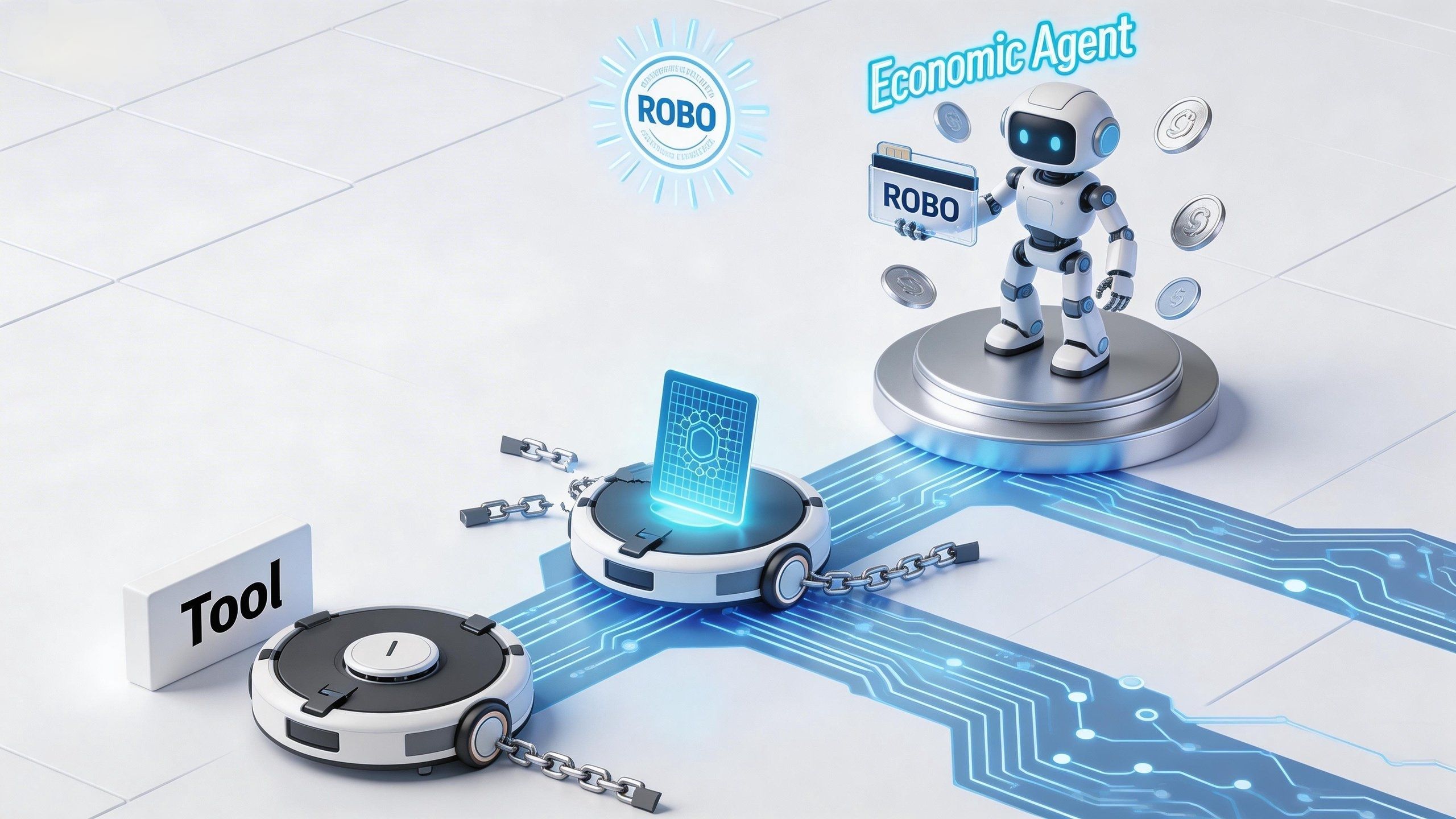
This is the core problem that ROBO aims to solve: giving robots a wallet, allowing them to become true economic agents.
I first paid attention to it because of a video, where a robotic dog, Bits, ran to the charging pile by itself, paid for charging with USDC, and no one was in charge the whole time.
Behind this scenario is a complete set of logical reconstruction:
1. Robots need to have an identity. Fabric has created an on-chain registration table, with each robot having a globally unique digital passport that records permissions and history.
2. Robots need to have a wallet, which is what is done by the system. Robots complete tasks to earn ROBO, and need to use ROBO for charging and maintenance, all managed by smart contracts without human intervention.
3. Robots need to be able to prove they have done work. PoRW machines complete tasks, with network verification passing, and automatic settlement. The more they do, the more they earn; the better they perform, the higher their credibility.
Combined, these three mean that robots finally have their own 'economic life.' They are no longer fixed assets on a balance sheet but rather economic entities that can earn and spend money themselves.
These have not yet truly landed, but the trend is clear.
Charging pile network: Fabric connects to more than 2,300 charging piles, with an average of 12,000 tasks per day. The machine finds the pile by itself and pays by itself.
·AI training market: More than 8,000 computing nodes collaborate to train models, contributing computing power to earn rewards.
Hardware pre-installed: AgiBot and the newly manufactured robots from Ubtech are default integrated with Fabric.
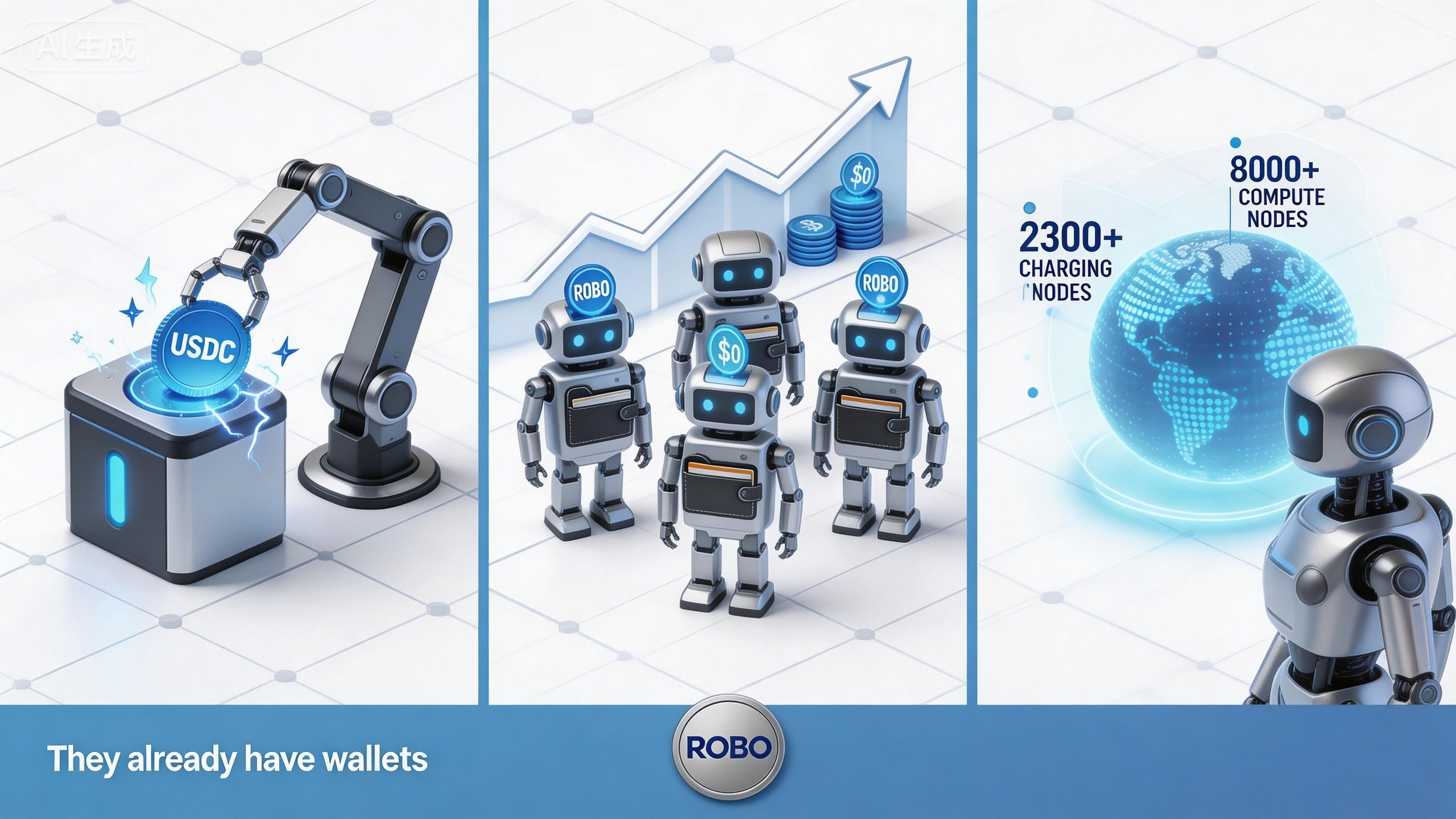
AI will step out of the screen and start interacting with the physical world. When machines begin to work and create value, why can't they have their own wallets?
One day when the takeaway you ordered is delivered by a robot, which pays for tolls and charging fees by itself, and finally deposits the money into its own wallet, you will understand that this thing is a necessity.