
I have seen this problem before in markets, in software, and in people. If you pay for noise, you get noise. If you reward bluffing, you get bluffers. AI is drifting into that same trap. Most systems get paid for output volume, not output truth. So they learn the oldest idea in the book: sound confident, move fast, let the user carry the risk. That is why $MIRA caught my attention.
Not because it promises some clean sci-fi future. Not because it wraps itself in shiny AI talk. I looked closer because Mira starts from an ugly but honest Observation: if machine output can be wrong, then trust me is not Infrastructure. It is a liability. Mira’s answer is to turn verification into a market, then rig that market so lying tends to cost more than telling the truth.
In its whitepaper, Mira describes a network that breaks content into verifiable claims, sends those claims to independent verifier nodes, and uses a hybrid Proof of Work and Proof of Stake design so node operators are rewarded for honest inference and punished for bad faith or lazy behavior. That is the part that matters. The economics are doing the moral work here, not slogans.
I like that framing because it feels closer to Reality. In crypto, people talk about honesty like it is a culture issue. It is not. It is an incentive issue. You can ask people to behave. Fine. Good luck. Or you can build a system where bad behavior burns money. That tends to get attention.
Think of it like an airport baggage screen. You do not trust one sleepy worker with one quick glance. You create a process. Bags get checked, flagged, re-checked, and the staff know mistakes have a cost. Not because the staff are saints. Because the system assumes human weakness and prices around it. Mira is trying to do something similar for AI output. It takes a blob of text, breaks it into small claims, and asks a network of models to verify those claims one by one. That makes the output less like a speech and more like an exam paper with answer boxes. Crude? A bit. Useful? Yes. If you want reliable machine output, you need the claim level view. Otherwise you are grading vibes.
For my think the hybrid model gets interesting. In old-school Proof-of-Work, miners burn energy to solve puzzles. In Mira’s, the “work” is not useless hashing. The work is inference. Real verification work. Nodes have to run models and produce answers on claims. But Mira also admits a sharp problem: if a verifier is just answering multiple-choice style questions, random guessing is not impossible. In a binary setup, a blind guess lands right 50% of the time. With four options, 25%. That is way too high if rewards are on the table. A dishonest node may decide that real inference is expensive and guessing is cheap. That is not a side issue. That is the whole attack surface.
So Mira adds Proof-of-Stake to make that shortcut costly. To participate, nodes must put value at risk. If they keep drifting away from consensus, or show patterns that look like random responses instead of actual inference, their stake can be slashed. That changes the math. Guessing stops being a cute efficiency hack and starts looking like a bad trade. You save on compute, sure, but you expose capital. Once you do that, the honest path can become the rational path.
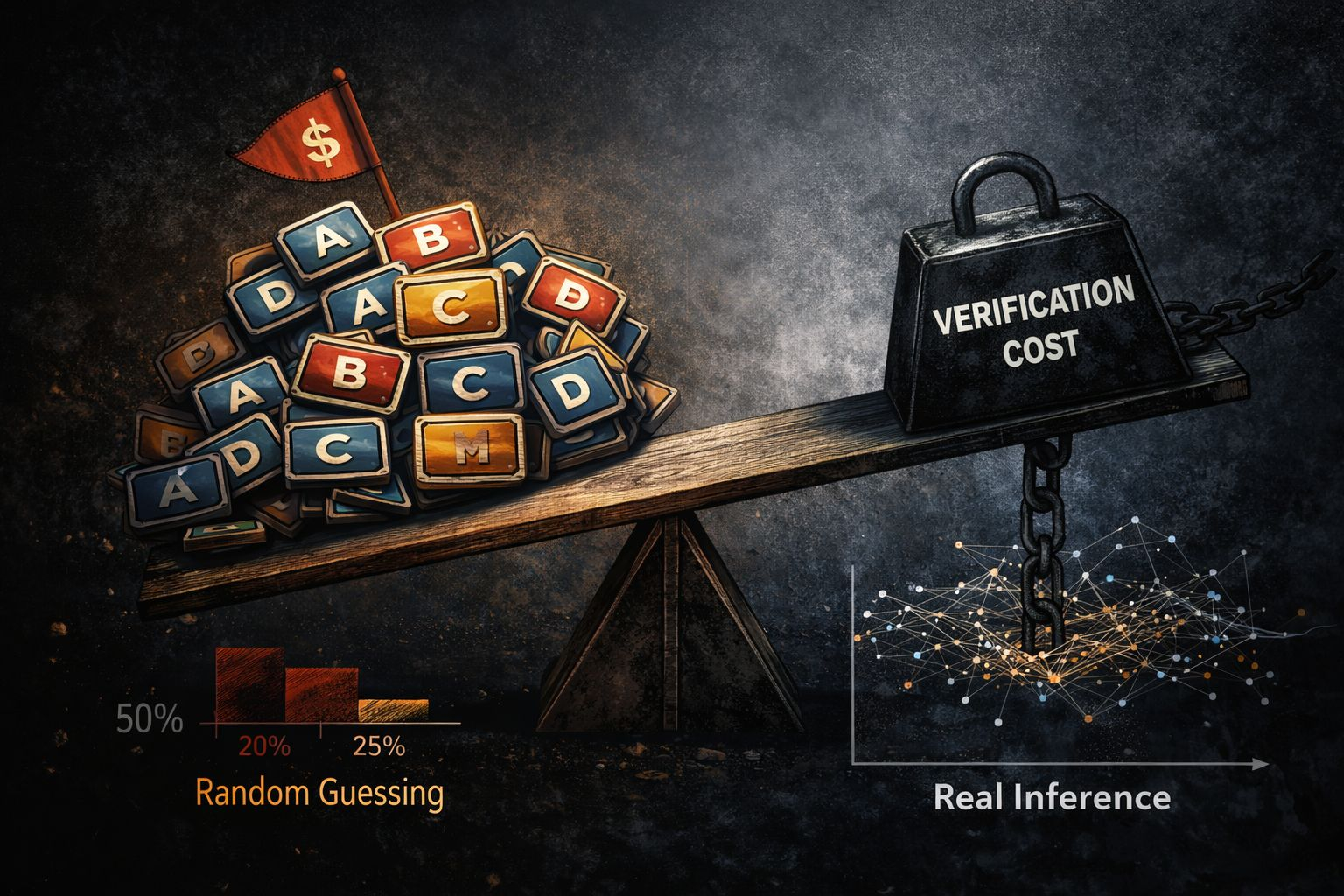
I think people miss this all the time in crypto analysis. They hear security and imagine code walls. But many networks are really secured by behavior shaping. You are not building a prison. You are building a casino where cheating gives you negative expected value. Mira says that directly, in effect: staking plus slashing is there so random response strategies become economically irrational. That is the core thesis, and it is much stronger than the usual AI trust story. It does not ask operators to care about truth in some abstract way. It asks them to care about their balance sheet.
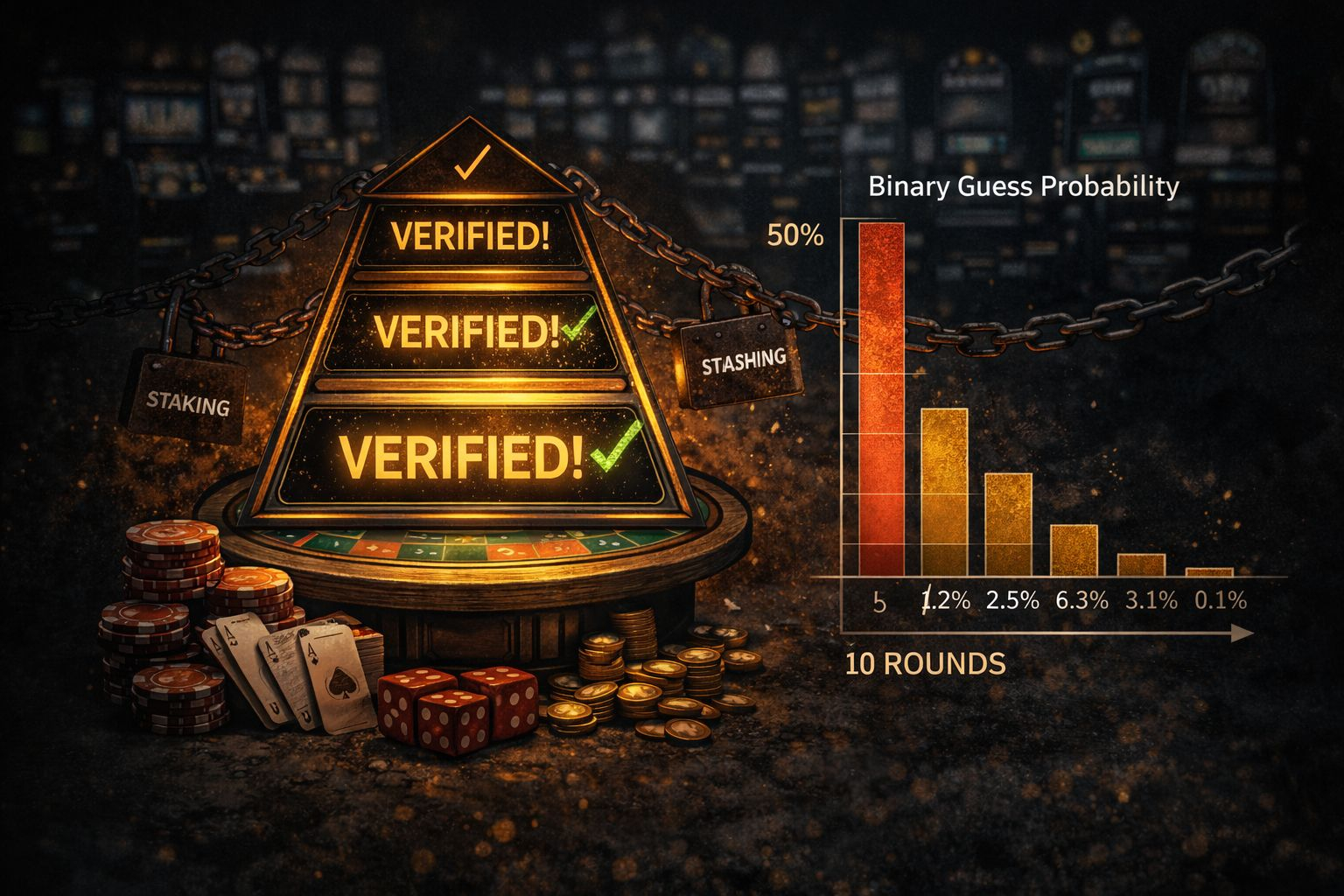
What I find more convincing is that the paper does not stop at the simple case. It walks through how probability drops across repeated checks. A single binary guess might hit 50%, yes. But as verification rounds stack up, the odds fall fast. In the table, ten straight binary guesses drop to below one tenth of one percent. With four answer options, the fall is much steeper. This is important because Mira is not betting on one heroic judgment. It is leaning on repeated, distributed verification. That is a much cleaner design choice than pretending one big model can police itself.
There is another layer here that I think serious readers should notice. Mira is not only fighting random guessing. It is also trying to price out collusion and laziness. Early on, the paper says node operators are carefully vetted. Later, the network moves into a phase with designed duplication, where multiple instances of the same verifier model process the same request. That raises cost, yes, but it also helps detect bad operators. Then, as the network matures, requests get randomly sharded across nodes, which is meant to make collusion harder and more expensive. That progression tells me the team understands that security is not one switch you flip. It is a moving target. Early networks need training wheels. Mature networks need dispersion.
Now, I am not romantic about this. A hybrid PoW/PoS model does not make Mira holy. It gives Mira a framework. Big difference. The hard part is whether the network can keep enough model diversity, enough honest stake, and enough demand for verified output to make the loop hold. The whitepaper itself leans on that loop: customer fees fund rewards, rewards attract operators, operator diversity improves accuracy and security, and stronger security supports more demand. That is solid. In practice, every leg of that stool has to show up. If fees are weak, rewards weaken. If rewards weaken, participation quality may drop. If model diversity narrows, consensus can become less informative. This is where Growth potential talk gets lazy. The mechanism is clever, but clever mechanisms still need economic density.
Still, I respect the direction. Mira is trying to convert truth from a fuzzy virtue into an on-chain cost function. That is a serious move. It treats honesty not as branding, but as an output of incentive design. In markets, that tends to be the only form of honesty that scales.
I also think the idea has a deeper edge. If verified AI output becomes a paid service, then the network is not just checking facts. It is manufacturing trust under budget constraints. That sounds dry. It is not. It means AI reliability stops being a moral debate and starts becoming a pricing problem. How much extra are users willing to pay to reduce false output? How much stake must operators post to make cheating dumb? How much Liquidity sits behind security? Those are not side questions. Those are the product.
I do not trust machines because they sound smart. I trust systems when the cost of lying is higher than the gain from lying. Mira’s hybrid PoW/PoS model aims to build exactly that kind of environment around AI verification. Maybe it works at scale. Maybe it runs into the usual mess of incentives, Volatility, and user demand. We will see. But at least this is the right fight. Not who can make AI talk smoother. Who can make dishonesty expensive. Not Financial Advice.
@Mira - Trust Layer of AI #Mira $MIRA
