

Most early-stage networks worry about user growth, token demand, or market positioning. In Mira’s case, none of those variables may be the most sensitive one. The real structural pressure point lies elsewhere: validator control.
A network can grow rapidly. It can onboard users through mining. It can design a dual-token structure to separate volatility from internal logic. But if validation authority remains concentrated for too long, the entire economic architecture operates on a conditional foundation. Not broken — but conditional.
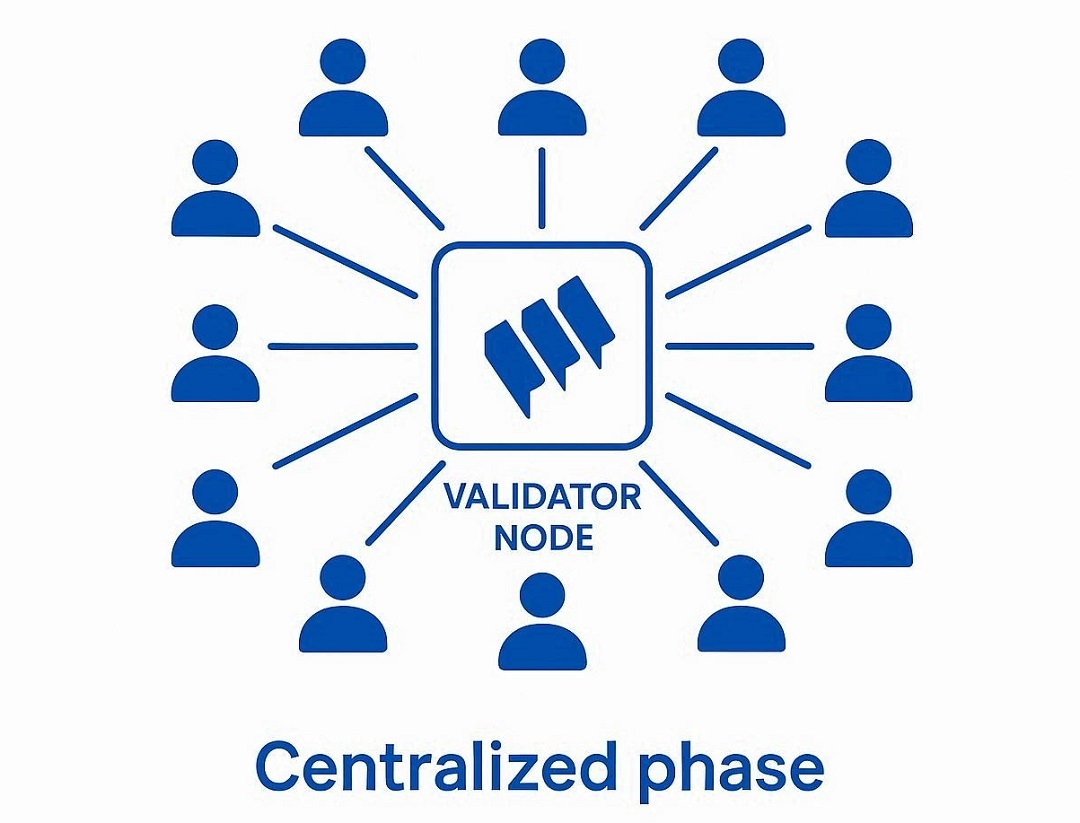
Centralized coordination in early phases is not unusual. It can increase efficiency, accelerate upgrades, and prevent fragmentation while the ecosystem stabilizes. The issue is not its existence. The issue is duration and transparency. Transitional models often fail not because they begin centralized, but because the transition becomes indefinite.
In Mira’s case, the validator roadmap represents more than a technical milestone. It represents a credibility inflection point. Once user acquisition scales and internal economic flows deepen, the validation layer becomes the silent arbiter of network neutrality. Control over validation implies influence over transaction ordering, governance dynamics, and economic rule enforcement.
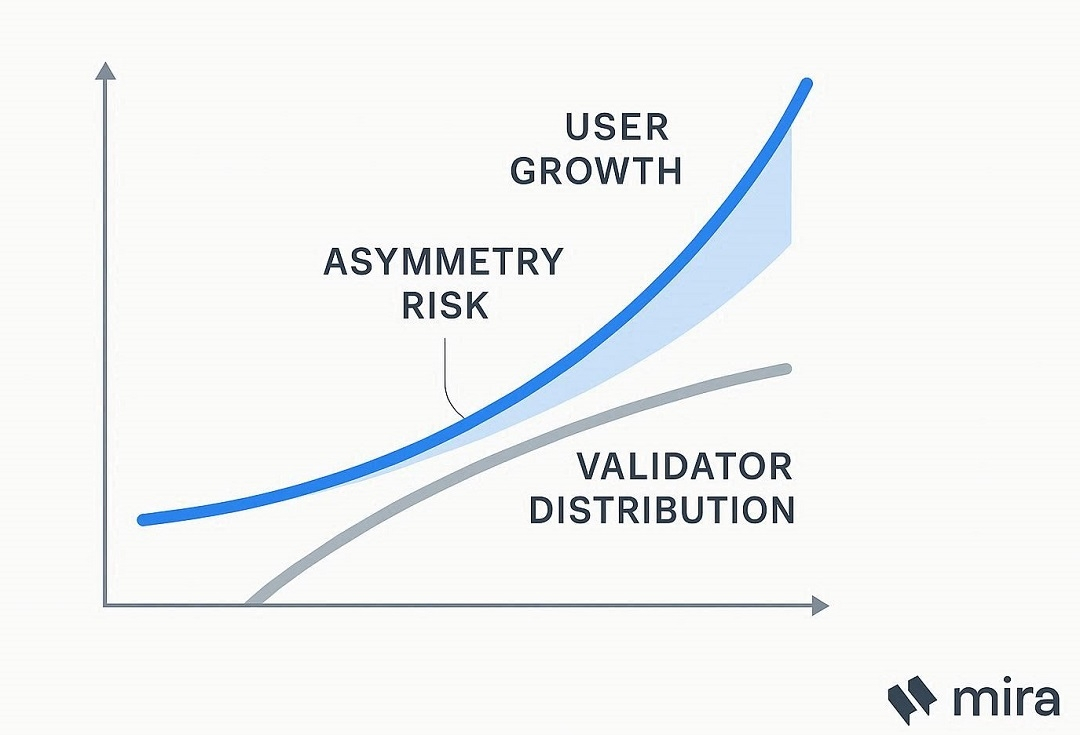
If mining expands faster than validator distribution, asymmetry grows before it shrinks. That imbalance may not generate immediate friction, but it introduces structural sensitivity. Markets tend to price visible metrics like supply and participation. They price governance concentration only when tension surfaces. By then, perception compounds quickly.
The strength of Mira’s architecture will not be measured by how efficiently it operates under coordination. It will be measured by how deliberately and measurably it moves beyond it. A validator transition must be observable, gradual, and structurally aligned with ecosystem growth. Otherwise, what was designed as a phase risks being interpreted as a ceiling.
This is not an argument against early centralization. It is an argument for precision in its evolution. Incentive geometry eventually converges on governance design. And governance design ultimately determines whether growth distributes power — or simply scales influence.
Mira’s most important test may not be how fast it grows. It may be how credibly it decentralizes.
@Mira - Trust Layer of AI $MIRA #Mira
