Picture a room full of people shouting at once, each certain they’re saving the system. That’s how control works in open networks, everyone speaks, few listen. Ideas crash into one another, energy builds without direction. The promise? Full access equals fairness. Reality? Chaos crowds out clarity. Without someone guiding when to speak or pause, talks drag on, frustration grows. Results come not from facts but from who yelled loudest or lasted longest.
Into this space stepped Mira Coin, aiming elsewhere. Not chasing votes shaped only by how many tokens someone held, it built something meant to keep voices in, yet add order. Silence wasn’t the aim. Shielding people from their own swings mattered more.
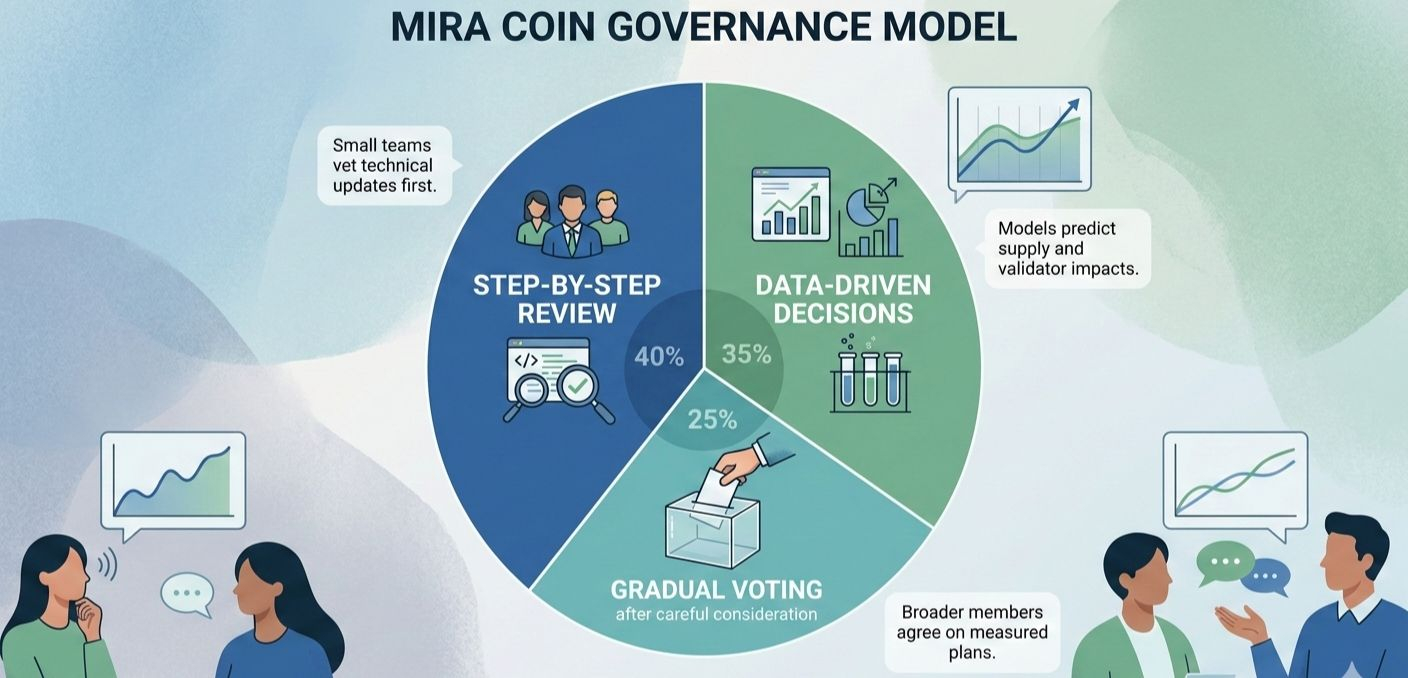
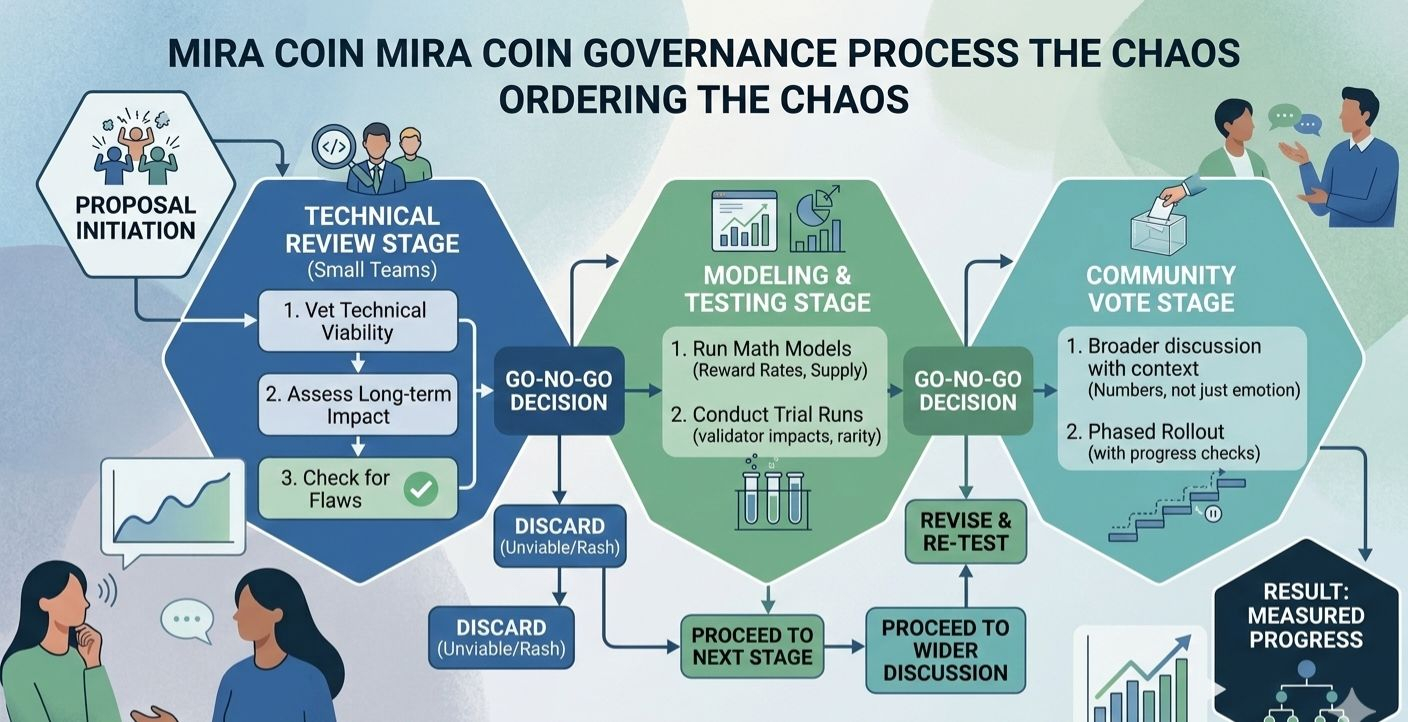
What stands out about Mira is how it handles decisions through stages. Technical updates never go straight to everyone for approval, instead, small teams check them first. These reviewers look at whether an idea works, what could go wrong and how it might play out years later. Once a plan gets past those checks, only then does it reach wider members for agreement. Slowing the process creates extra steps, yet it blocks rash or messy plans from spreading too far.
One choice often leads to another in how money systems evolve. Changes to rewards, user incentives, or holding rules never happen out of thin air. Instead, they pass through tests using math models and trial runs first. Only after such checks do people get a chance to weigh them. That way, discussions grow from numbers about future availability, guesses on human behavior, slow growth patterns, not just sudden mood swings.
That one instance stood out when people started talking about changing the reward rates. Conditions in the market were different now, so a few pushed hard for quick fixes to steady prices. Rather than jumping into a vote, they ran the idea through several models showing possible supply outcomes. What those involved looked at next included impacts on validator rewards, future token rarity, and whether development across apps might slow down or speed up. When the talk finally moved to broader discussion, opinions had already shifted, less emotion, more numbers.
A fresh dispute stirred within governance circles, this time about who gets to become a validator. Opening doors wider meant more people could help protect the system, spreading control further out. Yet some raised concerns: not everyone joining might handle the tech demands well, possibly weakening stability. A stricter bar, meanwhile, tended to boost steady operations, though it often left influence in fewer hands.
A slow shift emerged, shaped by Mira's way of thinking. Not locked to one side, changes rolled out in stages, each followed by pauses to check progress. Numbers showing speed were watched closely. Balance across nodes was measured over time. Input from users found its place as the plan moved forward. Doubt stayed visible, accepted rather than hidden behind certainty.
Here's what stands out when you watch how these governance phases play out, perfection isn’t the goal. What matters is building setups flexible enough to shift without breaking. Stability doesn’t come from fixed rules but from constant adjustment. Openness pulls one way, control tugs another, and progress lives in the stretch between.
Looking at it plainly, Mira’s design hints at having grown past early stages. It acts on the idea that tech choices spread like waves, touching economies, touching lives. When code shifts, what drives people also shifts. Those drivers then alter how folks act. And how they act builds the system’s character over time. Pausing decisions slightly, to weigh wider effects, helps Mira avoid stumbling because of its own moves.
Even so, every way of running things carries some danger. Tiredness around making group choices shows up for real. When systems grow and more ideas pile in, fewer people tend to show up. Eventually, those calling the shots are usually just a handful who never seem to quit. Even if a few people know what they’re doing, it might still look like nobody else is involved. When folks actually show up and take part, trust grows, rules alone aren’t enough to make things feel fair.
Staying active means learning regularly, sharing clear updates, one step at a time. When people see their input changing results, commitment tends to stick around. Should things turn too complex or start looping the same way, interest slips quietly away.
What keeps a decentralized effort alive often comes down to one thing: who decides what. Power moves through choices made by people, not code alone. When disagreements pop up, the way they get settled shapes trust over time. Mira tries something tricky, opening doors wide while keeping some order inside. Perfection? Never promised. Less mess though, that seems possible. People change their minds; plans shift. Instead of fighting that, the setup leans into motion, using it like wind in sails. Progress stumbles when rigid rules take over. This approach waits, watches, then adapts without force.
Only time will tell if Mira's pace holds up. Should adjustments keep coming, thoughtful discussion grow and quick emotional moves fade, then proof might take shape. Not chaos wearing freedom as a mask but something else entirely. A system where everyone speaks, yet choices rise on clear ground instead of loudness. What seems wild at first glance could turn out measured after all.
@Mira - Trust Layer of AI #Mira $MIRA