 It's March 5, 2026, and if you've been following the crypto-AI space even casually, you've probably seen $MIRA popping up more often lately. Not in the screaming-pump way some tokens do, but in steady mentions across Binance Square threads, community chats, and price trackers like CoinMarketCap and CoinGecko. The token's hovering around $0.09–$0.093 today, up a bit in the last 24 hours (some spots showing +5–6%), with solid volume in the $11–15 million range. That's not moonshot territory yet, but for a project that's all about building infrastructure rather than hype, it feels like the early signals of real traction.
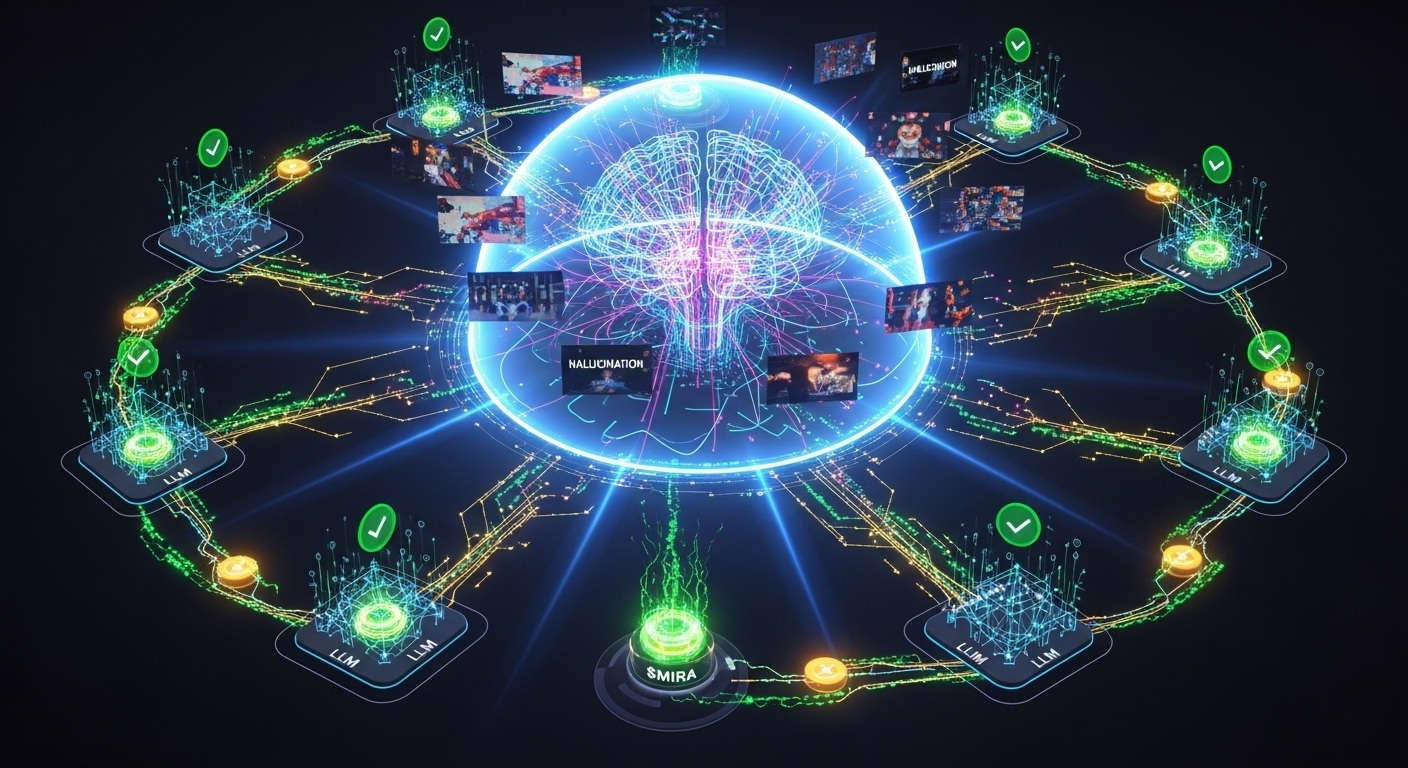
What stands out right now is the ongoing rollout of verification features, especially in their flagship app Klok. From what the community and recent updates describe, Q1 2026 is when the full consensus mechanism starts activating gradually. That means AI responses in Klok aren't just generated anymore—they get broken down into individual claims, run through a network of independent models for checks, and only pass when there's strong agreement. It's a phased thing, so not every query hits full verification yet, but the pieces are coming together. People are sharing screenshots and test results showing how it catches inconsistencies that single models miss, which is exactly the kind of practical proof this space needs.
Season 2 of their community campaign (tied to Kaito AI incentives) is wrapping up soon too, with rewards distribution on the horizon. It's kept engagement high even as prices have been choppy—folks on socials are posting about "Day 80+" streaks from earlier this year, pushing awareness while calling for more transparency on timelines. Patience seems to be the vibe: high conviction in the trust-layer idea, but frustration when broader market pumps leave MIRA lagging. Still, validator participation keeps climbing post-mainnet, and that's strengthening the network's decentralization. More diverse nodes mean deeper checks and harder-to-game consensus.
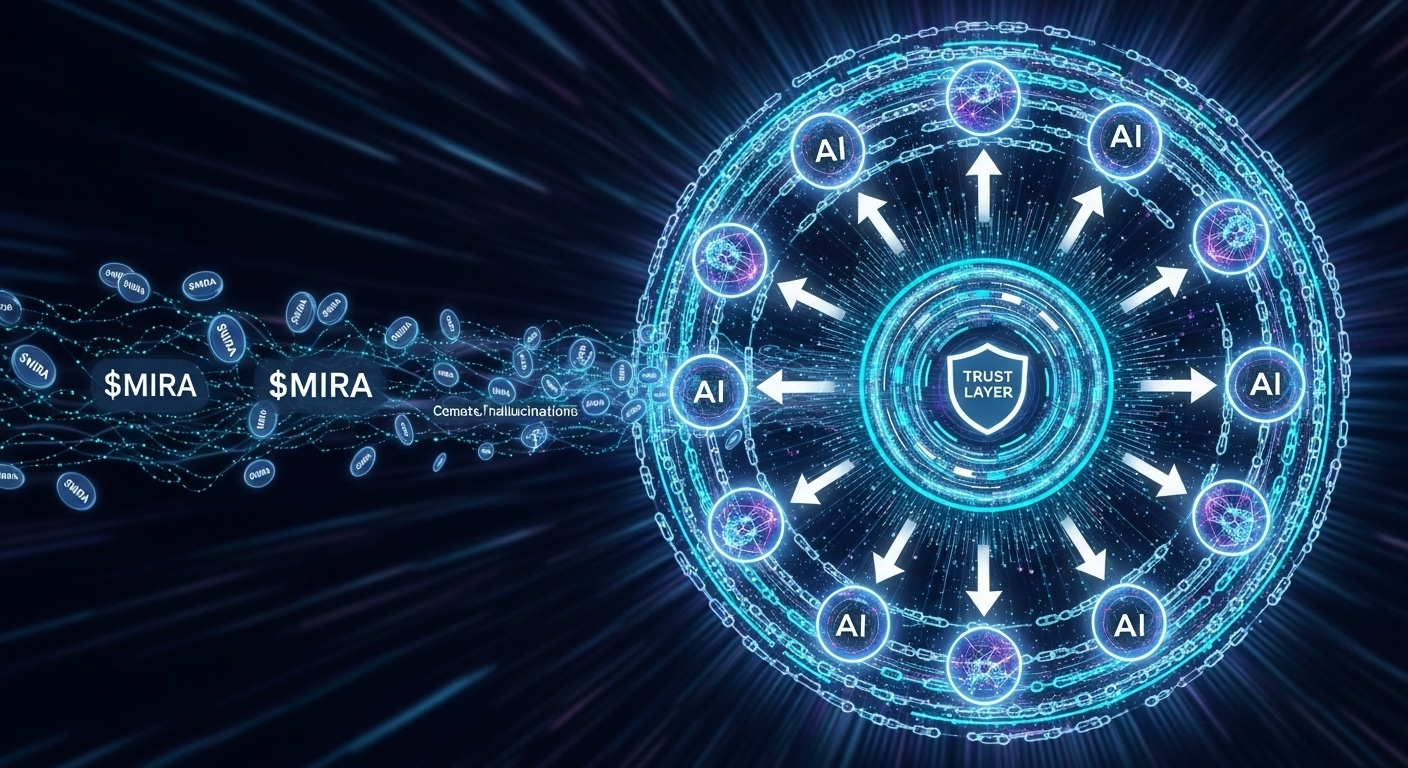
The bigger picture hasn't changed much since late last year, but it's maturing. Mira doesn't try to outsmart the big frontier models—it sits as the layer on top, turning outputs into verifiable claims secured by blockchain. Hallucinations get flagged because multiple perspectives have to align, biases get diluted through diversity of verifiers, and everything's auditable on-chain. For high-stakes stuff like finance bots, compliance tools, or autonomous agents handling real value, this is the missing piece. No more "trust me, bro" from a single black box.
Token utility feels straightforward and aligned: staking for validators (skin in the game to keep them honest), fees for verification, governance votes on upgrades. Rewards come from network activity, and slashing punishes bad behavior. It's classic cryptoeconomic design applied to intelligence verification—proven in other chains, now tuned for AI's specific headaches.
Price-wise, predictions are all over the map (some optimistic ones see $0.20+ by year-end, others more conservative around current levels or slight dips short-term). But the narrative isn't about quick flips; it's about positioning for when agents and robotics explode. If AI keeps fragmenting (which it will), a neutral, decentralized referee becomes invaluable. Recent threads on Binance Square are leaning into that: "quietly building what AI will eventually need," "under-the-radar play for trustworthy systems," stuff like that.
Challenges are real, though. Scaling verification without adding too much latency is tough—users won't wait forever for consensus on simple queries. Keeping true model diversity (avoiding groupthink among verifiers) requires ongoing tweaks to incentives. And adoption hinges on seamless plugs into existing tools—Klok is a start, but broader integrations will tell the story.
From what I'm seeing today, March 2026 feels like the "prove it" phase for Mira. The protocol v2.1 drop late last month cut consensus times noticeably (some claims of 40% faster), validator numbers are up, and ecosystem apps are starting to show verified outputs in the wild. Community's active, not manic—people grinding referrals, mining side things like Lumira (tied to their ecosystem), debating roadmaps in Discord.
If you're into the long game where crypto meets real-world utility, this one's worth watching closely. Not flashy, but foundational. The trust problem in AI isn't going away; it's getting bigger as more systems go autonomous. Projects solving it with decentralized mechanics, like Mira, might end up being the boring-but-essential winners.