
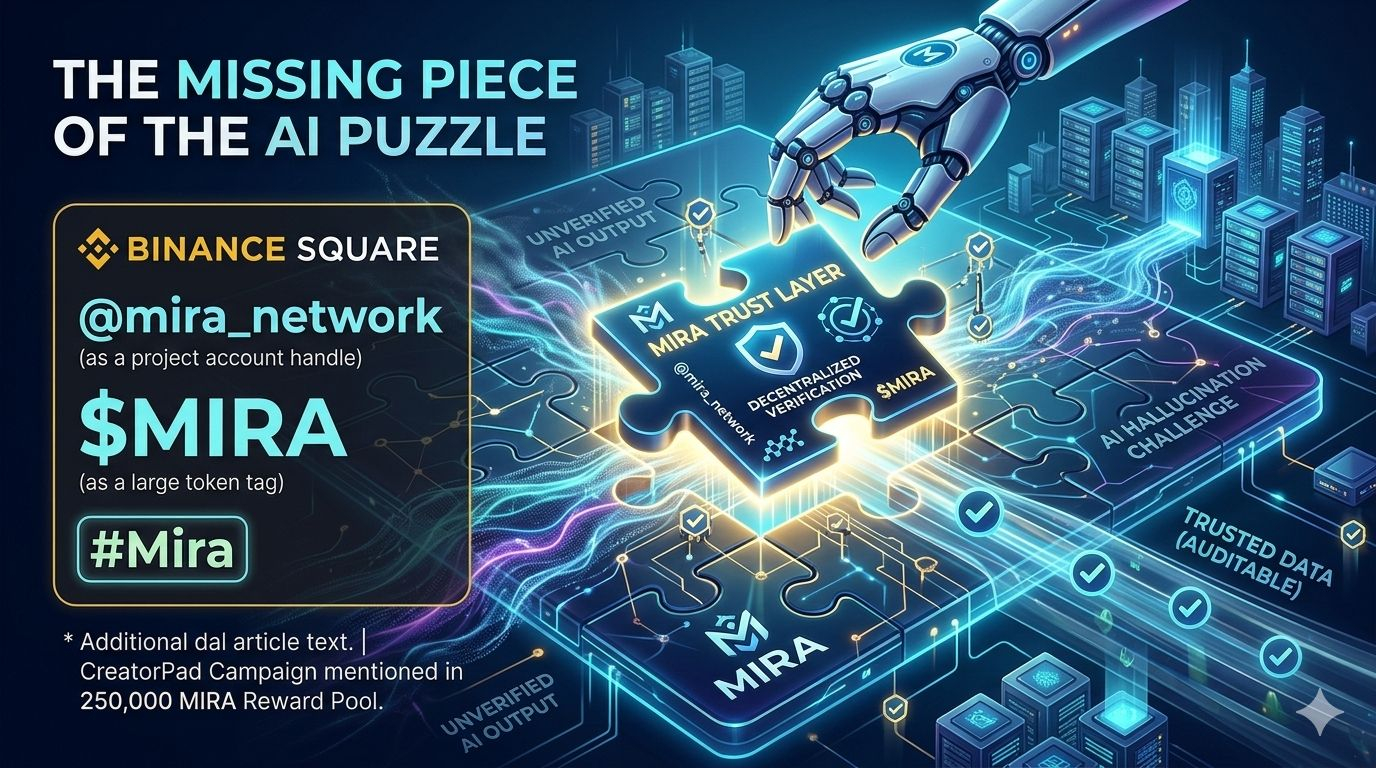
W 2026 roku przekroczyliśmy fazę "wow" sztucznej inteligencji. Nie interesuje nas już tylko to, jak szybko AI może wygenerować odpowiedź; interesuje nas, czy ta odpowiedź jest rzeczywiście prawdziwa. W miarę jak modele AI stają się coraz bardziej złożone, problem "czarnej skrzynki" tylko się nasilił, prowadząc do desperackiej potrzeby przejrzystości. Tutaj dokładnie @mira_network wyznacza granicę.
Budowanie warstwy zaufania
Tradycyjny krajobraz AI opiera się na scentralizowanych obietnicach, ale #Mira zmienia paradygmat w kierunku zdecentralizowanego dowodu. Dzięki wykorzystaniu globalnej sieci walidatorów, protokół zapewnia, że wyniki AI nie są tylko kreatywne — są kryptograficznie weryfikowane. Kiedy mówimy o branżach o wysokiej stawce, takich jak zdecentralizowane finanse czy zautomatyzowane badania prawne, "wystarczająco blisko" to za mało.
Rola $MIRA
Token $MIRA działa jako serce tego ekosystemu. To więcej niż tylko środek wymiany; to mechanizm odpowiedzialności. Walidatorzy są motywowani do utrzymywania najwyższych standardów dokładności, skutecznie tworząc "gospodarkę reputacji" dla inteligencji maszynowej.
Przekształcając wyniki AI w weryfikowalne roszczenia, @mira_network rozwiązuje problem halucynacji, który dręczył branżę przez lata. Wreszcie wkraczamy w erę, w której nie musimy ufać "słowu" LLM — mamy matematykę, aby to potwierdzić.
Podsumowanie
Przyszłość internetu nie jest tylko inteligentna; jest weryfikowalna. W miarę jak rośnie zapotrzebowanie na wiarygodne dane, infrastruktura zapewniana przez #Mira staje się podstawą dla następnej generacji dApp-ów. Jeśli śledzisz zbieżność AI i Blockchain, $MIRA znajduje się w absolutnym centrum tej kolizji.