
I first ran into Mira Network on a tired late night, the kind of night when reading one more whitepaper feels like testing your own tolerance. My first thought was, here we go again, another AI project, but then I paused because they went straight at a very real discomfort of this era: an output that sounds plausible is not the same thing as being correct.
Markets love the model race. Everyone has a reason to race, because pretty benchmarks are easy to tell, easy to fundraise with, easy to turn into the illusion of progress. But if you’ve lived through a few cycles, you start to see how quickly that kind of edge gets commoditized. Today you’re ahead, tomorrow someone catches up, next week there’s a new model. Mira Network is betting on a less glamorous battlefield: verification, turning “trust” into “verify for yourself,” and that feels almost unsettlingly familiar, because it’s crypto’s original instinct.
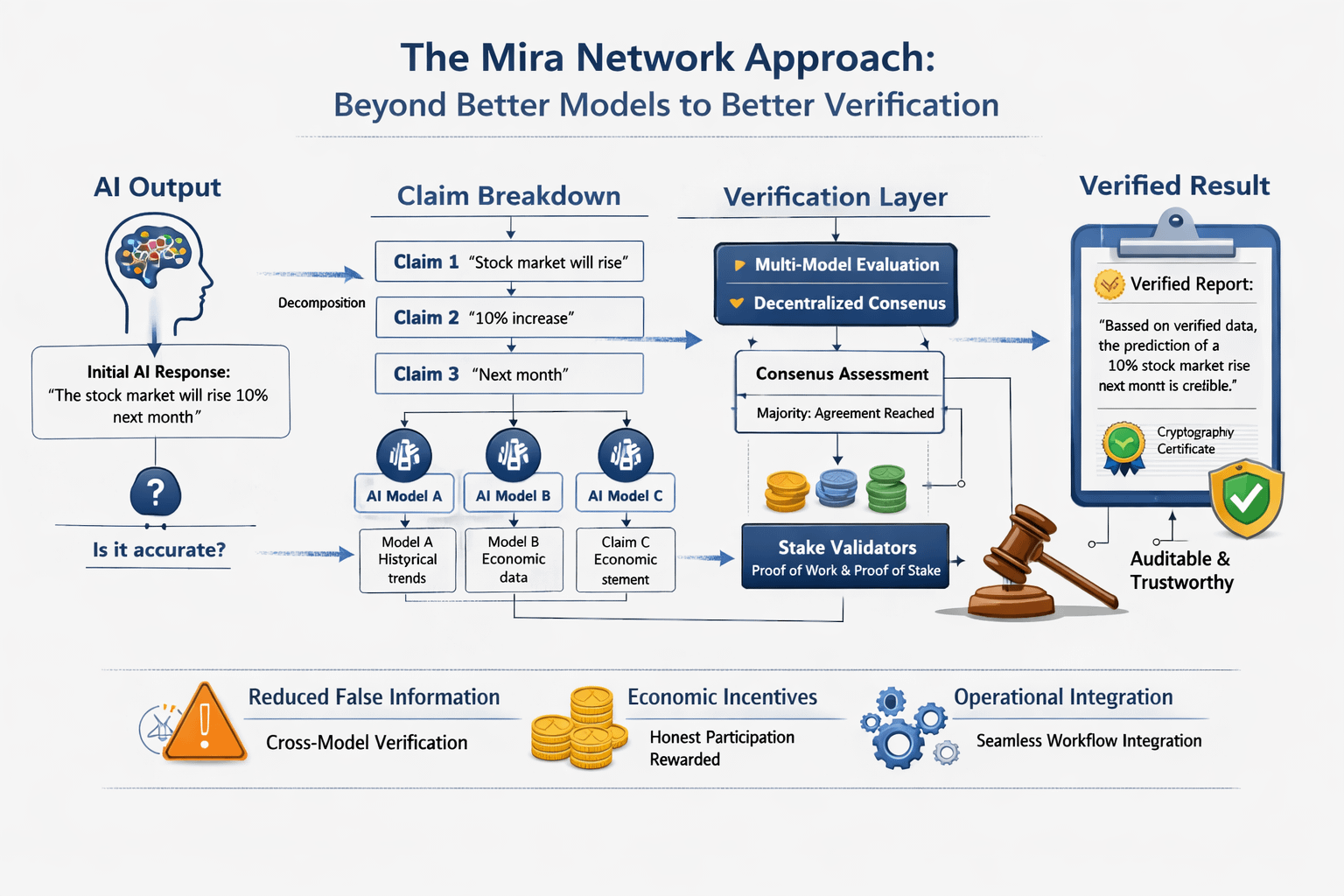
What stands out most to me about Mira Network is how they try to break a complex output into smaller propositions that can be independently verified. In their framing, content is decomposed into “claims,” then multiple models check those claims, the results are aggregated under a consensus threshold the user can choose, and the system returns a cryptographic certificate recording the verification outcome. Honestly, this is the part many AI projects wave away with a few slogans, while they’re attempting to push it into a process that can be measured, audited, and argued over.
The irony is that AI’s smoothness is exactly what makes me wary. A response that’s polished, structured, written in a “professional” tone can fool even people who are trained to doubt. I’ve seen product decisions drift off course because of a wrong summary. I’ve seen teams spend weeks cleaning up the fallout from a fabricated assumption everyone treated like a fact. Mira Network aims at that moment right before an accident happens. Before an output enters a system, before it becomes the input to a decision, it should pass through a verification mechanism rigid enough to resist the seduction of “it sounds right.”
But verification in AI isn’t like verifying a simple transaction. It’s closer to interviewing multiple witnesses about the same event and then trying to find a convergence point without falling into collective bias. Mira Network approaches that with “multi model” checking and “decentralized consensus,” meaning they don’t want a single entity defining truth, because even the choice of model can create systemic skew. I think they’re trying to turn diversity into a security property. Cross checking can reduce hallucinations, and multi perspective participation can soften bias.
What makes me slightly less cynical, though not fully convinced, is the economic layer they attach to the system. If verification is just “everyone gives opinions,” it collapses into noise. Their materials describe a mechanism combining Proof of Work and Proof of Stake, where node operators stake, and if their responses deviate from consensus in ways that look like dishonesty or careless guessing, they can be slashed. It’s funny how the AI problem loops back to crypto’s oldest question: how do you make lying expensive, and make being right worth the effort.
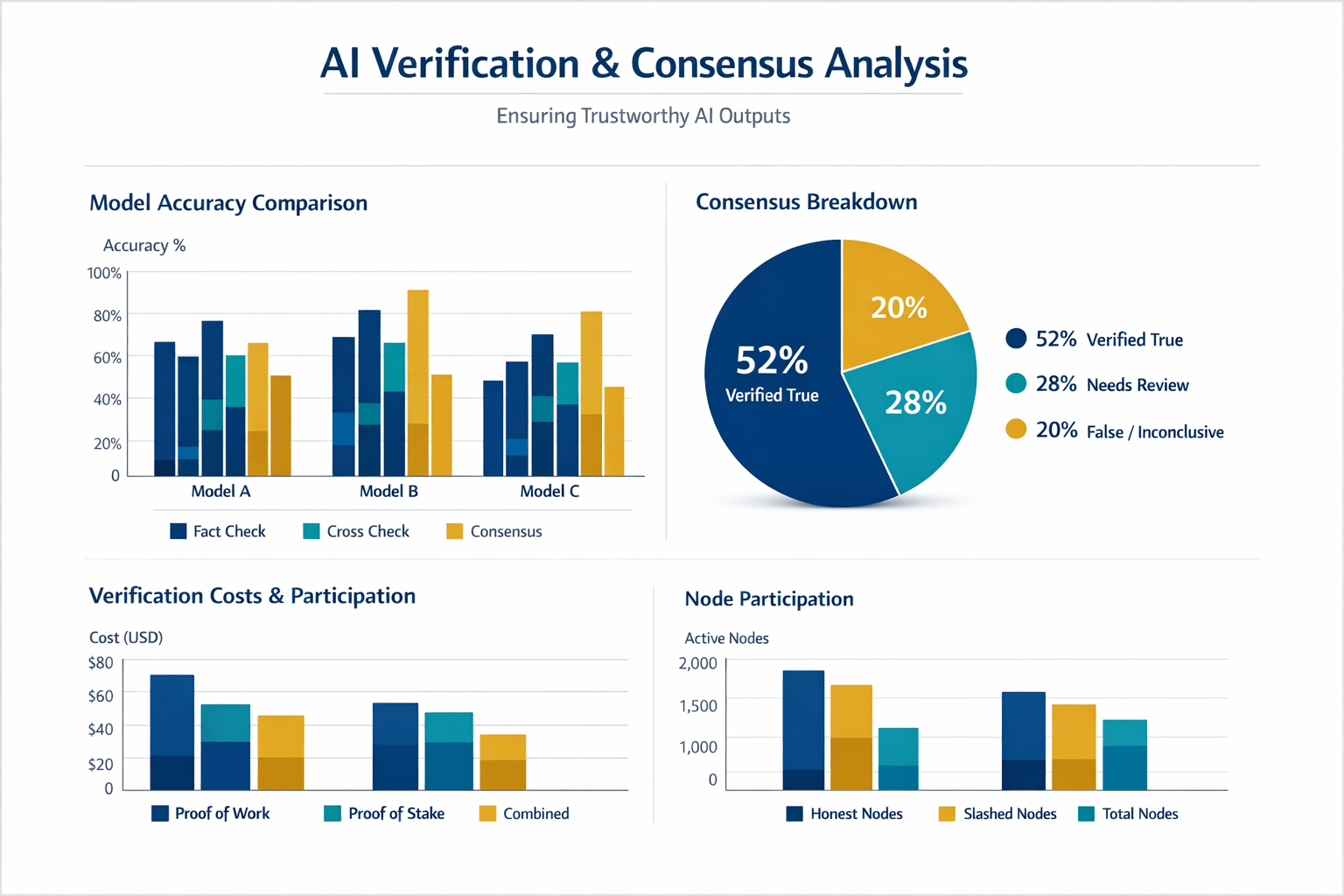
Of course, there’s a wide gap between design and reality. Mira Network will have to answer three things the market never forgives: speed, cost, and integration. If verification is slow, AI products will skip it. If it’s expensive, enterprises will build it in house. If it’s hard to use, developers will walk away. Here, the smartest move may be to plug into the right pain point, like LLMOps, where reducing errors has obvious value, and where a verification certificate can become an artifact in the pipeline, like logs, tests, and monitoring. When they talk about verifying both outputs and actions step by step, I read that as an ambition to make verification an operational habit, not a decorative check box.
After years of both investing and building, the lesson I keep is fairly cold: the future rarely belongs to whoever tells the best story, it often belongs to whoever makes risk manageable. Mira Network makes me think the real competition in AI could shift, from who produces the most impressive answers to who produces answers that can survive scrutiny, regulation, lawsuits, incidents, and those brutal market days when people only trust what comes with evidence. And if “better verification” really becomes the lasting advantage, what would you rather anchor your trust in, the model itself, or the mechanism that prevents the model from speaking carelessly in the first place.