
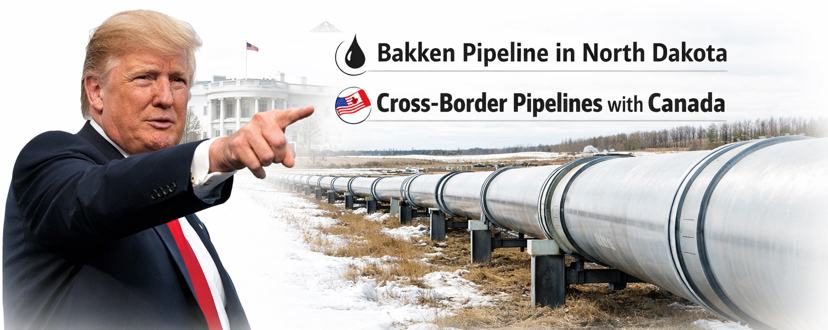

I think this move matters less as a one-day headline and more as a policy signal.U.S. President Donald Trump signed several presidential permits on April 15, 2026, aimed at supporting oil and petroleum transport across the U.S.-Canada border. The most notable new approval gives Bakken Pipeline Company permission to construct, connect, operate, and maintain new pipeline border facilities in Burke County, North Dakota, near Portal. The White House also issued permits allowing maintenance and continued operation of existing cross-border pipeline facilities in North Dakota and in St. Clair County, Michigan.$DOT 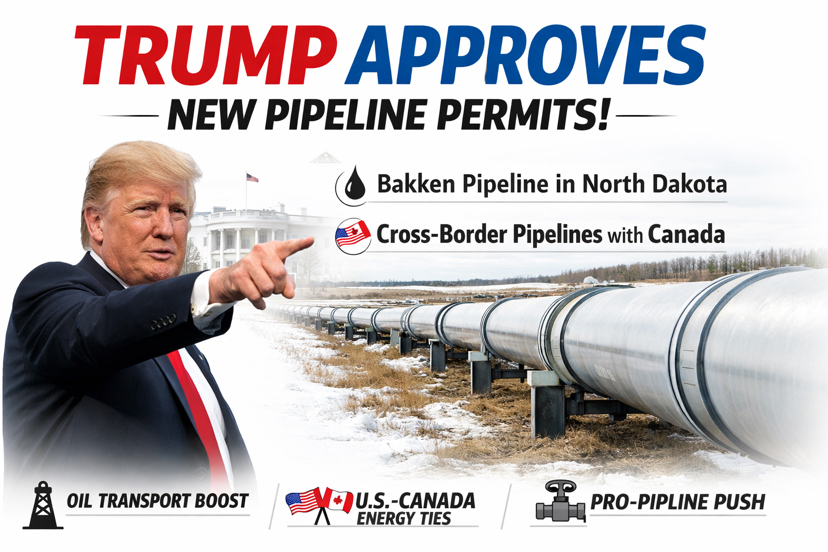
What stands out is that this is not just about one pipeline segment. The White House published a cluster of permits on the same day covering Bakken and multiple Enbridge-related border facilities, suggesting the administration is trying to make cross-border energy infrastructure easier to operate and expand, especially for crude oil and refined petroleum flows between the U.S. and Canada.
The Burke County permit is especially important because it covers new construction, not only upkeep. According to the White House text, the authorized border facilities include a 24-inch diameter pipeline extending from the international boundary near Portal, North Dakota, to the first mainline shut-off valve or pumping station inside the United States, less than one mile from the border. That makes this a concrete infrastructure expansion at a time when Trump is already signaling a broader pro-pipeline, pro-fossil-fuel stance.
The Michigan permit is also notable because St. Clair County is a key border crossing point for crude oil and petroleum products moving between the two countries. The White House language explicitly says the facilities can transport a wide range of products, including crude oil, gasoline, diesel, kerosene, jet fuel, natural gas liquids, and naphtha. In other words, this is about preserving and strengthening a major energy corridor, not just adding symbolic support for domestic drilling.$YGG
The bigger political takeaway is simple: Trump is using presidential permitting authority to accelerate North American energy connectivity. This fits a broader pattern from his administration, including support for faster approval timelines and interest in reviving additional cross-border oil infrastructure such as parts of Keystone XL.
From a market and policy perspective, the message is clear. Washington wants fewer bottlenecks at the border, more reliable crude and refined product movement, and a stronger U.S.-Canada energy link. Supporters will frame that as energy security and infrastructure pragmatism. Critics will likely argue it deepens long-term fossil fuel dependence and increases environmental and regulatory risk around border pipeline projects. That tension is not going away.
Cleaner social-post version:Trump’s latest pipeline permits look like more than routine paperwork.On April 15, 2026, the White House approved a new Bakken Pipeline border facility in Burke County, North Dakota, while also authorizing continued operation and maintenance of existing cross-border pipelines in North Dakota and Michigan. The permits cover crude oil and petroleum products moving between the U.S. and Canada.
The important part is the signal: this administration is clearly leaning into cross-border oil infrastructure again. One permit supports new construction near Portal, North Dakota, while others reinforce existing energy corridors tied to Enbridge facilities.#Write2Earn
That suggests Trump is not just talking about energy dominance. He is using presidential permit authority to make U.S.-Canada oil transport easier to maintain and potentially expand.#TrendingTopic
Supporters will call it energy security. Critics will call it another step deeper into long-lived fossil fuel dependence.
Either way, the policy direction is getting harder to miss.