
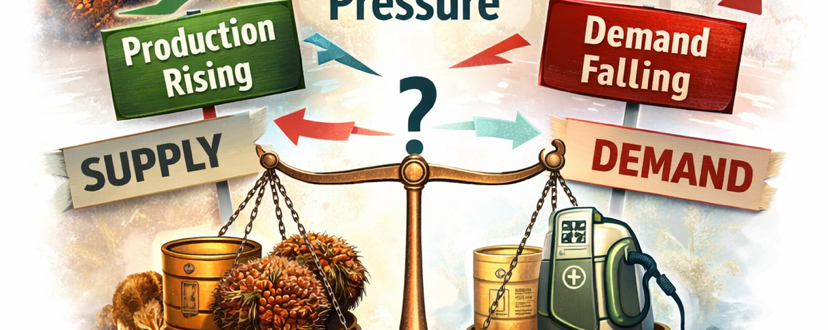

Palm oil is moving into a more fragile phase. Production is picking up seasonally, but demand is not rising with it. That mismatch is creating a market standoff: supply is building, buying interest is weakening, and prices are struggling to find a clear direction.$ID
The core problem is simple. When production increases during a seasonal recovery, the market usually needs either stronger export demand or a clear policy catalyst to absorb the extra volume. Right now, neither side looks strong enough. Demand has softened, which means the market is not fully digesting the additional output. That keeps pressure on sentiment even if prices have not fully broken down yet.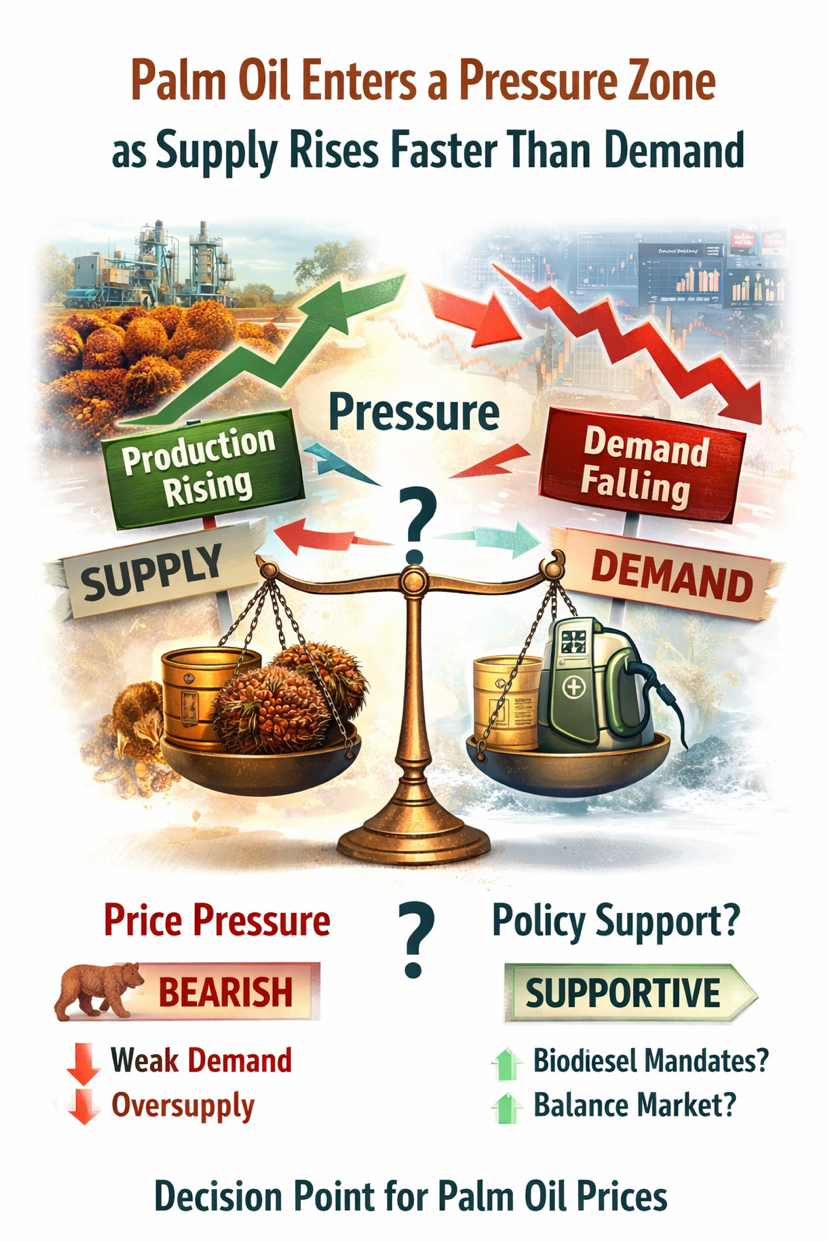
This is why biodiesel policy expectations matter so much. Traders seem to be waiting for policy support that could redirect more palm oil into fuel demand and help balance the market. If stronger biodiesel mandates or supportive implementation signals arrive, they could absorb part of the oversupply and give prices a floor. Without that support, the rising production trend may become the dominant force, which would make downside pressure harder to avoid.$SOL
So the market is stuck between two competing stories. One is bearish: more production, weak demand, limited urgency from buyers. The other is supportive: biodiesel policy could step in and tighten the balance before prices fall too far.
#TrendingTopic That is why this looks like a decision point. Palm oil prices may not stay range-bound for long. If policy support becomes concrete, the market could stabilize or rebound. If not, the supply-demand imbalance may start pulling prices lower. The next move will likely depend less on production alone and more on whether policy can create real incremental demand in time.#Write2Earn