

I started paying attention to why I kept logging back into Pixels, and the answer made me a little uncomfortable.
It wasn't the token price. I'd mostly stopped checking that after the first week. It wasn't the social side either, though the community is more active than I expected. It was something quieter and more mechanical than either of those things. I was logging in because I had crops ready to harvest. Because a quest timer had run out. Because the game had created a small obligation and I was honoring it without really deciding to.
That's retention design. And Pixels is pretty good at it.
The core loop in any farming sim works on variable reward schedules. You plant something, wait, come back, collect. The waiting is the mechanism. It creates a reason to return that has nothing to do with whether the game is fun in that moment. Zynga built an empire on this in the Facebook era with FarmVille, and the psychology hasn't changed much since. What Pixels adds on top is the Web3 layer, which introduces a second variable reward system running parallel to the first. Now you're not just waiting to see what your crops yield. You're also watching token prices, monitoring your resource values, wondering if today is a good day to sell or hold.
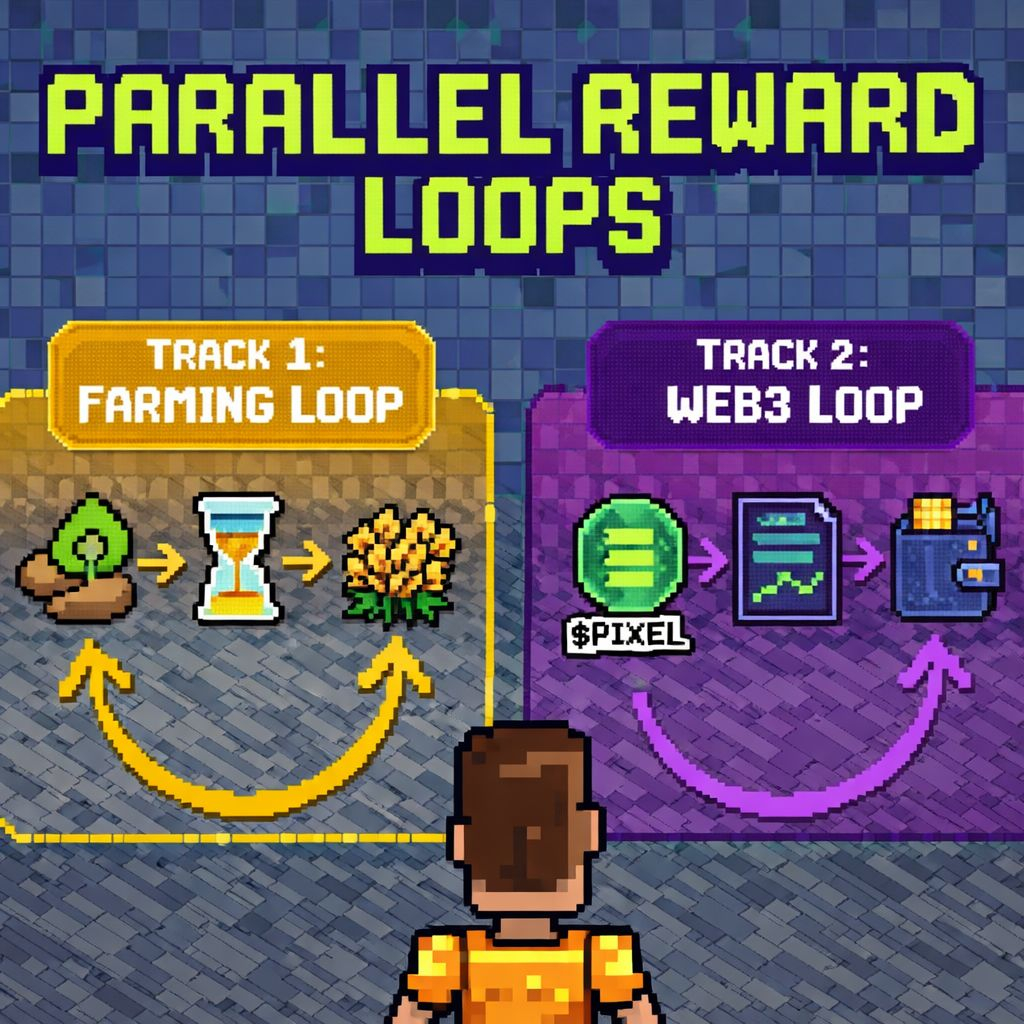
Two variable reward loops running at once is a lot of psychological surface area for a game to occupy.
I don't think this is automatically predatory. Games are allowed to be engaging. The question I kept asking myself was whether the engagement was coming from enjoyment or from something closer to compulsion. And honestly, on some days I couldn't tell. The days when I logged in because I genuinely wanted to play felt different from the days when I logged in because not logging in felt like leaving money on the table.
That second feeling is worth examining if you notice it in yourself.
The social architecture adds another layer. Pixels has guilds, cooperative land plots, shared resource systems. These create interpersonal obligations on top of the mechanical ones. If your guild is counting on your contribution, skipping a session has social weight. That's a powerful retention tool and again, not inherently bad. Cooperative games are supposed to create interdependence. But combined with financial stakes and timer mechanics, the pressure can stack up in ways that don't feel entirely like fun.
What the game does well is make progress feel visible. Your farm grows. Your crafting skills improve. Your resource stockpile builds. There's always a next thing to work toward, and the next thing is always just close enough to feel achievable. This is good game design by any measure. It's also the specific mechanism that makes it hard to stop.
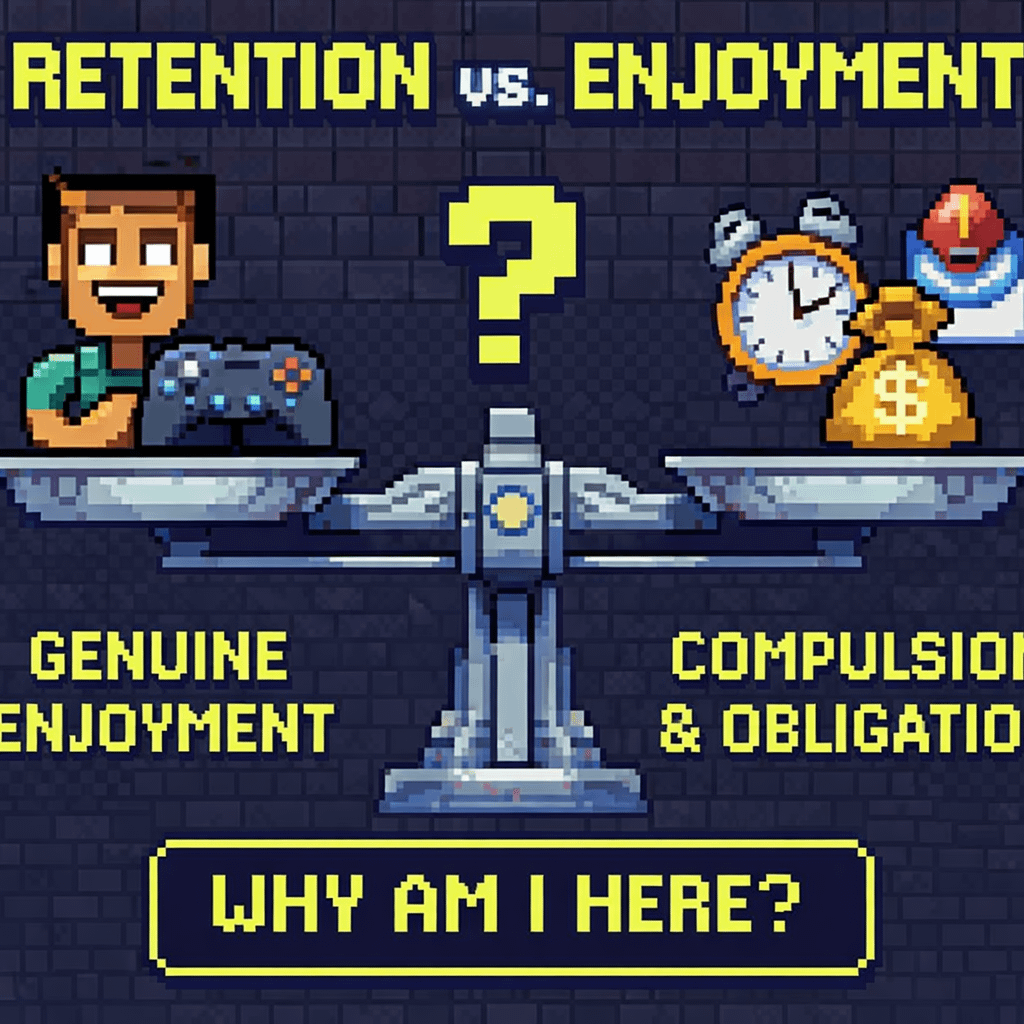
I think Pixels is more thoughtful about this than most Web3 games I've tried. The free to play entry point means the retention mechanics aren't backed by sunk cost in the same way they would be if you'd spent heavily to start. You can walk away without feeling like you're abandoning an investment. That's a meaningful difference.
But I'd still encourage anyone playing seriously to occasionally ask themselves a blunt question. Am I here because I want to be, or because the game has made leaving feel costly?
The answer won't always be comfortable. I've had sessions where I logged in, harvested my crops, and realized I hadn't actually enjoyed a single minute of it.
That's the moment to take a break. The crops will still be there.