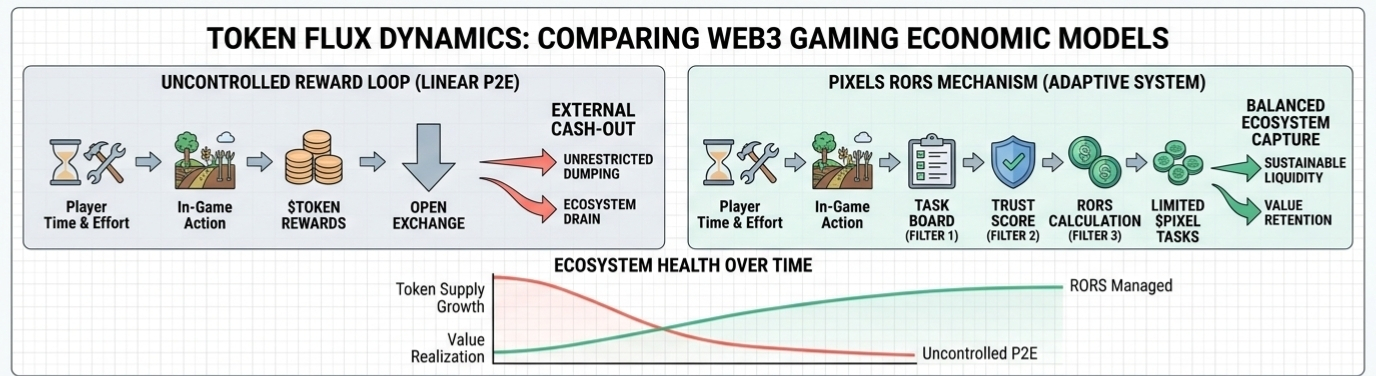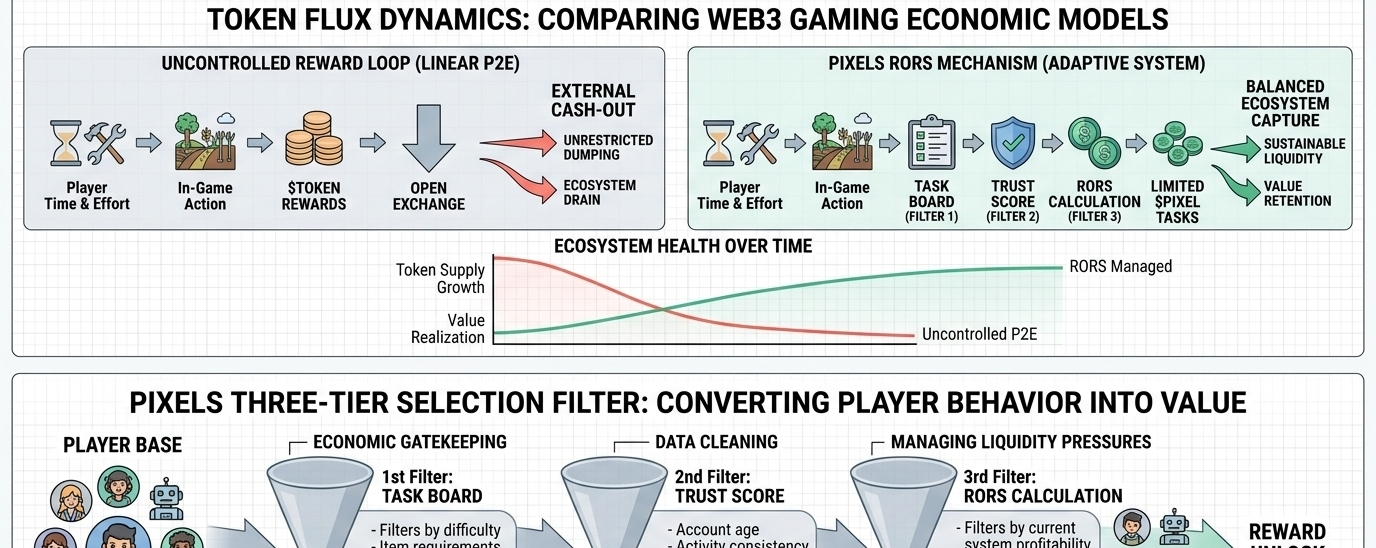
I have been staring at the Pixels breakdown for three hours now and I keep coming back to the same cynical realization that we have been lied to about the nature of the grind. We were all sold this dream of play to earn where your time was a commodity you could just swap for rent money at a fixed rate but the reality is much uglier because there is rarely a consistent window to actually withdraw that value. I used to think web3 gaming was just a flat loop of doing tasks and cashing out but looking at the way Pixels is handling their RORS mechanism made me realize that we are no longer playing games so much as we are navigating economic operating systems. The industry giants usually make the same fatal mistake of thinking that just issuing rewards creates growth when in reality an uncontrolled flow of tokens is just a slow motion train wreck for the entire ecosystem.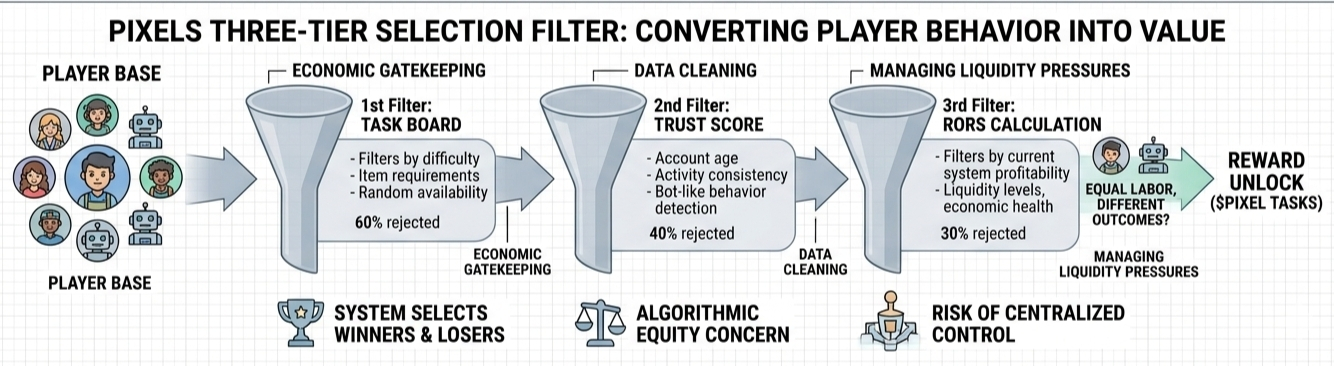
I was honestly surprised to see Pixels heading in a direction that feels more like economic gatekeeping than traditional game design. Their return on reward spend model is basically a way for the system to say it will only pay you if the ecosystem can actually afford your existence at that specific moment. It is a radical shift from the old model where players enter and immediately start dumping tokens until the system weakens and dies like a parasite killing its host. By using this three tier filter of a task board and trust scores they are trying to turn your long term behavior into a key that unlocks value. It sounds visionary on paper but my inner skeptic knows that the line between a balanced economy and a machine that chooses winners and losers is razor thin and potentially dangerous for the average player.
There is a deep seated unfairness that starts to creep in when you realize that two players can perform the exact same labor but only one might get a pixel task while the other is left holding the bag because of a trust score. I worry that the more layers of logic we add to these games the more they start to feel like being selected by a faceless algorithm rather than winning a challenge. We are trying to keep data clean in an environment that is basically a honey pot for bots and organized farming operations. If you cannot distinguish between a real human enjoying the scenery and a script optimized to suck the liquidity dry then your entire classification system is just a house of cards waiting for the first gust of a bear market.
At the end of the day Pixels is trying to evolve past the simple reward token loop that has turned so many other projects into digital ghost towns. They want $PIXEL to be a layer that captures value from every single action but that ambition carries a bone deep reality of risk. If they fail to balance the crushing pressure of system profits with the actual desire of a human to have fun they are just building a very complex ATM that eventually runs out of cash. We are watching a transition from the wild west of printing money to something that looks more like a managed shipping port where every container is inspected for its worth. It is less like a playground and more like a high stakes logistics hub for digital assets.