
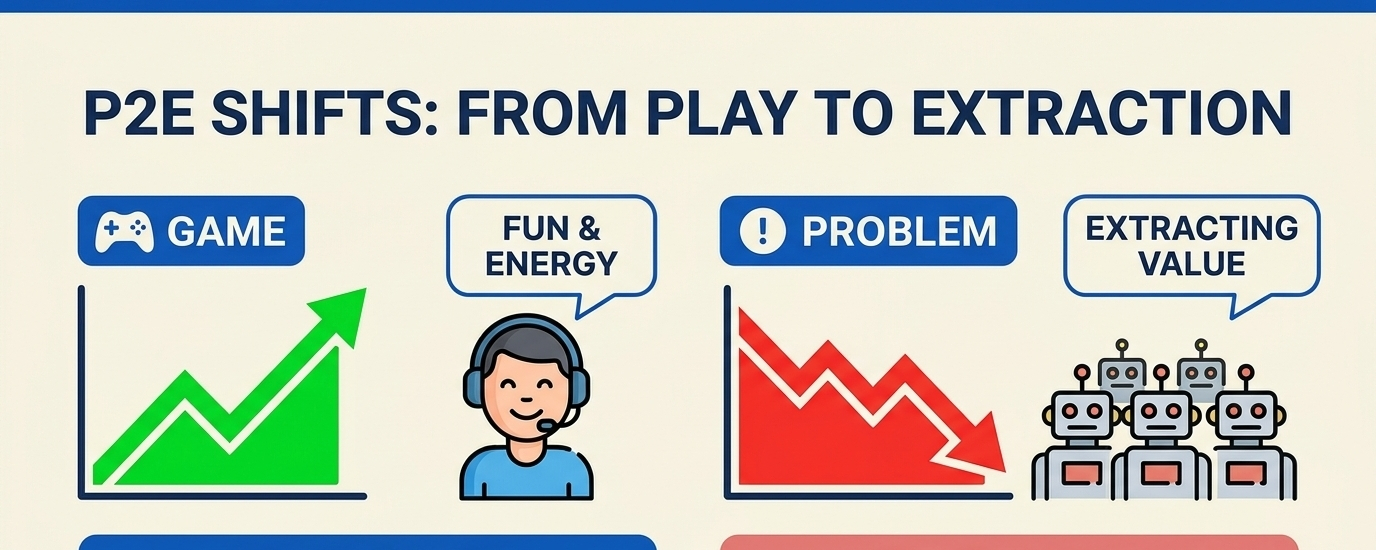
I didnot question play-to-earn at first.
The moment it clicked for me was quieter players were still logging in rewards were still flowing but the energy was gone. People werenot playing anymore they were extracting.
And that difference explains why so many Web3 games didnot just slow down they broke.
Early P2E models looked fair on paper. Everyone could earn.
But in reality the system couldn’t tell the difference between: 👉 a real player
👉 and someone farming with scripts
So both got rewarded the same.
That is where things started to drift.
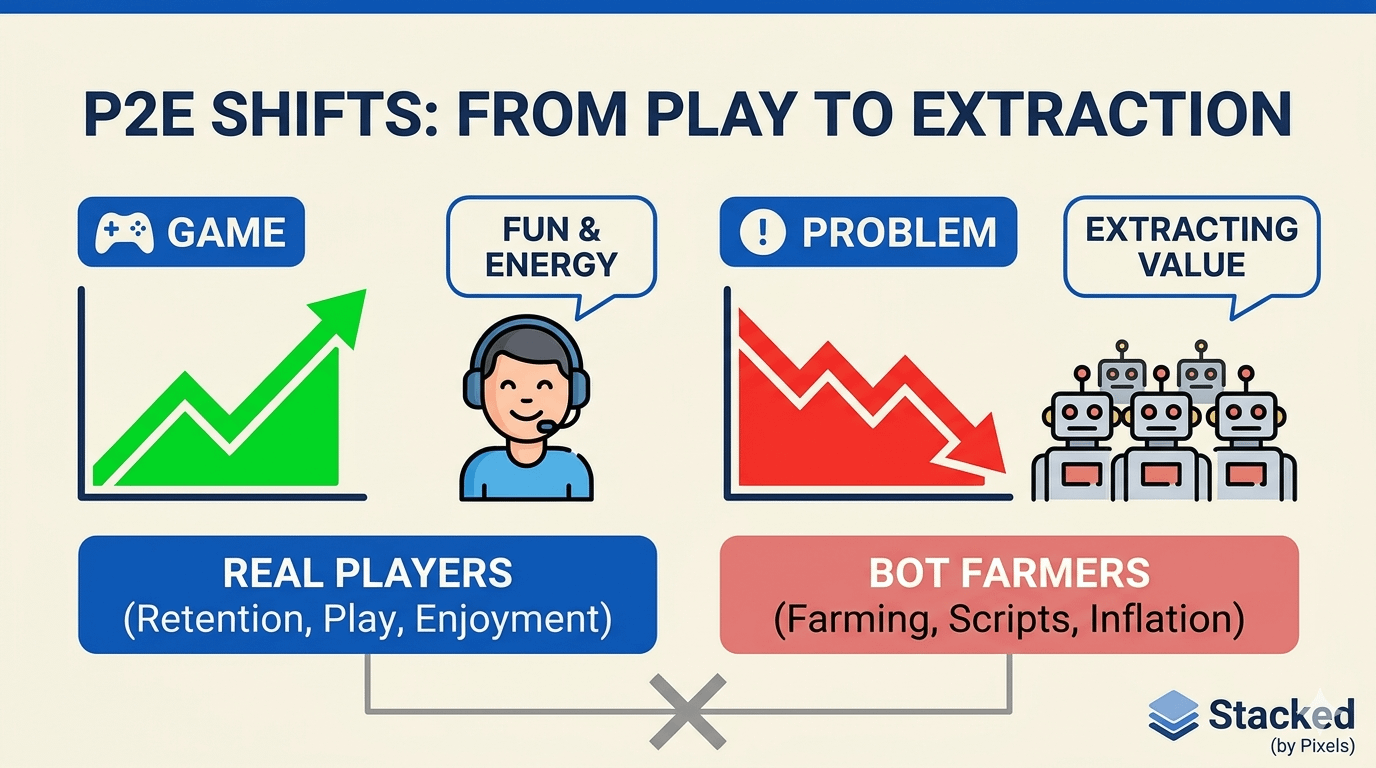
Retention dropped, bots scaled, and what looked like growth was often just empty activity. Once extraction becomes easier than actual play the whole loop flips.
And then you see it clearly: play → optimize → extract → leave
No real reason to stay.
Even big projects ran into this. When emissions outpace real value the system doesnot hold it inflates then fades. And most teams didn’t even have a way to measure if rewards were working in the first place.
That was the real gap: 👉 rewards were being distributed
👉 but not evaluated
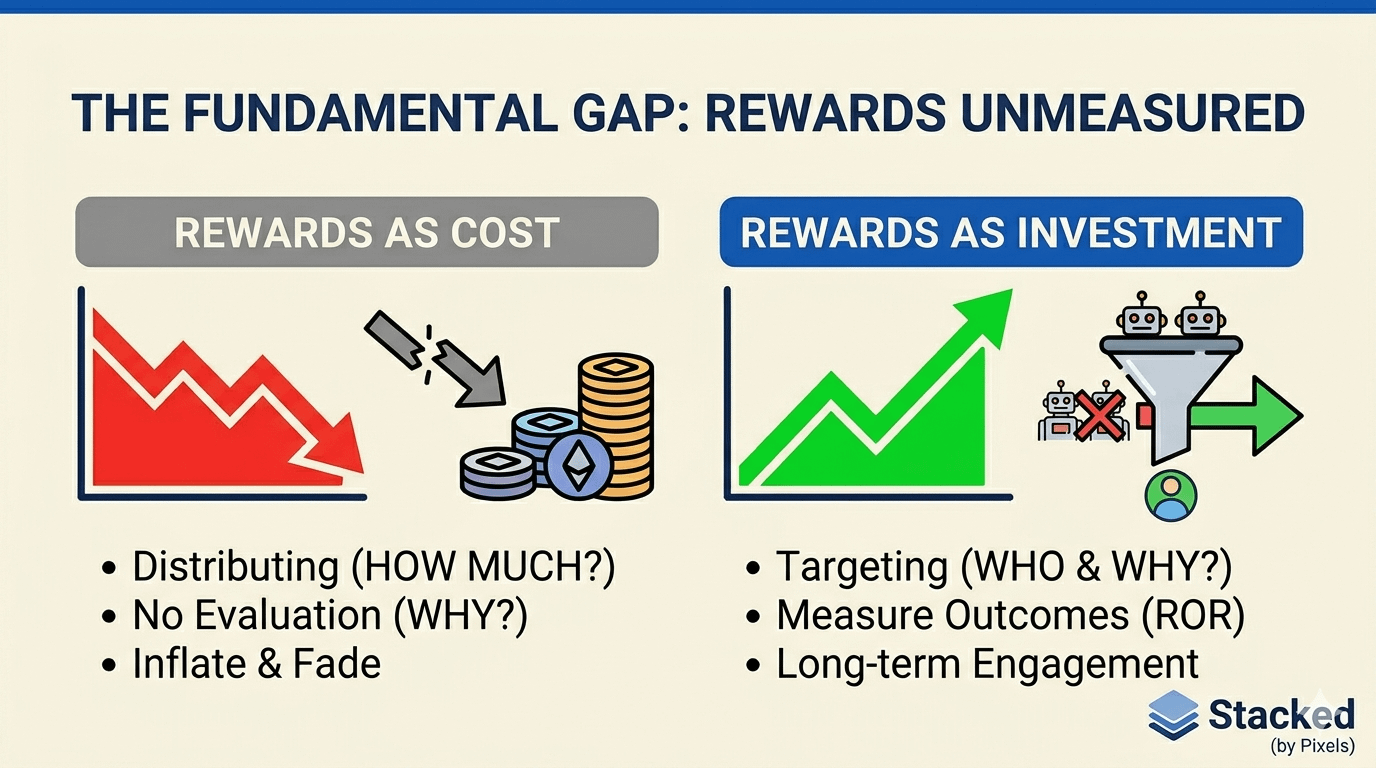
So gameplay slowly got replaced by earning logic.
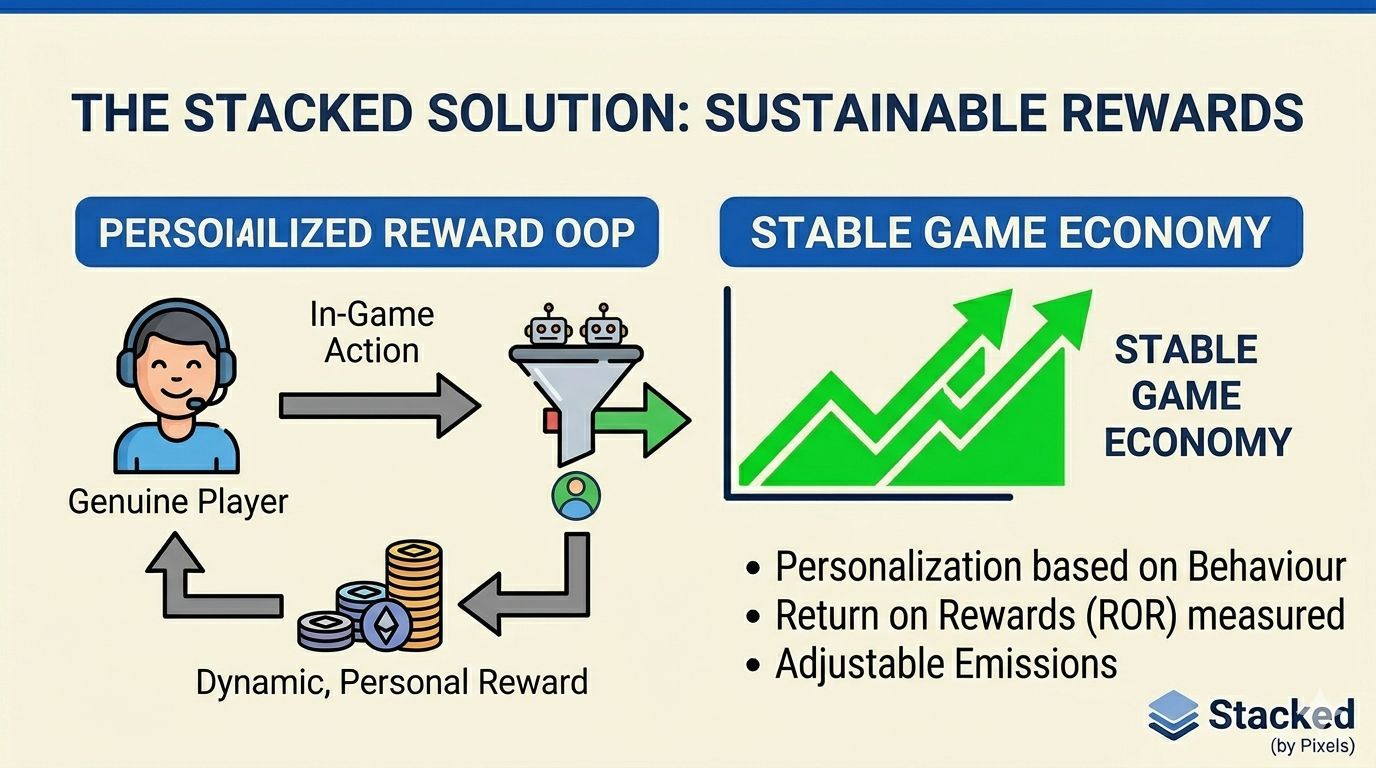
That is why something like Stacked (from @Pixels ) feels like a different direction.
Instead of asking how much to give it is asking: 👉 who should actually get rewarded and why?
That leads to a few important shifts:
Rewards tied to real behavior not just activity
Better filtering of bots vs genuine players
Systems that adjust based on outcomes not fixed emissions
It’s basically moving toward: 👉 rewards as investment, not just cost
There is also the idea of tracking return on rewards what actually comes back in terms of retention or engagement. Sounds simple but most P2E games never had that clarity.
And personalization adds another layer. Not every player plays the same way so rewards adapting to behavior makes the system feel more natural instead of forced.
Of course this doesnot solve everything.
If the game itself isnot fun no system will fix that.
And if rewards are too optimized they can still distort behavior.
But at least this approach tackles the core issue:
👉 the problem was not rewards…
👉 it was rewards without understanding
If this direction holds, GameFi shifts from pay as many users as possible to reward the right behavior over time.
And honestly that is probably the only version of P2E that has a chance to last 👀
