

Most traders still value gaming tokens as if player attention is temporary and disposable. That assumption misses where some of the strongest upside can emerge. In crypto, price often gets discussed first while product traction is treated like background noise, but sustainable tokens usually work the other way around. This article argues that PIXEL’s market profile is changing because Pixels continues to hold relevance as a top NFT game through active participation and ecosystem stickiness, and most people are missing that persistent usage can matter more than short-term chart weakness. I’ve watched enough cycles to know that weak projects can fake excitement for a week, but they struggle to maintain users. Retention is harder than marketing. If a game stays visible in a crowded sector, keeps communities engaged, and continues shipping updates, that tells me more than a random green candle ever will. Markets tend to dismiss slow operational strength because it’s less dramatic than speculation. That’s usually where the opportunity hides.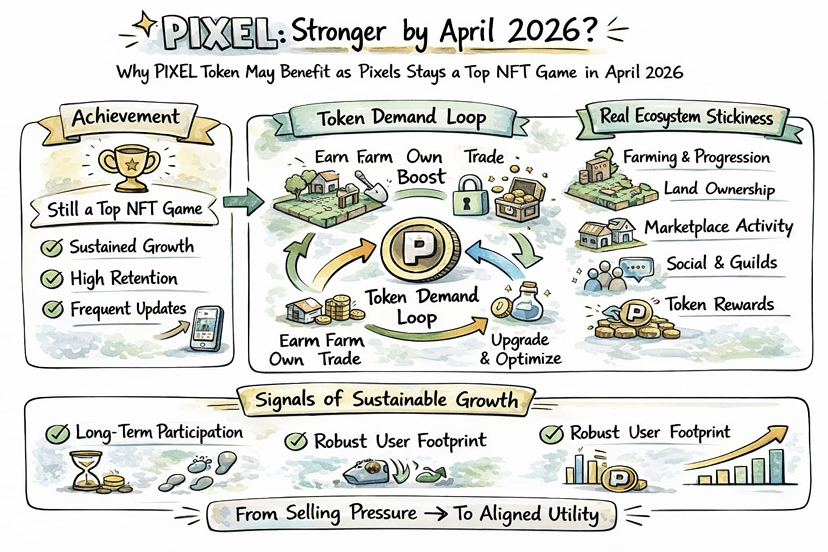
The real signal isn’t just rankings or headlines saying Pixels remains near the top of NFT gaming conversations. It’s the structure underneath that position. Pixels has built loops around farming, land ownership, progression systems, social play, marketplace activity, and token-linked incentives. Those loops create repeat behavior. Users return not only to speculate, but to progress, coordinate, trade, and optimize. Most people believe gaming tokens rise only when new money enters. What’s actually happening is that internal economies can create recurring demand if players keep participating. New users may buy assets, existing users may spend for speed or upgrades, landowners may reinvest, and traders may rotate inventory. That means value doesn’t rely on one source. It circulates across multiple participant groups. The team issues content and systems, the community verifies value through time spent and transactions made, and the token becomes a bridge between gameplay and ownership. That mechanism matters. I’m not saying every active game deserves a premium valuation. Many don’t. But when a project remains culturally relevant while others fade, it deserves closer attention than the market usually gives it. Too many investors still look at gaming tokens as dead-on-arrival assets instead of living networks with changing economics.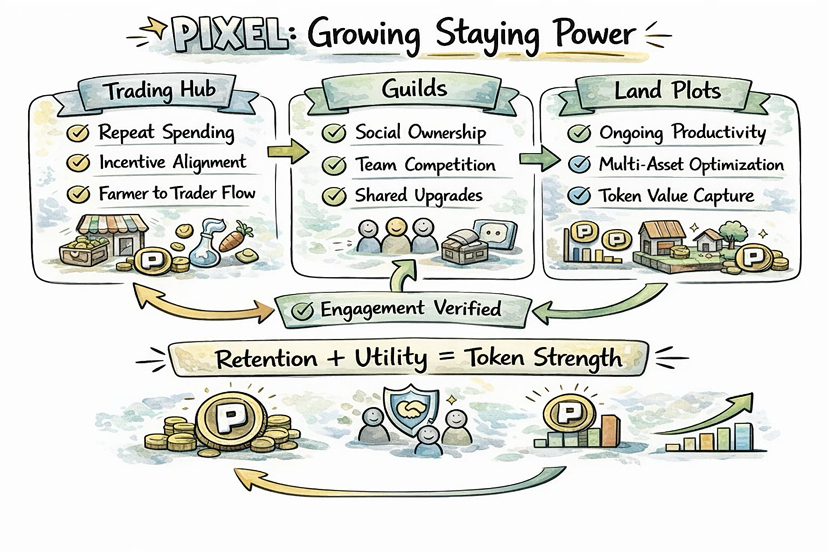
What could happen next is a rerating if Pixels converts sustained relevance into deeper monetization and stronger token utility. If future updates expand land productivity, social competition, creator participation, or more meaningful PIXEL sinks, then the market may start valuing ecosystem durability instead of treating the token as a seasonal trade. Timing matters because sentiment is still shaped by old scars from failed play-to-earn models. That creates inertia. Investors remember broken economies and assume every gaming token follows the same script. But models evolve. Some teams learned that emissions without engagement fail, while engagement with layered utility has a chance. If Pixels keeps proving it can retain users while improving economic design, PIXEL may increasingly be priced like a functioning digital economy rather than a leftover narrative coin. I’ve seen markets change their minds suddenly after ignoring signals for months. That’s why I pay attention before consensus does. This isn’t about being a top NFT game for one month. It’s about turning sustained attention into lasting economic value.
