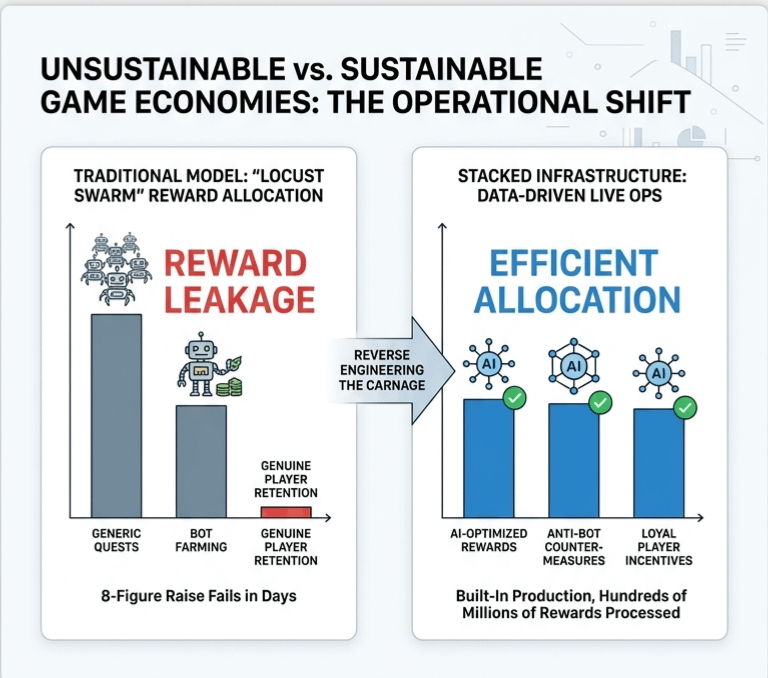
I spent the last three years watching the same tragic comedy play out in the Web3 gaming scene where a team raises eight figures on a pitch deck only to watch their economy get devoured by a locust swarm of bots in three days flat. It is the same old story of teams building in a vacuum and then acting surprised when their generic quest board gets farmed into oblivion by guys in a basement with ten thousand virtual machines. I have seen the wreckage of play to earn first hand and it usually looks like a spreadsheet gone wrong where the only people making money are the ones who never actually intended to play the game. Most of these rewards apps are just glorified ad networks with a fresh coat of paint and they fail because they treat players like clicks instead of humans.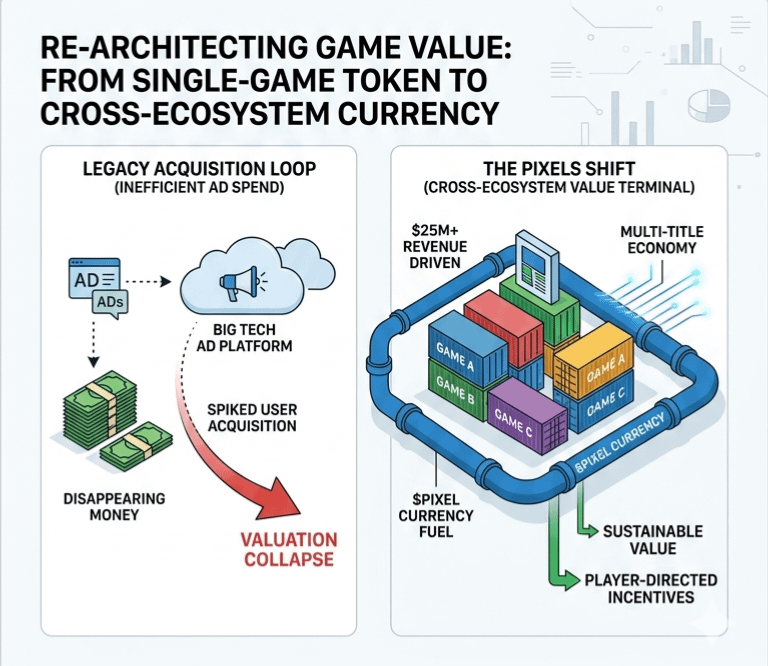
The team behind Pixels actually lived through that nightmare and instead of pivoting to some new AI trend they decided to reverse engineer the carnage to see what actually survives. That is how Stacked came to be and it is less of a product and more of a battle hardened infrastructure that has already been through the meat grinder. I am talking about a system that has processed hundreds of millions of rewards and helped drive over twenty five million dollars in revenue. This was not built in a pristine lab or written in a whitepaper to lure in venture capital during a bull run. It was built in production while the servers were screaming and the bot farms were knocking at the door.
When you look at why most games bleed out it usually comes down to the fact that they are just guessing. They throw tokens at people and hope for the best but they have no idea why a whale disappears on day five or what a loyal player actually looks like before they hit their first month anniversary. Stacked solves this by dropping an AI game economist right into the engine to analyze the rot in real time. It is a genuinely new way to handle live operations because it lets a studio ask why their budget is leaking and then fix the hole immediately. We are finally moving away from the era of vaporware and into a period where the tech actually has to perform under pressure.
The real shift here is that $PIXEL is graduating from being a single game token into a cross ecosystem currency that fuels multiple titles. It turns the entire concept of player acquisition on its head by taking the billions of dollars that studios usually set on fire by giving it to big tech ad platforms and putting it directly into the pockets of the players who actually show up. We have been stuck in this cycle of digital gold rushes where everyone is digging for something that does not exist but this feels more like building a massive container terminal for the future of digital value. It is the difference between selling a dream of a virtual world and building the actual pipes that make the water run and the lights stay on.