
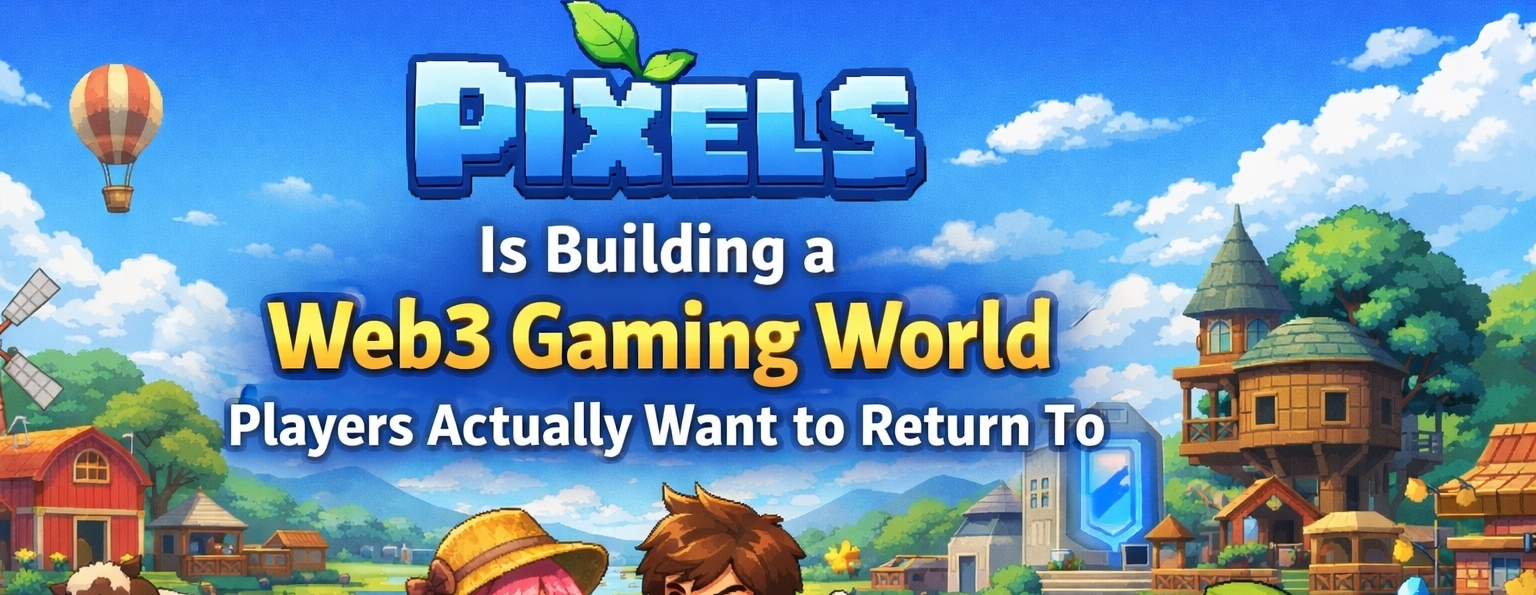

Pixels feels different from a lot of Web3 games, and that difference is probably the main reason people kept paying attention to it. Most projects in this space arrive with big promises, complicated systems, and a lot of noise around tokens, ownership, and future potential. Pixels took a softer route. It built a world that people could actually step into without feeling like they needed to study it first. That simple decision gave the project something many blockchain games never really had: a natural pull.
What makes Pixels interesting is not that it tried to be the loudest project in the room. It is that it understood how people actually behave inside games. Most players do not care about impressive terminology. They care about whether a game feels easy to enter, enjoyable to spend time in, and worth returning to the next day. Pixels leans into that in a very direct way. Farming, exploring, collecting, crafting, trading, building relationships with other players — these things are familiar, but that familiarity is part of the strength. The game does not fight the player. It gives them a world that feels open, simple on the surface, and gradually deeper over time.
That is why Pixels has a stronger identity than many other Web3 titles. It does not feel like a financial model dressed up as a game. It feels like a game first. That might sound like a small point, but in this category it changes everything. Too many projects built their economies before they built anything people actually wanted to live in. Pixels feels like it was shaped around habit, comfort, and routine. Those things matter more than hype because they are what bring players back when the excitement cools down.
There is also something very smart about how Pixels uses its world. It does not need to overwhelm players with complexity in the first few minutes. It lets the experience breathe. You enter, you start doing simple things, and slowly the world begins to open up. That kind of pacing matters. People enjoy feeling that their progress grows naturally. They like seeing small actions turn into something bigger. Planting, harvesting, upgrading, unlocking, expanding — these are basic loops, but they work because they make progress feel visible. Pixels understands that rhythm and builds around it instead of trying to replace it with something overly engineered.
The social side of Pixels also gives the project real weight. It is not just about growing crops or managing resources. It is about existing inside a shared world where identity starts to matter. Guilds, pets, land, reputation, trade, access, and progression all add to that feeling. These features are not just decorative layers. They help turn the project into a space where players feel attached to what they are building. That emotional connection is what gives a game durability. People rarely stay because of mechanics alone. They stay because the world starts to feel like it belongs to them in some way.
Pixels also benefits from being clear about what kind of experience it wants to offer. It is not pretending to be a hardcore battle game, and it is not forcing itself into a style that does not fit. It is comfortable being social, casual, and progression-driven. That clarity helps the project feel more honest. A lot of games lose their identity because they try to satisfy too many expectations at once. Pixels feels more focused. It knows that its strength is in creating a calm but active world where players can build routines, interact with others, and slowly develop their place inside the ecosystem.
That is where the project becomes more interesting on a deeper level. Pixels is not just successful because it is easy to understand. It is successful because it makes simple gameplay feel alive. That is harder than people think. Anyone can describe farming, quests, items, and trading. What matters is whether those systems connect in a way that makes the world feel active instead of empty. Pixels does a better job than most at making those systems feel connected. The player is not just completing actions. They are participating in a loop that keeps unfolding, and that makes the project feel more natural.
It also helps that Pixels does not force the blockchain side to be the only thing players notice. That is one of the biggest mistakes many Web3 games made. They treated ownership and token systems as the main attraction, when most players only care about those things after they already enjoy the game itself. Pixels handles that better by letting the experience come first. The Web3 layer is there, but it does not completely dominate the feeling of the world. That balance is important. When the technical side becomes too visible, the game starts feeling like work. Pixels avoids some of that by keeping the player experience in the center.
There is a real lesson in that. People do not return to a project every day because they were impressed once. They come back because the world starts fitting into their routine. Pixels seems built around that idea. It understands that repeated engagement usually comes from comfort, momentum, and attachment. A player wants to see what changed, finish what they started, improve what they own, and stay connected to the world they have been building in. That is a much more stable kind of interest than short-term excitement.
What I like about Pixels is that it does not need to pretend to be something bigger than it is. It does not rely on looking extreme or futuristic to prove its value. In a strange way, that makes it feel more modern than many louder projects. It respects the idea that games do not need to shout to matter. They need to hold attention in a natural way. Pixels does that through atmosphere, progression, and social energy rather than through constant pressure.
That does not mean the project has no challenges. Any live game can become repetitive if the world stops evolving. Any economy-linked system can lose balance if progression starts feeling too tied to spending or grinding. Pixels still has to protect the feeling that made people care in the first place. It has to keep the world alive, keep the pace fresh, and make sure the project still feels enjoyable rather than demanding. But those challenges come with every growing game. What matters is that Pixels already has the hardest part in place: people actually want to spend time there.
That is what gives the project its real value. Not just the token layer, not just the ownership angle, not just the ecosystem around it. The real strength of Pixels is that it created a world people can understand quickly and still find interesting after spending more time in it. That is rare in Web3 gaming. A lot of projects can attract attention for a moment. Much fewer can build a space that feels worth returning to again and again.
Pixels stands out because it feels like a project built around people, not just systems. It understands that simple does not mean shallow, and casual does not mean forgettable. It turned a familiar style of gameplay into something that feels social, persistent, and rewarding without making the experience feel heavy. That is why the project has stayed relevant. It gave players more than a pitch. It gave them a place.
And in this space, that matters more than almost anything else.