

I want to start with something that doesn't get said enough about tokenomic redesigns in Web3 games. When a project replaces its primary currency, it's usually because something broke.
Not always catastrophically. Not always visibly. But somewhere in the original design, the numbers stopped working the way the team hoped, and the cleanest solution was to introduce a new token rather than patch the old one. I say this not to be cynical about Pixels specifically but because understanding why BERRY existed and why PIXEL replaced it as the primary economic layer requires being honest about what token transitions usually mean.
BERRY was the original in-game currency in Pixels. It functioned as the soft currency, the thing you earned through regular gameplay and spent on basic activities. Soft currencies in dual token systems are designed to be inflationary by nature. They're supposed to flow freely, earned easily, spent constantly. The idea is that the soft currency handles day to day economic activity while a harder, scarcer token handles premium transactions and value storage. It's a model borrowed from traditional free to play game design and applied to blockchain.
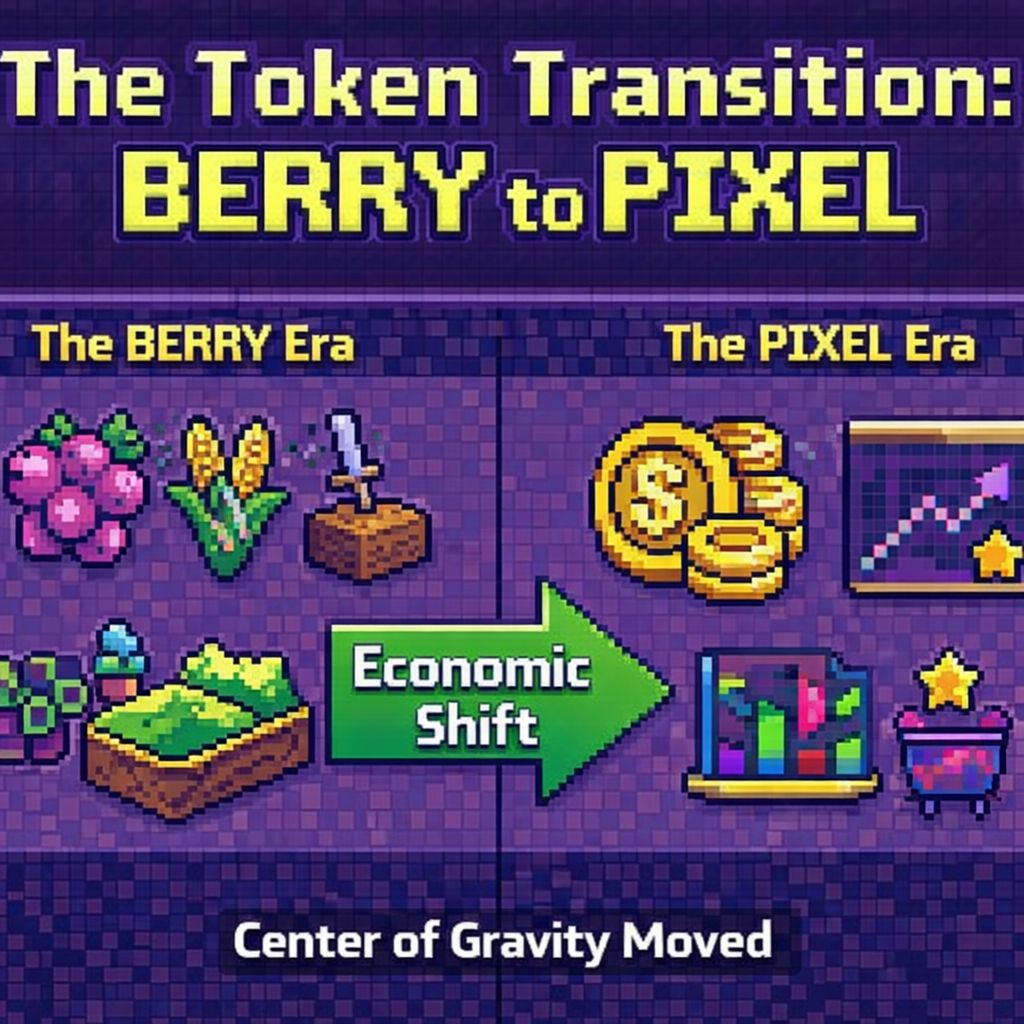
The problem with soft currencies is that they accumulate. Players who engage seriously end up holding more than they can spend, and when that surplus hits the market it pushes the value down. BERRY followed a pattern I've seen in other Web3 games where the currency became so abundant that it lost meaningful purchasing power within the game economy. The sink mechanisms weren't pulling enough out to offset what the faucets were putting in.
PIXEL entered as the harder currency, the one tied to the token generation event, listed on exchanges, subject to real market forces. The shift wasn't just cosmetic. It changed what the primary economic unit of the game actually was and what players were supposed to do with it. BERRY didn't disappear entirely. It still exists as an in-game resource. But the center of gravity moved.
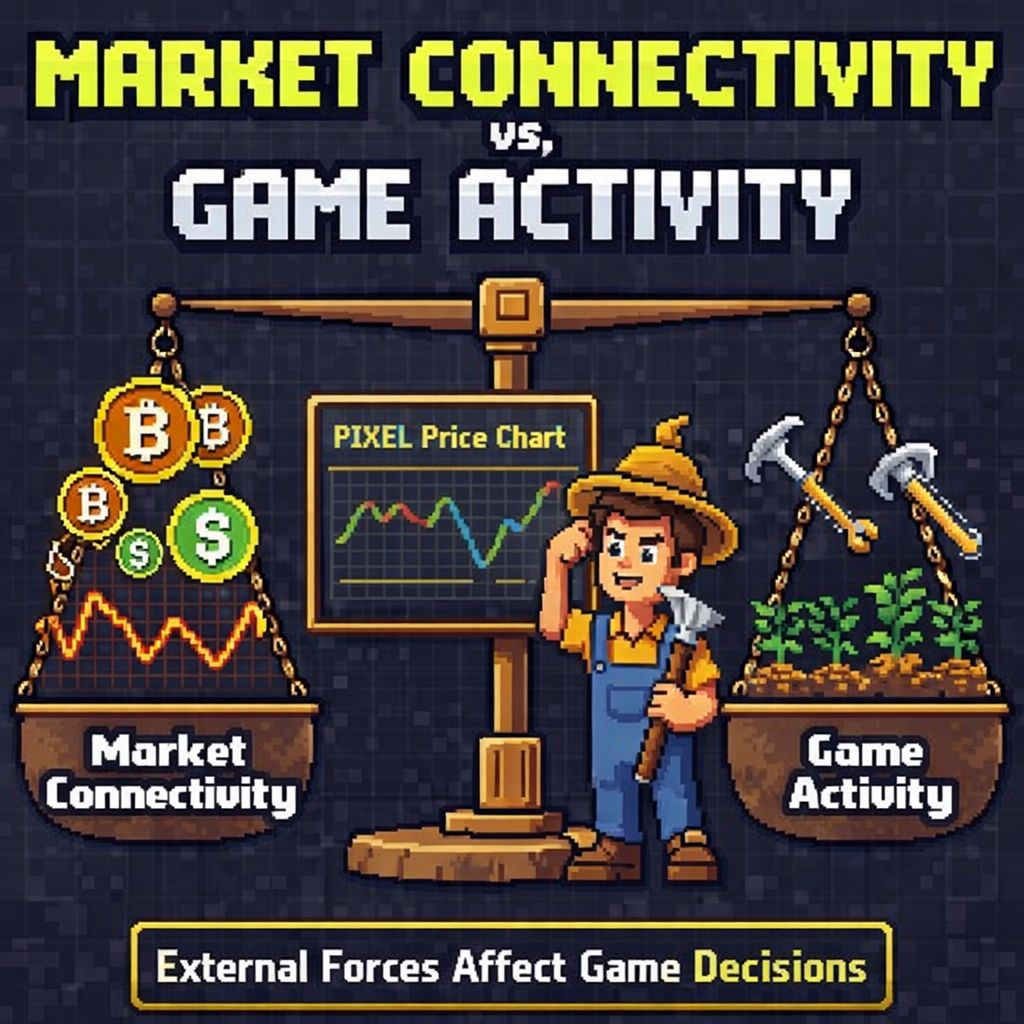
What I find interesting about this transition is how it reframed player behavior almost immediately. When BERRY was the main currency, players thought about the economy in terms of game activity. How many crops do I need to plant to afford this upgrade. When PIXEL became central, a second calculation entered the room. What is this worth in dollars right now and is spending it here a good decision. That's a fundamentally different relationship with an in-game currency and it changes how people play.
I don't think that change is straightforwardly good or bad. It makes the economy more connected to real market conditions, which adds genuine stakes. It also means that a bad week for crypto markets affects how willing players are to spend on upgrades, which introduces volatility into game decisions that probably shouldn't be volatile. Deciding whether to improve your tools shouldn't depend on what Bitcoin did overnight. But in a PIXEL denominated economy, those things are connected whether you want them to be or not.
The historical arc from BERRY to PIXEL is really a story about what kind of game Pixels decided to be. A game with an internal economy that happens to use blockchain, or a blockchain economy that happens to have a game attached. The BERRY era leaned toward the first. The PIXEL era leans toward the second.
Whether that's the right direction depends entirely on what you came for. Players who want a farming game with ownership benefits probably preferred BERRY's simplicity. Players who want financial exposure to a growing ecosystem probably prefer PIXEL's market connectivity.
Pixels made a choice. Most people playing today weren't there to see what they chose away from.
That context matters more than most guides will tell you.