

I think most people analyzing Pixels spend too much time looking at the token price and not enough time looking at the token architecture. Price is an outcome. Architecture is a decision. And the decision Pixels made when it introduced vPIXEL tells you more about where this project is trying to go than any single market move ever could.
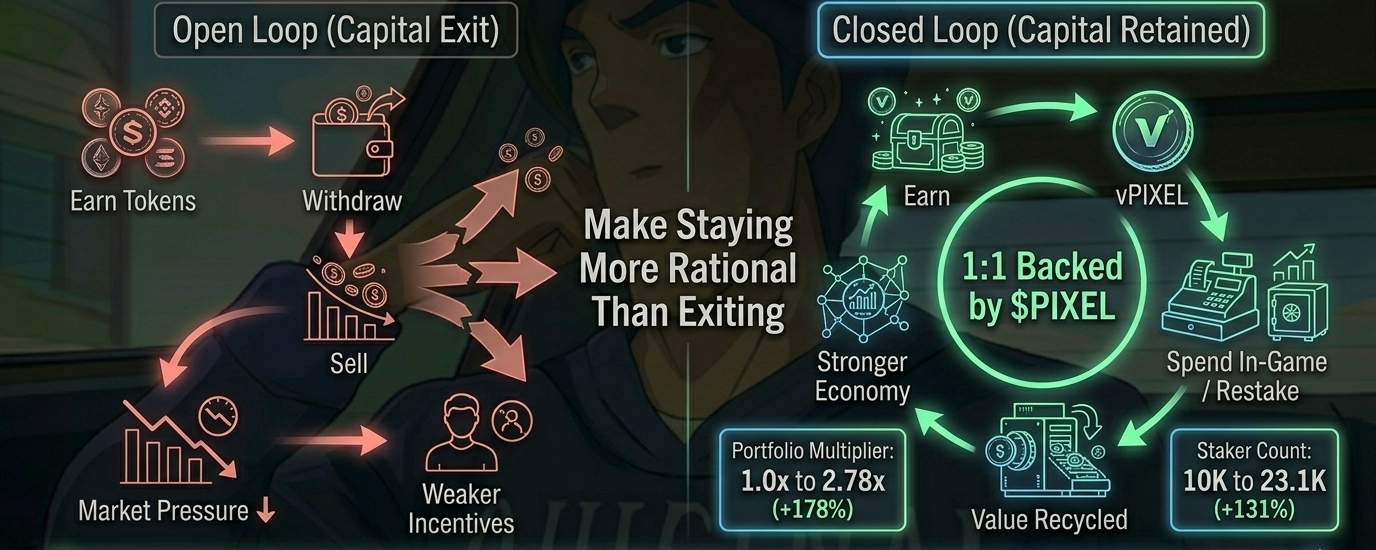
To understand why vPIXEL matters you have to start with the problem it was built to solve. Web3 gaming economies have a structural leak that almost no team has successfully fixed. The leak works like this. A game distributes tokens as rewards for player activity. Players earn those tokens and face a simple choice: spend them inside the game or withdraw and sell them. For most players in most games, selling is the rational choice because the game has not given them enough reasons to spend and the token has enough liquidity to make exiting easy. When enough players make that choice simultaneously, selling pressure builds, token price falls, the reward pool becomes less attractive in dollar terms, more players exit, and the cycle accelerates. This is not a story about bad actors. It is a story about incentive design that points in the wrong direction.
Pixels is not the only team that identified this problem but it may be the first team that built a genuinely structural answer to it rather than a cosmetic one. Most projects respond to the leak by adding more reasons to hold, launching staking programs with attractive APR, introducing burn mechanisms, or simply increasing emissions to keep the reward pool looking attractive in nominal terms. All of those responses treat the symptom rather than the cause. They make holding temporarily more attractive without changing the underlying logic that makes selling the default rational choice.
vPIXEL changes the underlying logic. It does this by creating a token that is backed one to one by $PIXEL but that can only be spent inside the ecosystem or restaked. Players who take their rewards as vPIXEL instead of $PIXEL are not giving anything up in terms of purchasing power inside the game. They can buy upgrades, pets, VIP access, crafting materials, and anything else the in-game economy offers. What they cannot do is withdraw vPIXEL to an exchange and sell it. That single constraint redirects the flow of value in a way that changes the math for the entire ecosystem.
When a player spends vPIXEL inside the game, the backing $PIXEL does not disappear. It gets recycled into user acquisition rewards or treasury operations. That means every in-game purchase made with vPIXEL is simultaneously a piece of ecosystem revenue and a mechanism for keeping $PIXEL off the open market. The player gets what they wanted. The ecosystem gets the spending it needed. And the token supply that would have hit exchange order books stays inside the system doing useful work instead. That is a closed loop rather than a leak, and building closed loops is the hardest and most important thing any token-based economy can do.
The Farmer Fee reinforces the same logic from a different angle. Players who want to withdraw $PIXEL directly rather than taking vPIXEL face a fee that runs between twenty and fifty percent of the withdrawal amount. That fee gets redistributed to $PIXEL stakers. This design does two things at once. It makes direct withdrawal expensive enough that vPIXEL becomes the more attractive option for players who intend to keep playing, and it compensates stakers for providing the liquidity and ecosystem support that makes the whole system function. The result is that the players most committed to the ecosystem are subsidized by the players who are leaving it. That is exactly the right direction for incentives to flow.
What I find genuinely interesting about this design is that it does not require players to be altruistic or to care about token price. It just requires them to be rational. A player who enjoys the game and intends to keep spending inside it will naturally prefer vPIXEL over direct Pixel withdrawal because vPIXEL gives them the same in-game purchasing power without the Farmer Fee penalty. A player who is extracting value and planning to exit will pay the fee and leave, which is fine because that player was going to leave anyway and the fee at least returns something to the people who stay. The system routes behavior without requiring anyone to act against their own interests, which is the mark of a well-designed incentive structure.
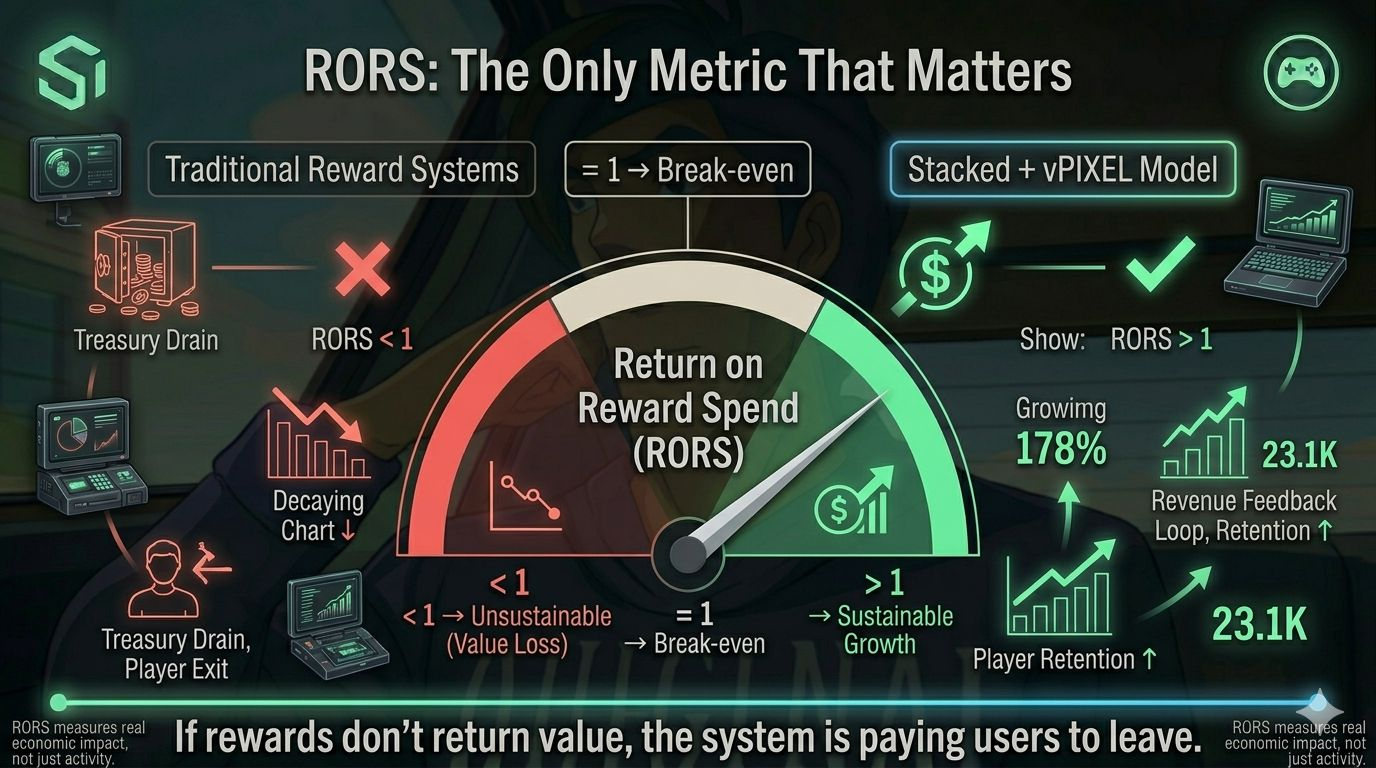
Stacked extends this logic into the targeting layer. Where vPIXEL handles the withdrawal side of the economy, Stacked handles the reward distribution side. The old model distributed rewards based on activity, which meant that any player who showed up and completed tasks could capture emissions regardless of whether they were contributing to ecosystem health or extracting from it. Stacked replaces that blanket approach with an AI-driven targeting engine that evaluates player behavior and deploys personalized incentives toward the players most likely to convert that reward into spending, retention, and ecosystem contribution. The RORS metric, Return on Reward Spend, is how Pixels measures whether this is working. Every token distributed as a reward is supposed to generate at least one dollar back in ecosystem revenue. That is a demanding standard and the fact that Pixels has committed to it publicly means the team has to keep the number honest.
The combination of vPIXEL and Stacked represents something I have not seen another Web3 gaming team attempt with this level of seriousness. Most projects pick one lever. They either try to fix the withdrawal side of the economy or the distribution side, but not both simultaneously. Pixels is trying to close the loop on both ends at once, which is harder to build and harder to explain but potentially much more durable if it works. The early evidence from inside the Pixels ecosystem is encouraging. The 178 percent lift in conversion to spend from Stacked's targeted re-engagement campaigns and the 131 percent return on reward spend suggest the targeting model is finding real signal in player behavior. The growth in vPIXEL adoption, while harder to measure from outside the ecosystem, tells you something about whether players are finding the closed-loop option attractive.
I stay cautious because none of this eliminates execution risk. vPIXEL only works as a loop-closer if there are enough things worth spending it on inside the game. If the in-game economy stagnates or content cadence slips, the rational choice for players shifts back toward exit even with the Farmer Fee in place. Stacked only keeps RORS positive if the targeting model keeps improving and the games in the ecosystem keep generating real monetization rather than just showing healthy metrics during the initial integration period. And Pixel only maintains its role as the coordination asset at the center of all of this if the staking model keeps attracting games and capital worth organizing around.
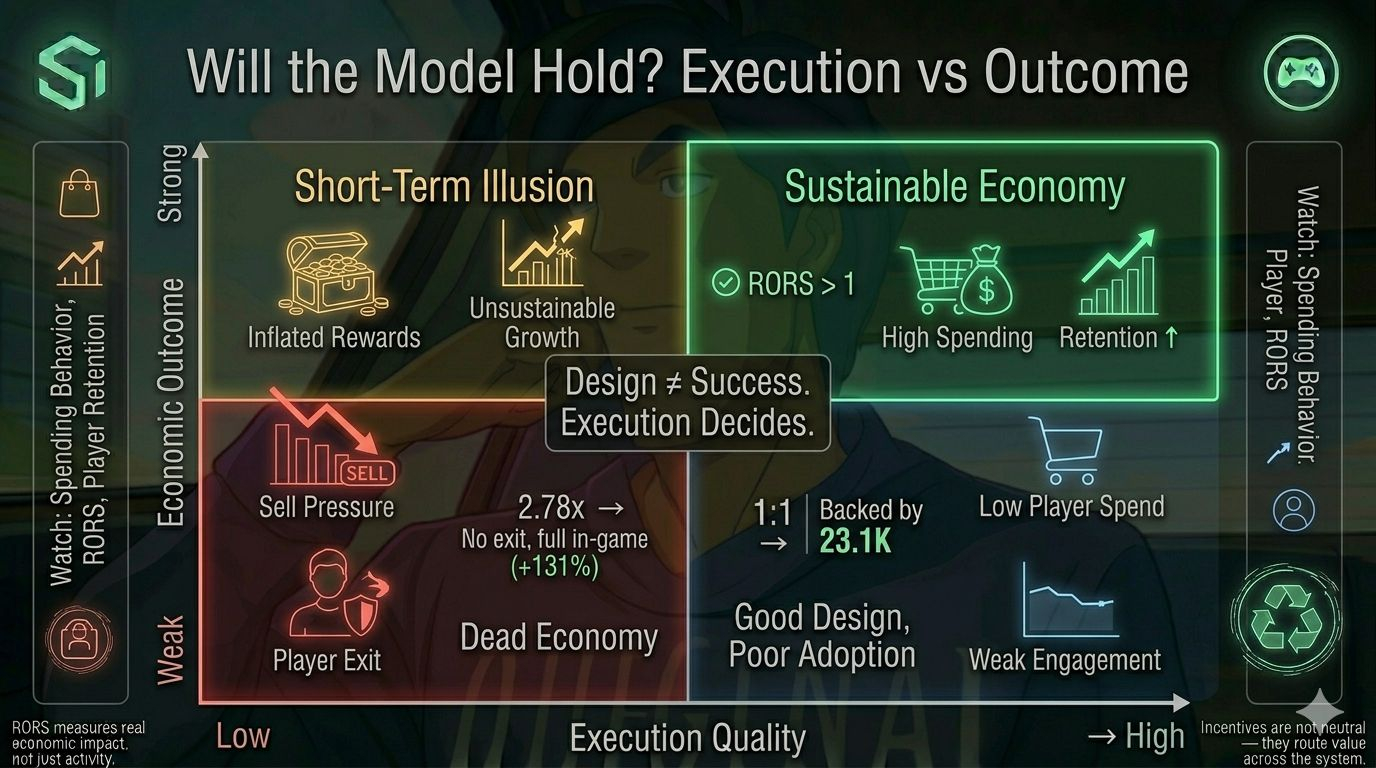
Those are real risks and I would not minimize them. But I think the direction is right and the design is more serious than anything else I have seen in this space. The question for Pixels is not whether the architecture is clever. It is whether the team can keep executing against it while also keeping the core game fun enough that players choose to stay inside the ecosystem not because the math says they should but because they actually want to.
That is the test I am watching. Not the price. Not the staking APR. Whether the game keeps earning the attention that makes the economic design worth anything at all. Everything else follows from that.
@Pixels #pixel #PİXEL #Web3Gaming #GameFi #Ronin #BinanceSquare