
At first Pixels doesnot feel like a typical free-to-play system.
You can play for hours without touching $PIXEL . Farming works Coins keep flowing and nothing really forces you into spending. It feels smooth and self-contained.
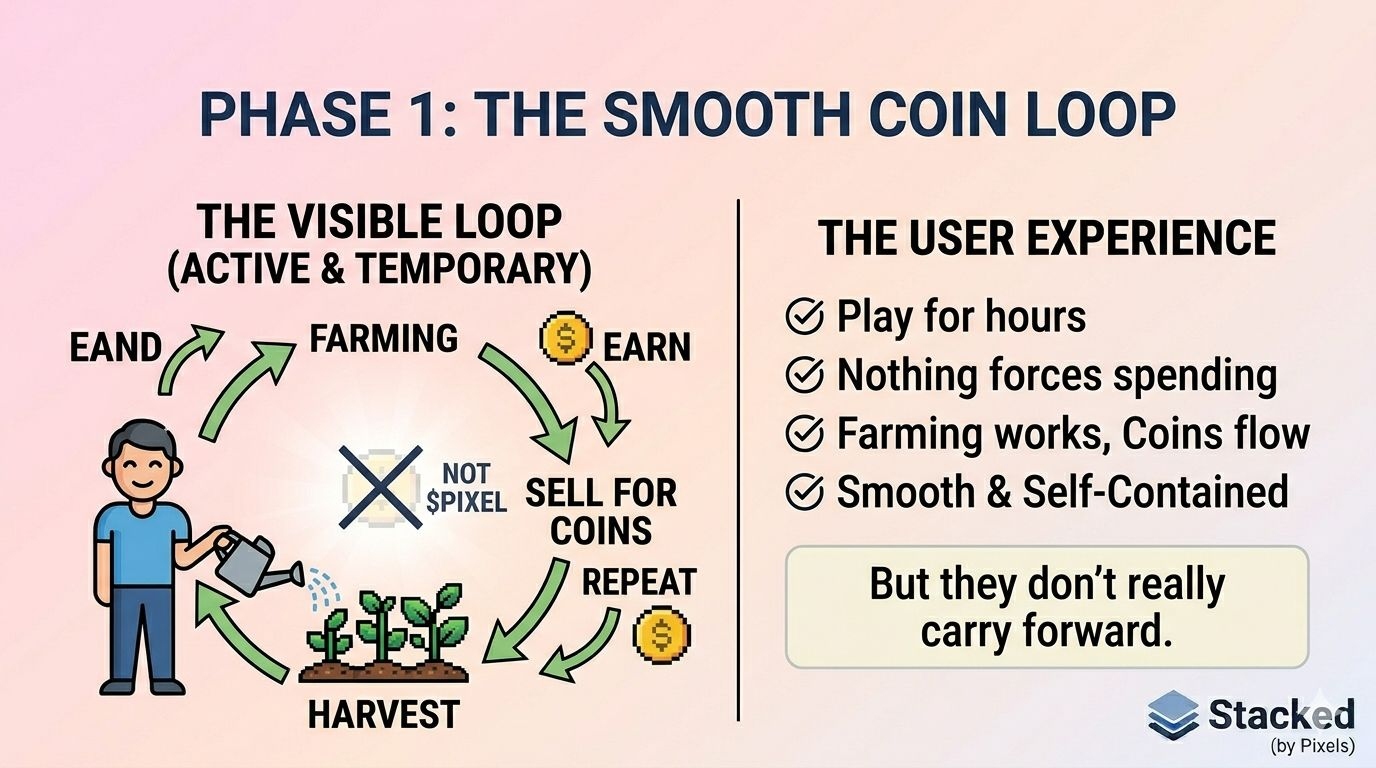
But after a while something feels slightly off.
Coins run most of the visible loop you earn spend repeat.
But they donot really carry forward. They stay inside the moment.
Then you notice where $PIXEL shows up.
Not everywhere only in specific places: 👉 upgrades that last
👉 assets that persist
👉 parts of the game that connect beyond a single loop
And thatis where the difference starts.
It’s not about paying to progress faster.
It’s more like choosing where your effort actually sticks.
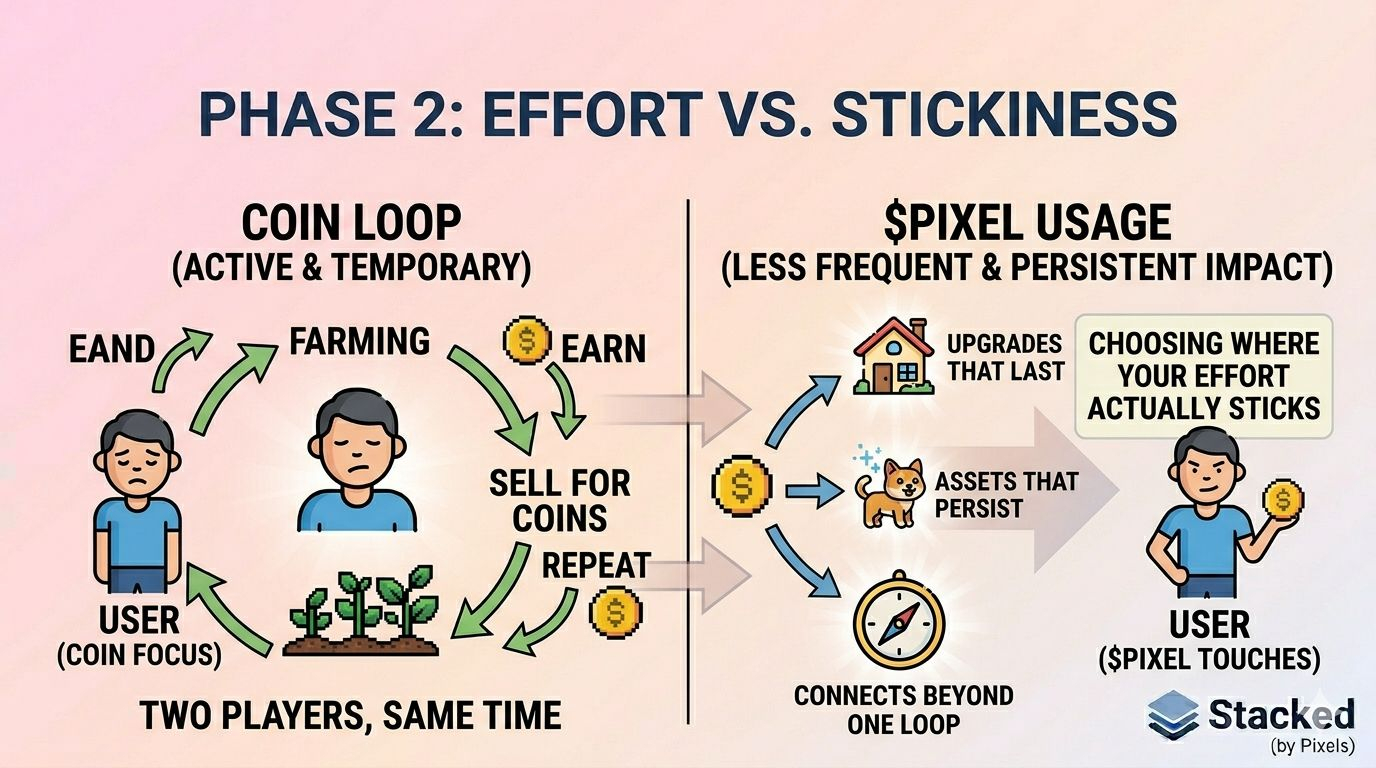
Two players can spend the same time:
one stays inside the Coin loop (active but temporary)
the other touches Pixel occasionally (less frequentvbut more persistent impact)
You donot notice it immediately its gradual.
Most of the game feels like activity.
Pixel feels closer to settlement where some of that activity actually gets anchored.
That’s what makes it interesting.
Its not aggressively pushing the token. You can ignore it for a long time.
But that also creates a risk if too many players stay in the surface loop the deeper layer might feel disconnected.
And then there is supply. Tokens keep entering the system, whether players engage with that layer or not. If usage doesnot keep up pressure builds.
Still, the design itself is worth watching.
If Pixels expands beyond a single game loop this structure could matter more: 👉 Coins handle the moment
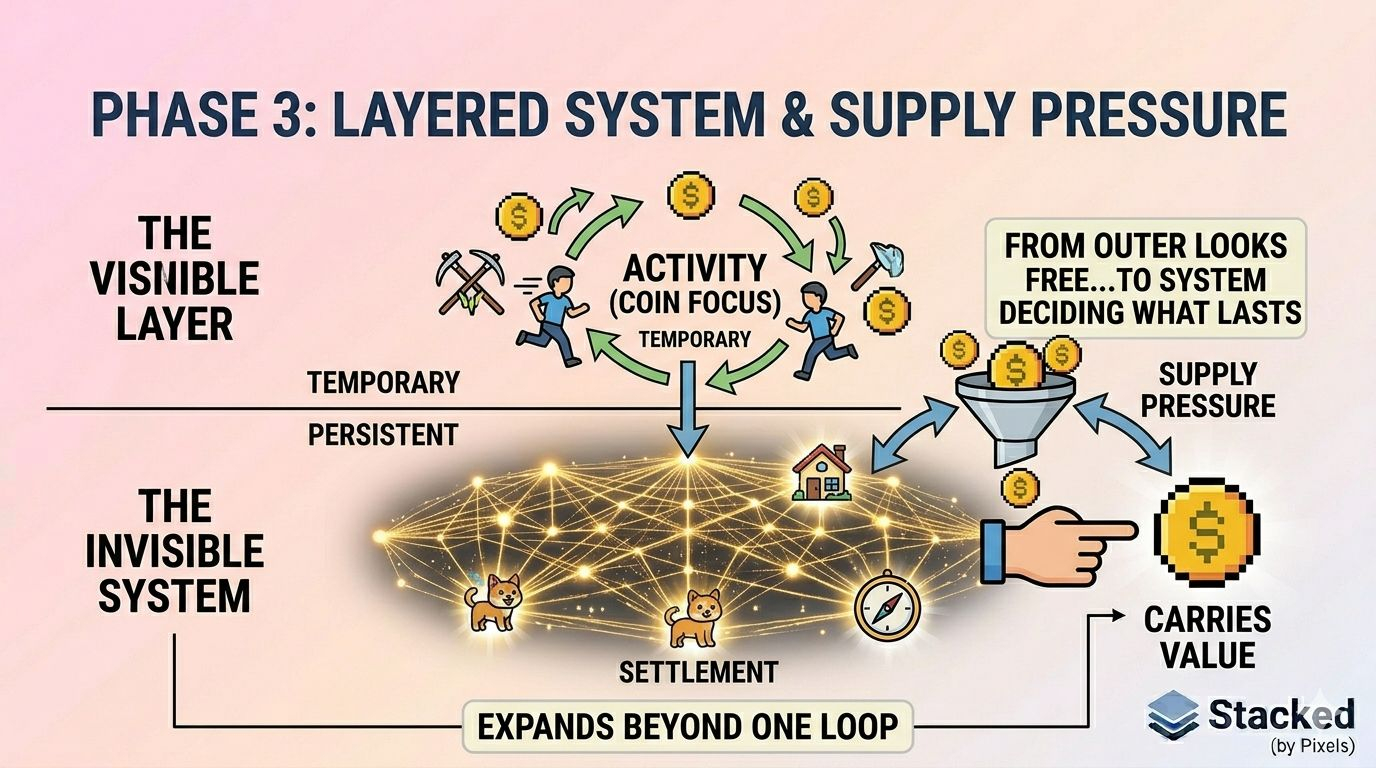
👉 $PIXEL carries value across systems
That is when it starts feeling less like a simple game 🎮 economy
and more like a layered system where not all effort is treated equally.
From the outside, it looks free.
But once you sit with it
it feels more like a system deciding what actually lasts 👀