

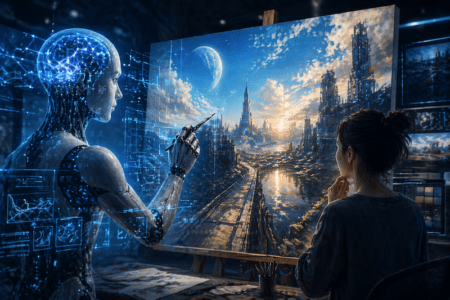
Artificial intelligence technology welcomes a key leap forward. OpenAI officially launched the next generation image generation system ChatGPT Images 2.0 on April 21, with the underlying model being gpt-image-2. Compared to the past generation mode centered on 'text to image', the biggest breakthrough in this update is the introduction of 'inference capability' into the image generation process, allowing AI to conduct logical planning and visual layout similar to a human designer before generation, marking a shift of AI drawing from a tool to a system with design thinking.
ChatGPT begins 'think before drawing'
Previously, image models mostly directly output images based on prompts, while Images 2.0 adds an inference engine that can analyze complex commands and pre-arrange the spatial relationships between visual elements. This means that users no longer need to fine-tune details through trial and error; the AI can complete a higher quality composition in one go.
At the same time, the model also has real-time info integration capabilities, able to generate content based on the latest data. For instance, in tests, the system can directly produce images that include real-time weather info, showcasing its potential in data visualization and real-time content generation.
Additionally, the new model supports generating multiple images at once while maintaining consistency of characters and objects across different scenes, significantly improving the stability issues seen in past AI image generation.
Quality and layout upgrades: targeting commercial design applications.
In terms of visual performance, Images 2.0 will output quality at a maximum of 2K resolution and enhance the ability to control details. Whether it's tiny fonts, interface elements, or complex charts, clarity and accuracy can be maintained, making it more aligned with actual commercial design needs.
Text generation capabilities have also made notable advancements. Compared to earlier models that often produced garbled text or typos, the new system has reached a usable standard in multi-language formatting (including Chinese and English), suitable for advertising materials, social media content, and product showcases.
In terms of size flexibility, the model supports various aspect ratios, allowing for dynamic generation of both landscape and portrait formats, suitable for mobile device interfaces and multimedia content production.
Design is heading towards a 'Vibe-directed' approach.
The industry widely believes that this update will have a profound impact on the content industry. Previously, design processes relied on multiple tools and manual adjustments, while Images 2.0 provides end-to-end capabilities, completing everything from copy conception to visual output in one go.
This model has also been described as shifting from 'fine-tuned operations' to 'Vibe-driven', where creators only need to describe the style and logic, and the AI can complete the overall design. Fields like game development, film storyboarding, and digital marketing are expected to benefit first.
In third-party evaluation platforms, the new model has demonstrated strong competitiveness, outperforming most similar products, indicating both its technological maturity and practicality have improved in tandem.
The image inference feature is available to paying users.
OpenAI has currently made basic image generation features available to the general public, while the advanced version with complete inference capabilities is offered to Plus, Pro, and enterprise users. For developers, gpt-image-2 is also being launched via API, supporting multi-round conversational editing and application integration, making it easier for businesses to embed image generation capabilities into their product workflows.
Source