
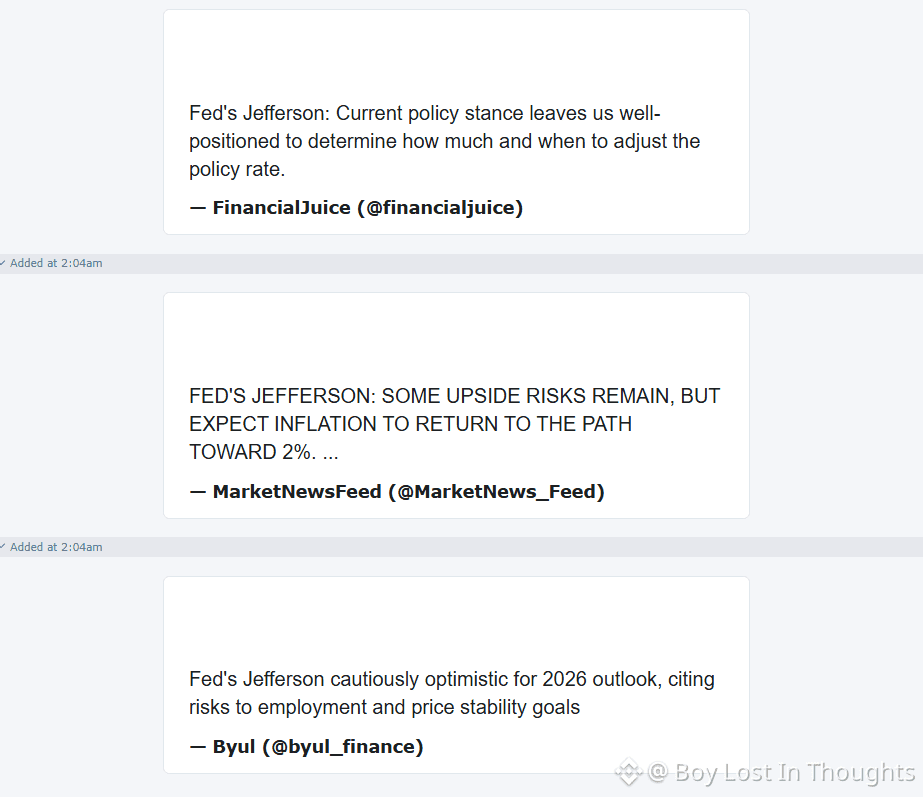
In a speech on the economic outlook and monetary policy implementation, Federal Reserve Vice Chair Philip N. Jefferson struck a tone of cautious optimism for 2026. He outlined key developments in growth, employment, and inflation, while explaining recent technical steps taken to ensure smooth monetary policy operations.
Major Points Highlighted:
Economic Outlook – “Cautiously Optimistic”
Growth: The economy remains strong, with Q3 2025 GDP at 4.3%, though Q4 was restrained by the government shutdown. Underlying expansion is around 2%.
Labor Market: Job growth has moderated, and the unemployment rate has edged up to 4.4%. Layoffs are low, but hiring is also low, indicating a softer but not rapidly deteriorating market.
Inflation: Progress toward the Fed’s 2% target has slowed. CPI inflation was 2.7% in December. While services inflation is falling, a pickup in core goods inflation (partly due to tariffs) is offsetting disinflation progress.
Risks: Downside risks to employment have increased, but inflation is still expected to return sustainably to 2%, with tariff effects seen as likely temporary.
Monetary Policy Stance – At Neutral, Data-Dependent
The Fed cut rates by 1.75 percentage points since mid-2024, which Jefferson views as having brought policy to a neutral stance—neither stimulating nor restricting the economy.
The current posture allows the Fed to be patient; future decisions on rate adjustments will depend on incoming data, the outlook, and the balance of risks.
Monetary Policy Implementation – A New Phase in Balance Sheet Management
The balance sheet runoff ended in December 2025 after reducing holdings by about $2.2 trillion.
With reserves now at an “ample” (but not abundant) level, the Fed has begun “reserve management purchases”—buying short-term Treasuries to maintain sufficient reserves and ensure smooth interest rate control.
Jefferson emphasized this is NOT quantitative easing (QE). These purchases are technical operations to support policy implementation, not to stimulate the economy.
The Fed also removed the cap on its standing repo facility to act as a ceiling on money market rates, a tool that saw increased usage during year-end pressures.
Bottom Line:
The Fed is in a watchful holding pattern on interest rates, focused on navigating risks to both employment and inflation. Meanwhile, it has entered a new technical phase of balance sheet management aimed at ensuring steady policy implementation without changing the overall monetary policy stance.

