

Most blockchains are very good at moving forward. Blocks finalize, transactions confirm, and state updates smoothly. From the outside, everything looks healthy. But there is a quiet assumption underneath all of this that rarely gets questioned.
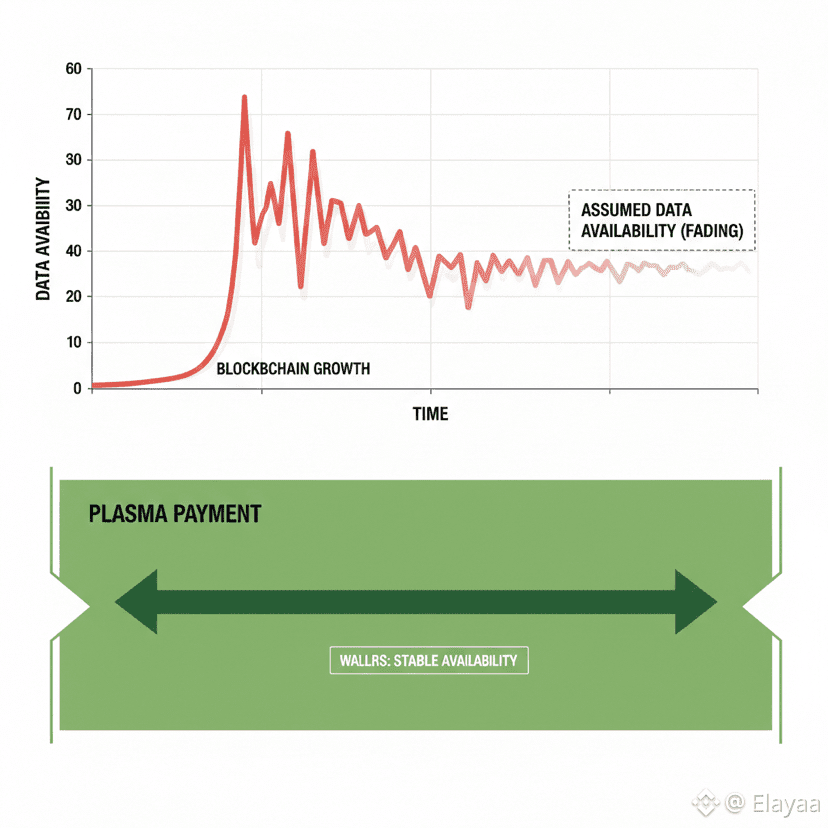
The assumption is that data will always be there.
Every transaction produces data that proves what happened. That proof is not always needed immediately. It is needed later, when something goes wrong, when users need to verify history, or when systems are stressed instead of growing. This is where many blockchains become fragile.
Early on, storage feels cheap and easy. Over time, history grows and incentives thin. Fewer participants want to carry the burden. Responsibility slowly concentrates. Nothing breaks loudly, but trust quietly shifts.
Walrus exists because this outcome is predictable.
Instead of hoping data stays available, Walrus treats availability as something that must be enforced. Data is split, encrypted, and distributed so no single party controls it. The network stays verifiable even when attention fades.
$WAL exists to make this reliable. Availability is rewarded. Failure has consequences. Walrus protects blockchain memory before it becomes a problem.

