

I remember a side event where the room felt louder than it should have. Conversations overlapped, names were exchanged quickly, and everyone carried a quiet urgency, to be seen, to be remembered, to matter.
I introduced myself more than once to the same people.
Not because they didn’t care, but because there was nothing to hold onto. No shared memory. No persistent thread connecting who I was yesterday to who I was in that moment.
By the end of the night, I had a strange realization: in crypto, your reputation doesn’t disappear, it just doesn’t travel.
Over time, I began noticing this everywhere.
People contribute meaningfully in one ecosystem, yet appear invisible in another. Builders restart their credibility each time they cross platforms. Contributors accumulate experience, but not continuity.
It creates a system where activity is constant, but recognition is fragile.
And that fragility shapes behavior.
People optimize for visibility over substance. Narratives become more portable than truth. Trust becomes something you reconstruct repeatedly instead of something that compounds.
Nothing is explicitly broken. But something feels inefficient, almost wasteful.
I came across Sign Protocol expecting another identity solution. Something profile based, perhaps social layer oriented.
@SignOfficial wasn’t trying to define identity. It was doing something more restrained, and strangely more powerful.
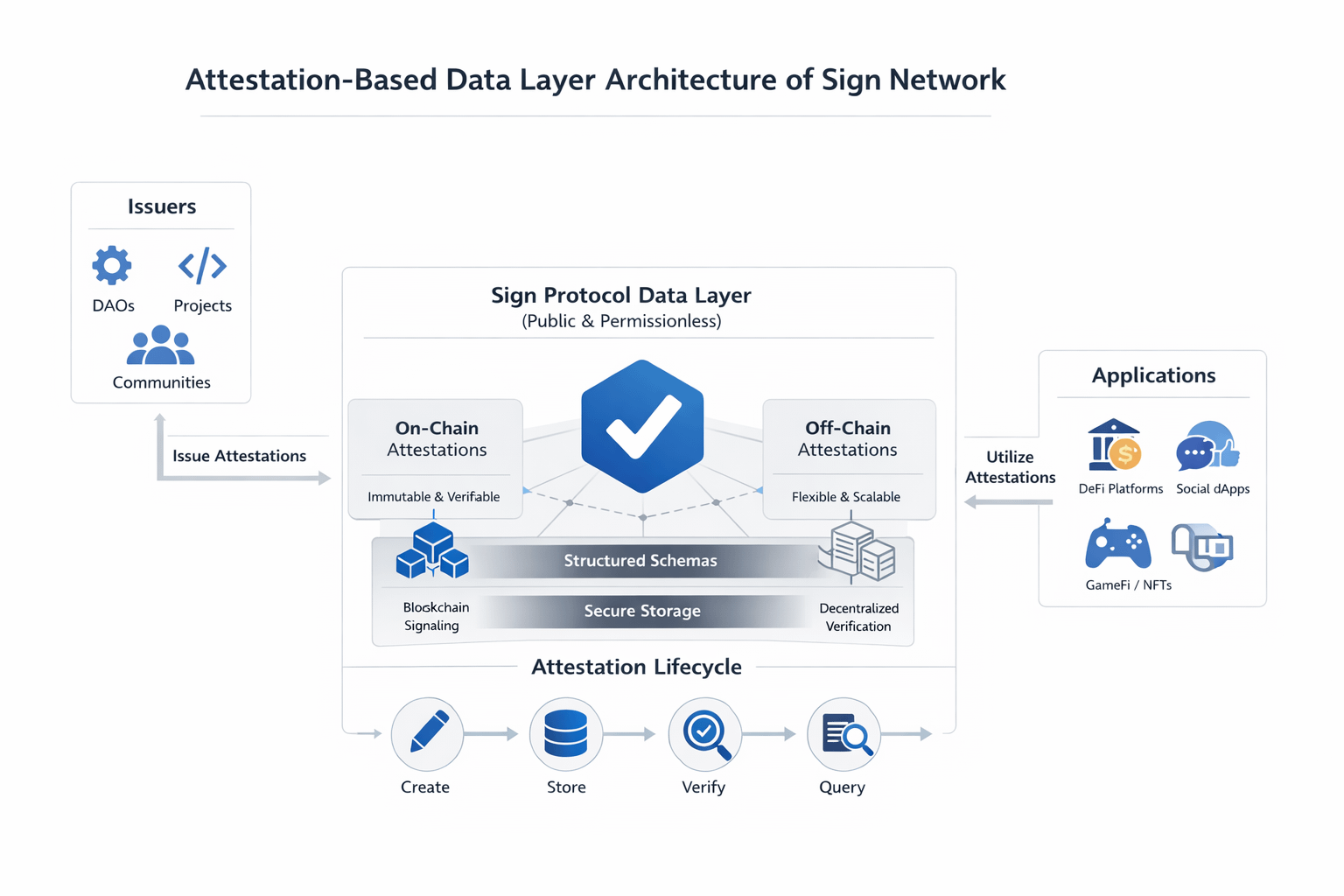
It focused on attestations.
Not who you claim to be, but what can be verifiably stated about your actions.
That shift felt small in wording, but significant in implication.
What I initially overlooked was how structured these attestations actually are.
They aren’t just records, they follow schemas.
That means contributions aren’t stored as loose signals or subjective claims, but as standardized data. Data that different applications can interpret, verify, and reuse without ambiguity.
That standardization is what enables interoperability, different applications speaking the same data language without needing to trust each other directly.
This is where it started to feel less like a feature and more like infrastructure.
$SIGN doesn’t try to store identity. It enables continuity.
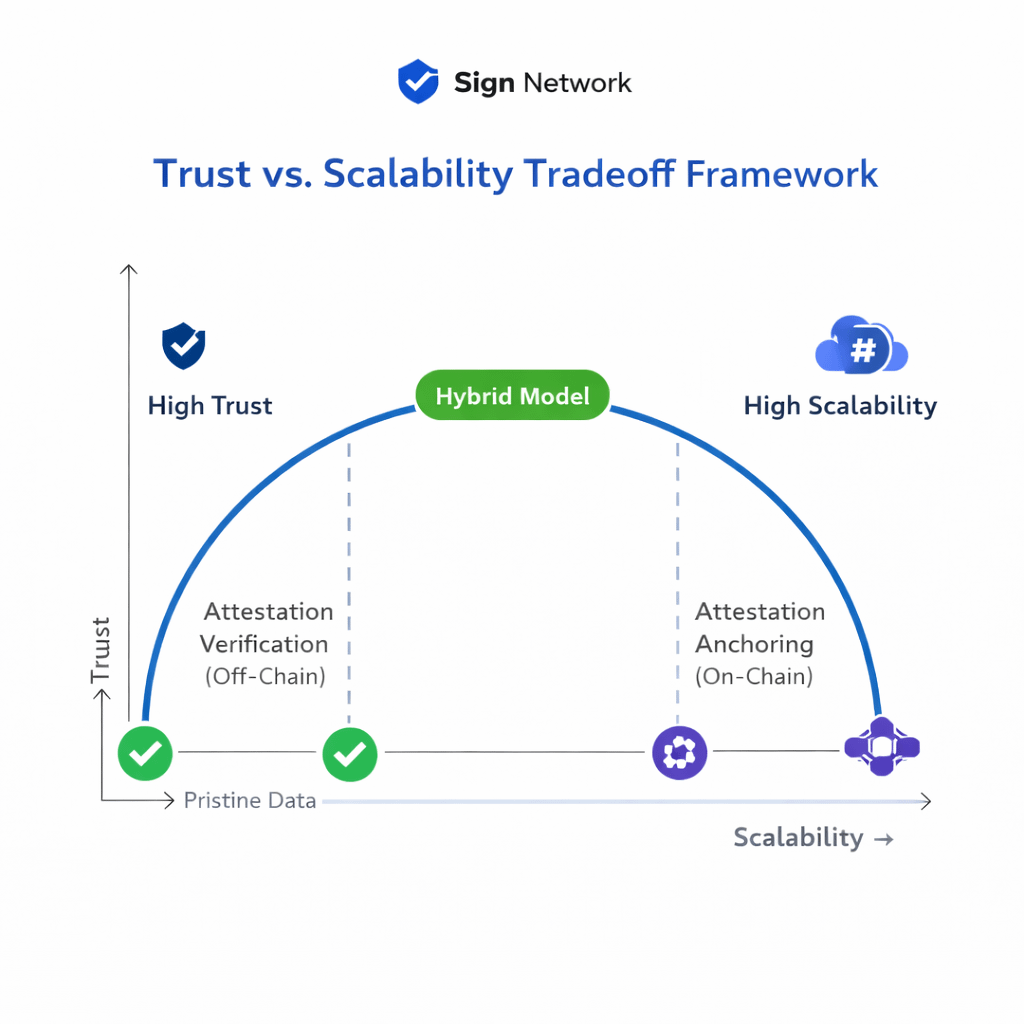
Attestations can anchor on chain when trust needs to be absolute, immutable, transparent, and verifiable at the highest level. Others remain off chain, where scale and flexibility matter more than permanence.
At first glance, this hybrid model feels like a compromise.
But upon reflection, it feels intentional.
Not all credibility requires the same weight. Some actions need strong guarantees. Others simply need to be remembered. Sign separates these layers without fragmenting them.
And importantly, these attestations aren’t just stored, they can be queried, verified, and referenced programmatically, turning credibility into something applications can actually use.
What made it more compelling is that no single entity controls this system.
Anyone can issue attestations within defined schemas.
There’s no central authority deciding what counts as valid contribution. Instead, credibility emerges from a network of verifiable statements, each anchored in a shared structure.
Over time, it starts to resemble a public data layer, one where credibility isn’t owned by platforms, but shared across them.
It doesn’t eliminate subjectivity but it makes it legible.
The more I thought about it, the more I realized this isn’t just a technical improvement, it’s a behavioral one.
When contributions are attested and persist, people begin to act differently.
There’s less incentive to optimize for short term visibility, and more incentive to build a track record that can be referenced across time and platforms.
Reputation stops being performative. It starts becoming cumulative.
And because these attestations are composable, they don’t stay confined to a single application. They can be reused, referenced, and built upon, turning isolated contributions into shared context.
This is where coordination begins to improve.
Not through enforced trust, but through accessible history.
Crypto has always had an unusual relationship with trust.
We design systems to minimize reliance on it, yet we constantly depend on it socially when choosing collaborators, evaluating projects, or interpreting signals.
The problem isn’t trust itself. It’s the lack of memory.
Without a persistent data layer, trust resets too easily. And when trust resets, coordination slows down.
Sign addresses this by making actions verifiable, structured, and portable.
From a psychological standpoint, this aligns with how humans naturally assess credibility. We don’t rely on single interactions, we look for patterns, consistency, and context.
Sign turns those patterns into data.
And data, when structured properly, doesn’t forget.
At some point, I started thinking less about the protocol and more about the system forming around it.
Because infrastructure alone doesn’t sustain itself, it needs alignment.
In that sense, the Sign Token feels less like a transactional asset and more like a coordination layer. It begins to align incentives between those issuing attestations, those verifying them, and the applications that rely on this shared data layer.
Not in an obvious way. But in a way that suggests long-term alignment between participation, data creation, and trust.
It doesn’t force value.
It allows it to emerge from usage.
Stepping back, this feels part of a larger transition.
We’re moving from an internet defined by content to one defined by verifiable actions.
Expression was enough in earlier systems. Visibility was enough in social platforms. But in increasingly decentralized environments, contribution needs to be recognized in a way that persists.
Especially as users move across ecosystems, chains, and communities.
Without a shared data layer, their history fragments.
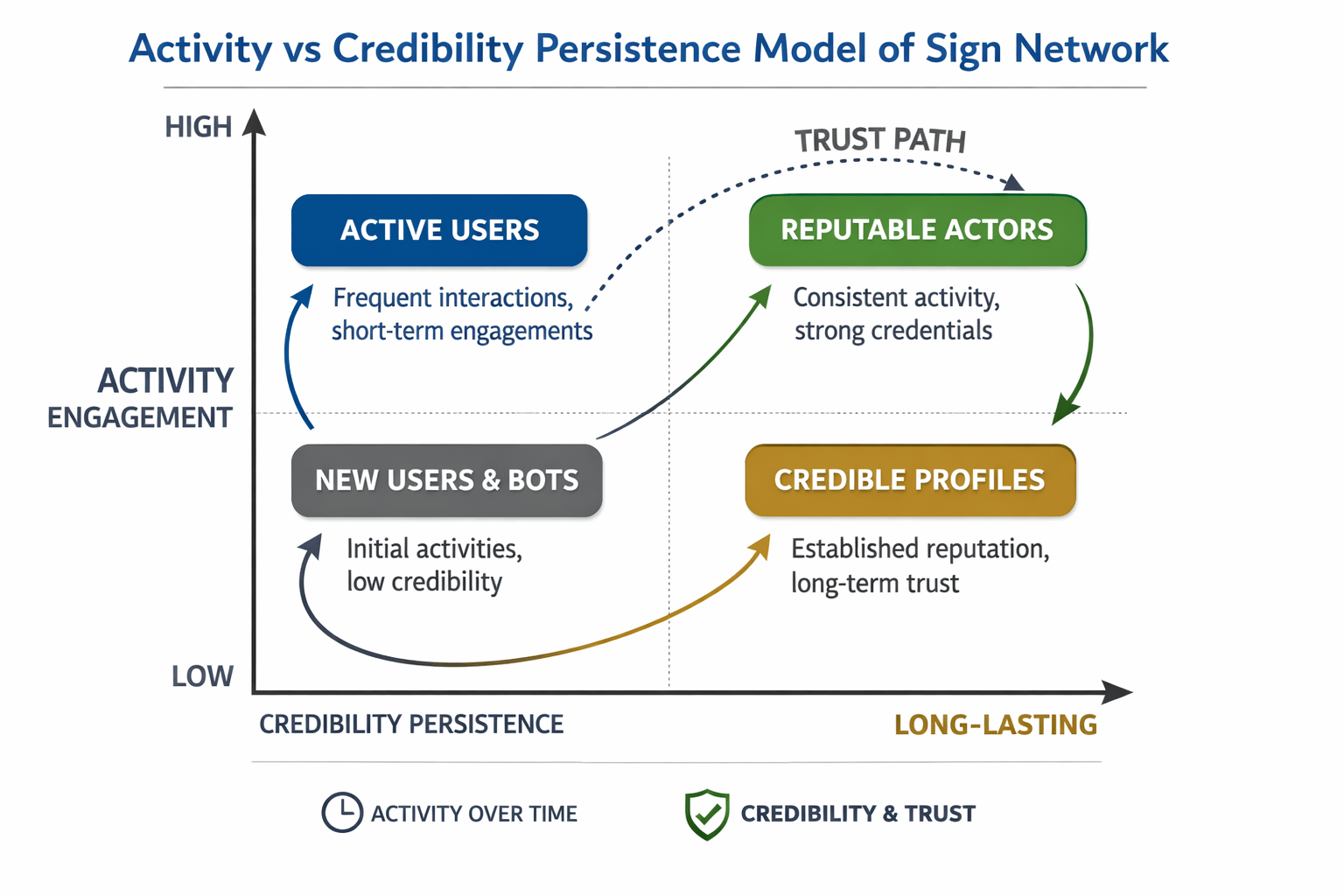
With something like #SignDigitalSovereignInfra , that fragmentation begins to resolve, not by centralizing identity, but by standardizing how actions are recorded and understood.
I went back to that conference memory recently.
What felt uncomfortable wasn’t the people. It was the absence of continuity.
Everyone was building, contributing, participating but none of it carried forward in a way that others could reliably see or trust.
Sign doesn’t solve human complexity. It doesn’t define reputation for you.
It simply ensures that what can be verified, isn’t lost.
I used to think reputation in crypto was something you had to constantly prove.
Now I’m starting to think the real problem was that nothing was built to remember it.
And maybe the quiet strength of something like Sign isn’t that it creates trust,
but that it finally gives it a structure that doesn’t disappear.