I remember noticing small token leftovers sitting in my wallet after normal activity.
People usually call these tiny balances dust. At first it feels irrelevant the value is too small to care about.
But over time I started seeing dust differently.
Even when it has no real utility dust still leaves a trace. And those traces don’t just sit there they quietly build a version of your activity history. If enough of them accumulate they can start shaping how behavior is interpreted even when they don’t reflect any meaningful intent.
I’ve seen situations where wallets look active just because of these tiny remnants. It makes you wonder how much of on-chain analysis is actually signal… and how much is just leftover noise.
That’s where ideas connected to @MidnightNetwork begin to feel relevant.
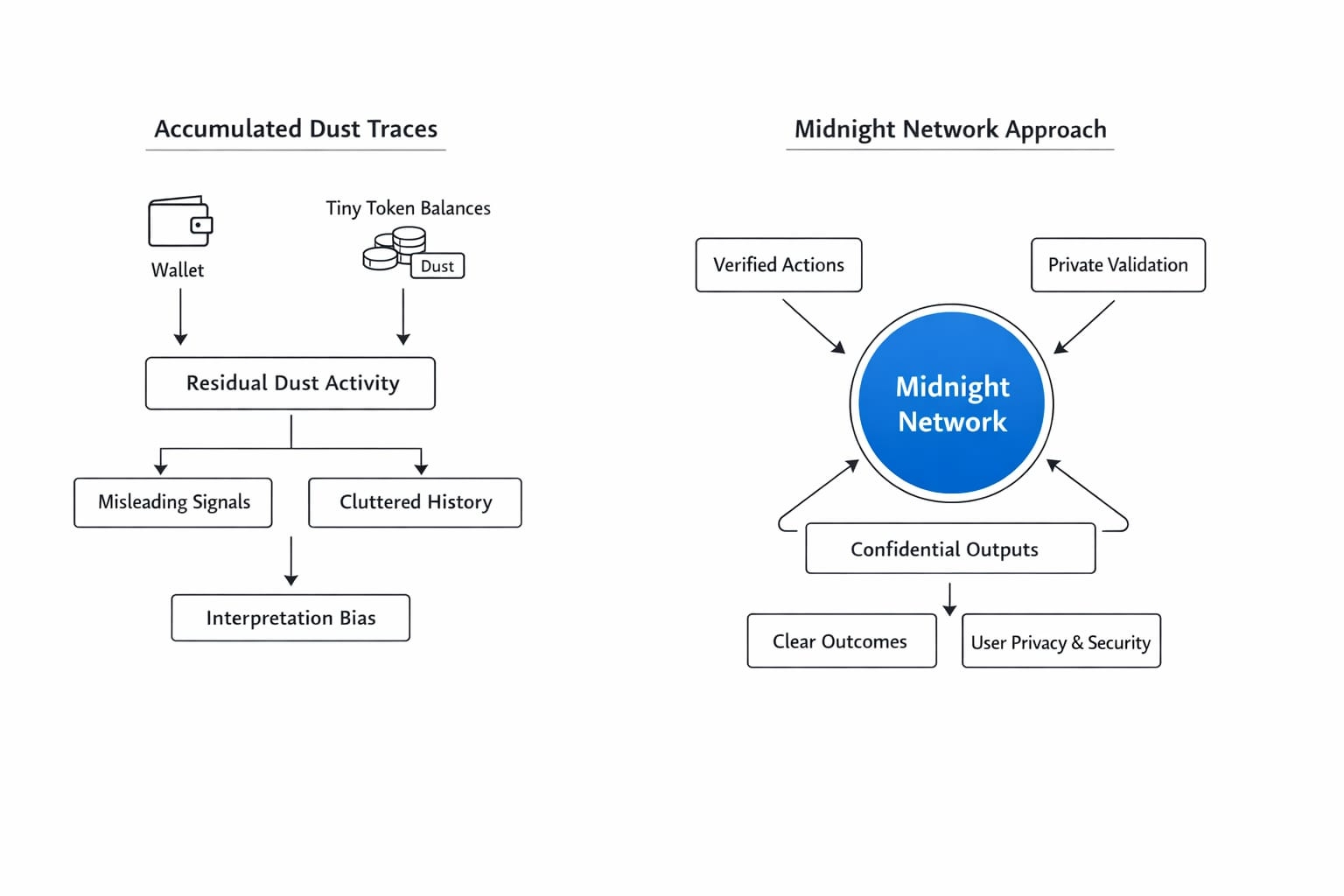
Instead of relying on accumulated traces like dust to guess what happened the focus shifts toward confirming that useful actions were completed correctly. It’s less about what remains in the wallet and more about what can be proven without exposing unnecessary details.
From a participant’s point of view that changes the experience.
You’re not being indirectly judged by fragments of activity that don’t really mean anything. Attention moves toward real contribution not accidental residue.
As networks grow small things like dust don’t stay small. They influence perception metrics even decisions.
And honestly I think this is where many current systems still fall short they treat leftover traces as signals.
Midnight Network points toward a different direction:
one where validation focuses on what actually matters and everything else doesn’t have to follow you around forever.