

Bitcoin is undergoing a structural transformation, with spot ETFs—led by BlackRock’s iShares Bitcoin Trust (IBIT)—moving to the center of liquidity and price discovery. Since approval in 2024, ETFs have evolved from simple investment vehicles into core market infrastructure.
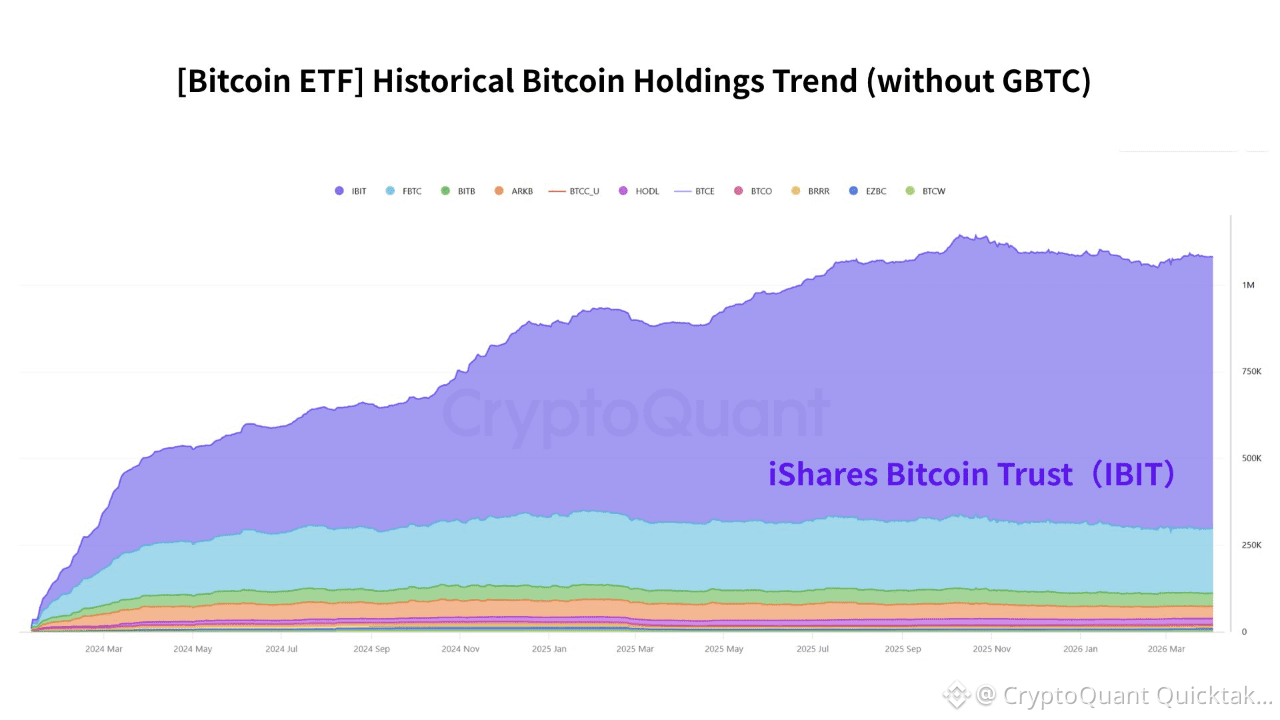
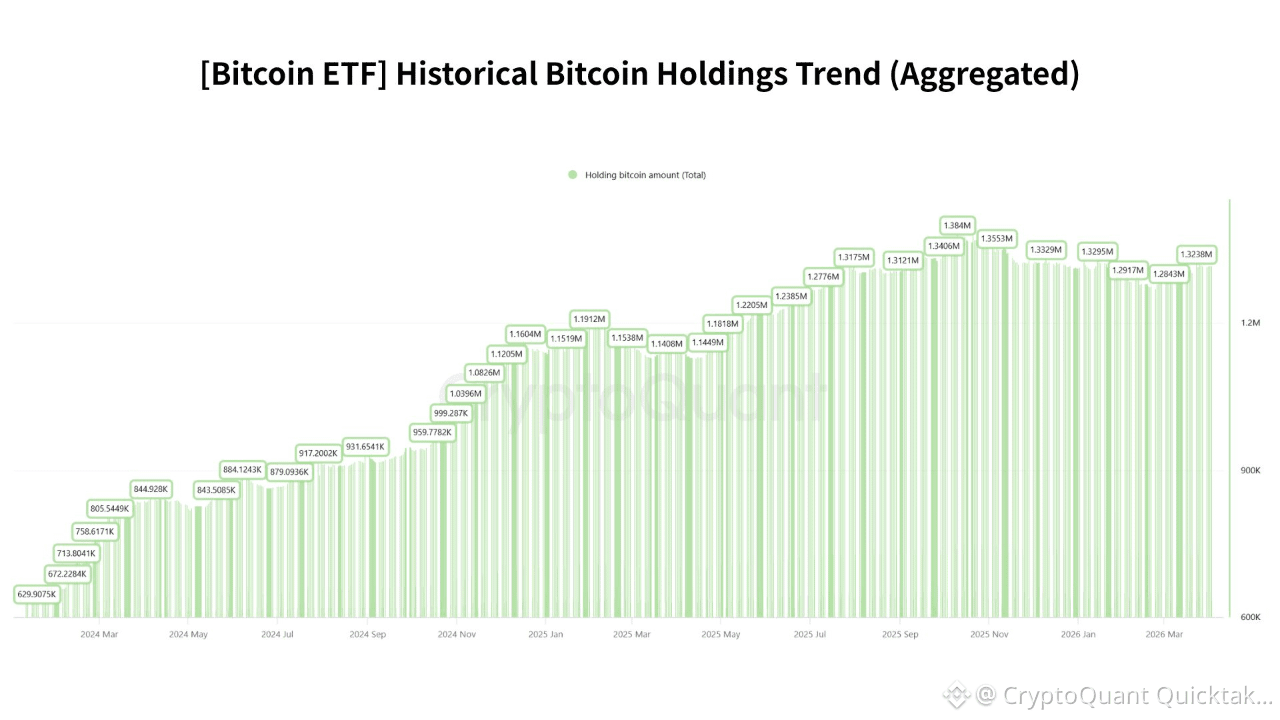
U.S. spot Bitcoin ETFs now hold roughly 1.3 million BTC, about 6–7% of total supply. IBIT alone accounts for nearly 780,000 BTC, dominating market share. Daily trading volume has reached $16–18 billion, rivaling or exceeding Coinbase and Binance. This signals a shift in price discovery from exchanges to ETF markets.
The charts “Bitcoin ETF Historical Bitcoin Holdings Trend (without GBTC)” and “(Aggregated)” confirm this transition. IBIT is driving growth almost single-handedly, while total ETF holdings have doubled from ~600K BTC to ~1.3M BTC. This reflects not just inflows, but a structural supply lock—BTC being removed from liquid circulation.
ETF mechanics reinforce this dynamic. Authorized participants arbitrage price gaps, tightly linking ETF and spot markets. The 2025 approval of in-kind creation/redemption significantly improved capital efficiency, accelerating institutional participation.
Looking ahead, potential ETF approval in Japan could be a major catalyst. With over ¥2,000 trillion in household assets, even small allocations could meaningfully impact Bitcoin’s supply-demand balance, extending this ETF-driven model globally.
Bitcoin is no longer just a crypto asset—it is becoming a core financial instrument within global capital markets.
Written by XWIN Research Japan