
Iran peace talks have entered their most uncertain 48 hours — and crypto markets are watching closely. Vice President JD Vance is flying to Islamabad to lead a U.S. delegation that includes envoys Steve Witkoff and Jared Kushner, Axios reports, even as Tehran publicly says it “has no plans” for a second round of talks. Iran’s Foreign Ministry called U.S. statements about negotiations “a media game” and has privately warned intermediaries that the U.S. could be using the talks to construct a “blame game” narrative — announcing diplomacy while preparing military strikes timed with the ceasefire’s Wednesday expiration. What’s happening on the ground - Pakistan has locked down the capital and fortified its Red Zone with thousands of paramilitary and army personnel in anticipation of another round. Two U.S. Air Force C-17s landed Sunday with security equipment and vehicles, signaling Washington’s intent to proceed whether Iran confirms or not. - The U.S. team traveling to Islamabad is the same group that led the unsuccessful first round on April 11–12. - Tehran intensified its suspicion after the Sunday seizure of the vessel Touska, which occurred hours after former President Trump announced the Pakistan talks. - Iran’s lead negotiator Mohammad Bagher Ghalibaf said state forces remain “ready” even as diplomacy continues — underscoring that Tehran is treating military and diplomatic tracks as simultaneous, not mutually exclusive. - Pakistan frames the effort as an ongoing “Islamabad process” rather than a single round, giving it diplomatic flexibility if talks falter. Prime Minister Shehbaz Sharif spoke with Iranian President Masoud Pezeshkian, and Pakistan’s army chief Field Marshal Asim Munir has been the primary intermediary between delegations. - Despite Tehran’s official denial, Pakistani security preparations were completed, and an Iranian parliamentary official told Al Jazeera Iran would “likely” send a team Monday or Tuesday — suggesting negotiations could still materialize at the last minute. Why crypto traders should care The next two days could dictate short-term trajectories for Bitcoin and other risk assets: - Ceasefire extension or a credible deal: mirrors the market reaction after April 8 — oil prices plunge, and Bitcoin heads higher. Analysts say a genuine deal could propel BTC toward $80,000. - Confirmed collapse and resumed strikes: geopolitical risk spikes, likely pushing institutional buyers to pull back and testing Bitcoin’s demand floor below $70,000. The sticking point: Iran’s nuclear program A permanent halt to uranium enrichment is the central hurdle. The U.S. demands Iran stop enrichment activities; Iran insists it will not surrender its roughly 440-kilogram stockpile. Diplomats have floated technical fixes — for example, third-party custody of the material — but no formula has been publicly endorsed by either side. Pakistani intermediaries have reportedly been exploring such options, but bridging that gap remains the toughest diplomatic nut to crack. Bottom line Traders and miners should brace for volatility. Whether Islamabad yields a breakthrough or collapses into renewed strikes will likely move oil and Bitcoin in opposite directions: a deal would depress oil and boost BTC; a breakdown would raise oil and weigh on crypto sentiment. The coming 48 hours are pivotal. Read more AI-generated news on: undefined/news

Artigo
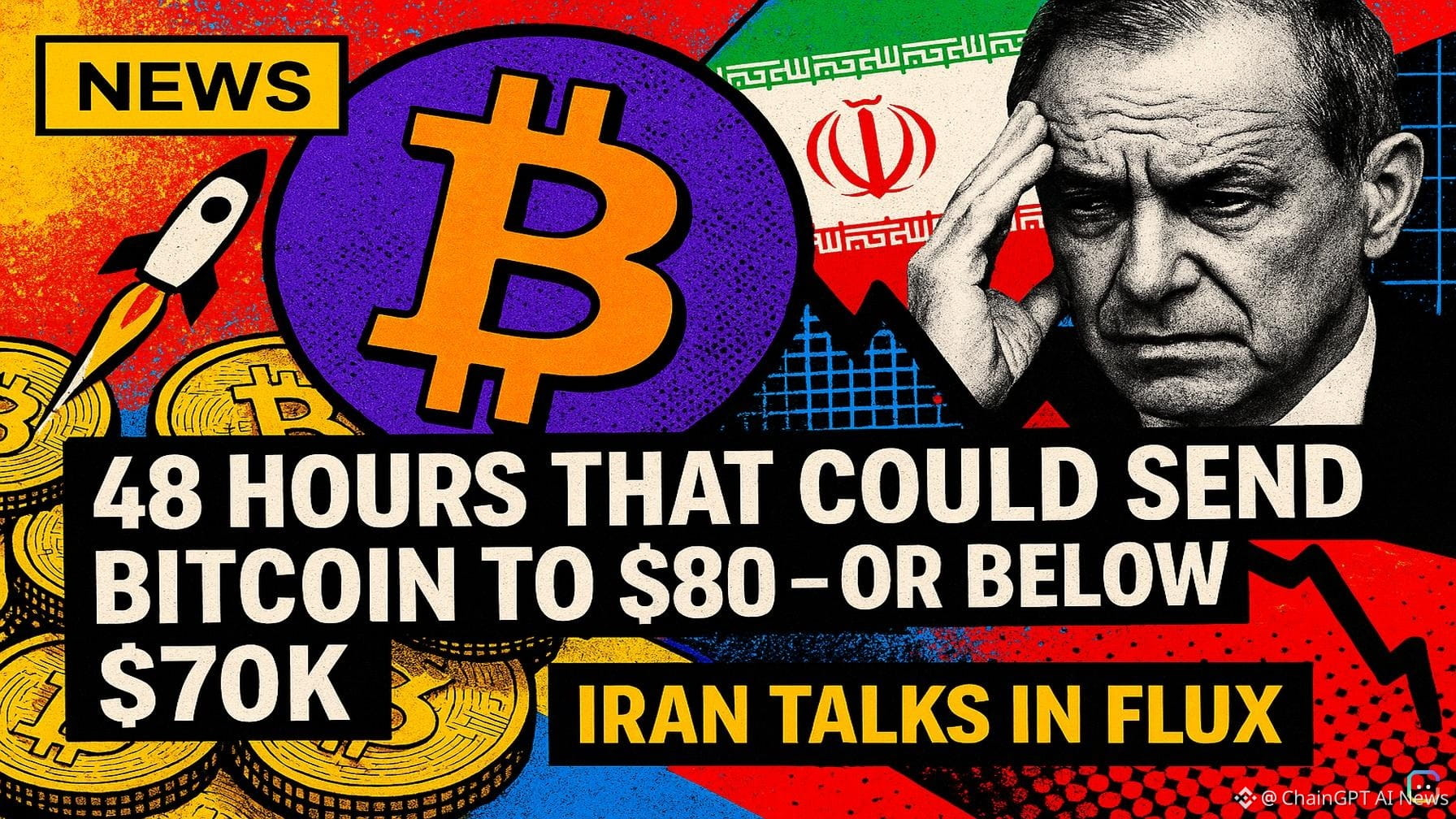
48 Hours That Could Send Bitcoin to $80K — or Below $70K: Iran Talks in Flux
Aviso Legal: inclui opiniões de terceiros. Não se trata de aconselhamento financeiro. Poderá incluir conteúdos patrocinados. Consulta os Termos e Condições.