

Bitcoin is not facing a simple short-term correction, but a structurally driven crisis fueled by cascading leverage liquidations and deep spot-market fear. On-chain data shows a clear “cascading dumping” pattern, where capitulation from long-term holders triggers panic selling among short-term investors.
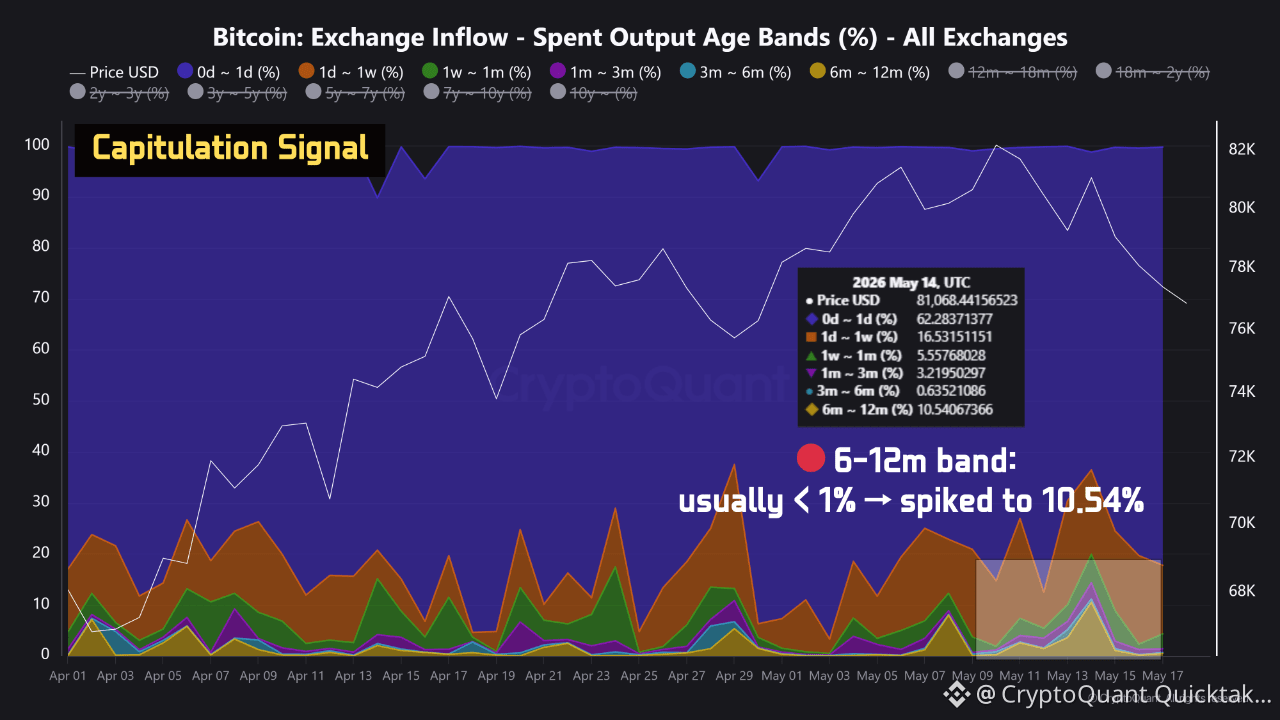
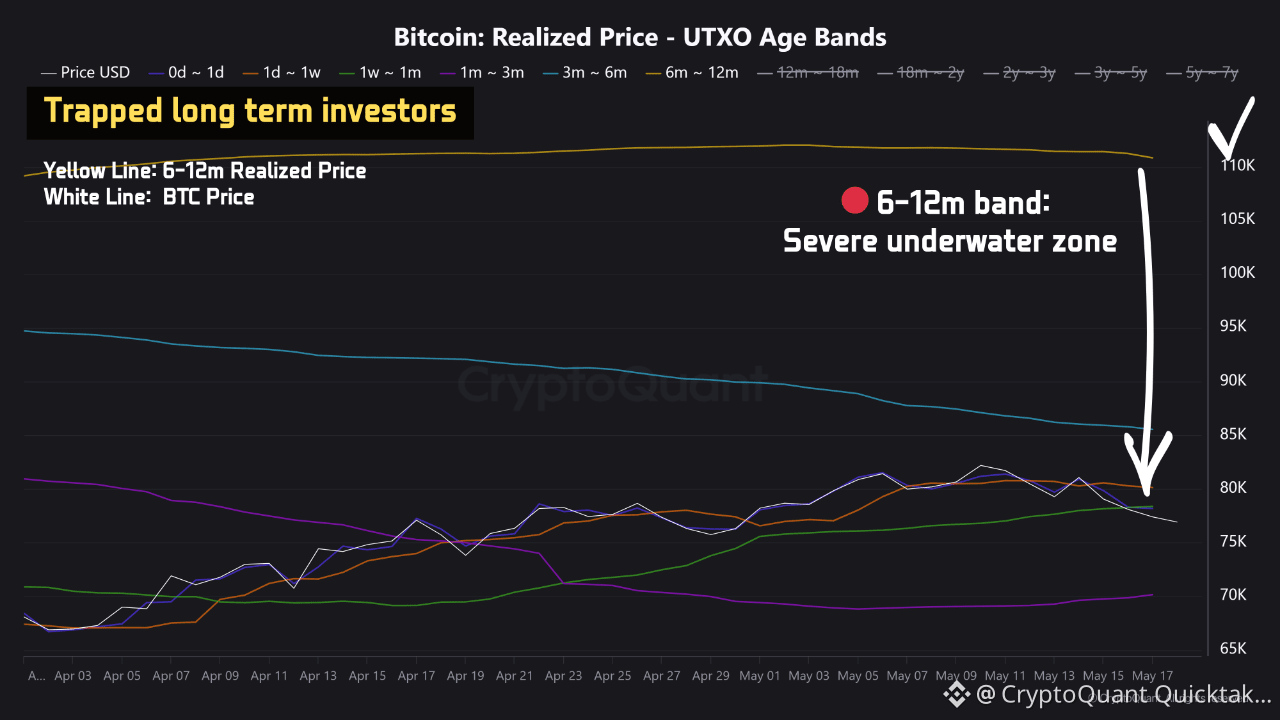
Long-term holders who bought 6-12 months ago have an average realized entry near $110,851. After the recent collapse, many entered deep unrealized losses. Since May 14, on-chain flows show heavy exchange inflows from these holders. The SOAB ratio for 6-12 month coins, normally below 1%, surged abnormally to 10.54%, signaling large-scale capitulation. Historically, this reflects investors locking in major losses and exiting the market, creating severe spot-market selling pressure.
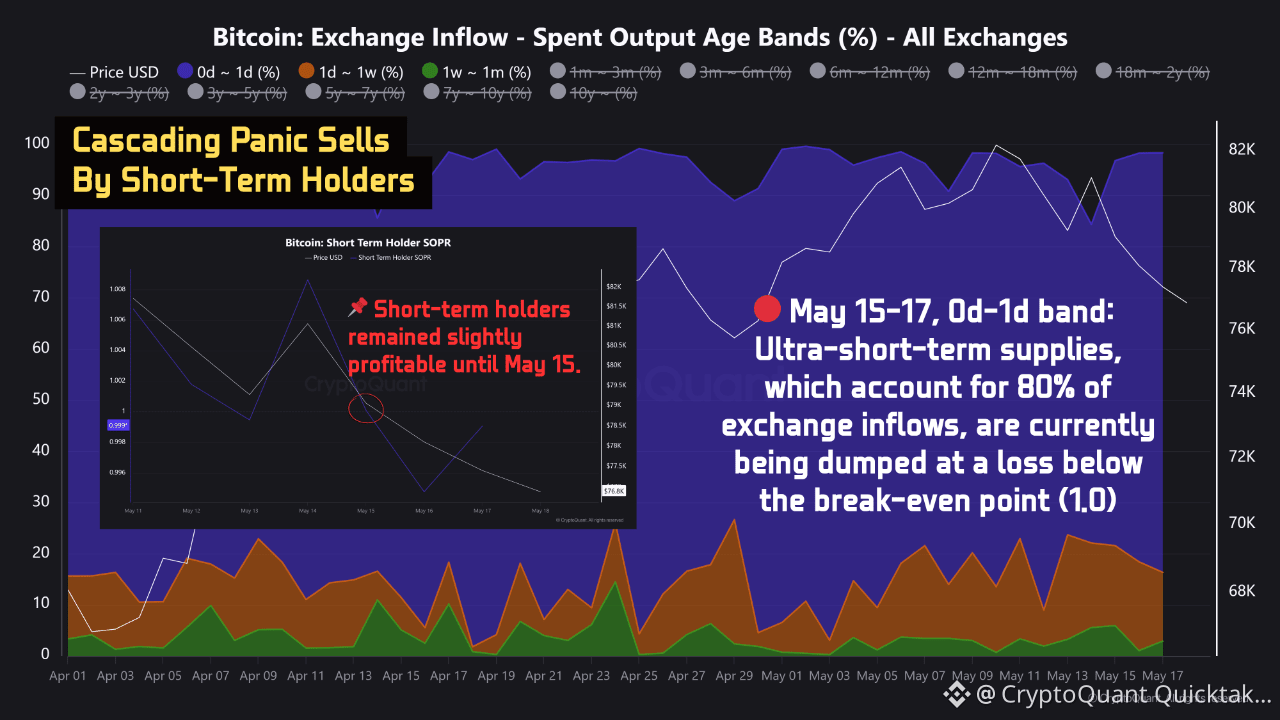
This shock rapidly spread to short-term investors. Although 70-85% of exchange inflows are usually 0-1 day trading-related coins, profitability indicators reveal broader panic selling. On May 16, STH-SOPR fell to 0.994 and aSOPR dropped to 0.996, both below the critical 1.0 level. Even on May 17, STH-SOPR remained weak at 0.999, confirming that most short-term inflows are not profit-taking, but loss-cutting driven by fear.
The current decline is therefore an internally driven market crisis caused by derivative liquidations, large-scale long-term holder capitulation, and cascading panic from short-term participants. Until this toxic supply is fully absorbed and sentiment stabilizes, a rapid V-shaped recovery remains unlikely.
avoid aggressive dip-buying while the market remains in an extreme fear phase. Additionally, the $80,127 range the average entry price of 1 day to 1 week holders should be treated as a critical support level.
Written by Easy On Chain