

 It was quieter than that. I was cleaning up old files one night, half-asleep, deleting things I didn’t need anymore. And it hit me—none of this stuff actually lives with me. Not really. It’s all sitting on servers owned by companies I don’t know, in places I’ll never see. I just rent access. That thought stuck around longer than I expected.
That’s probably why Walrus caught my attention later on.
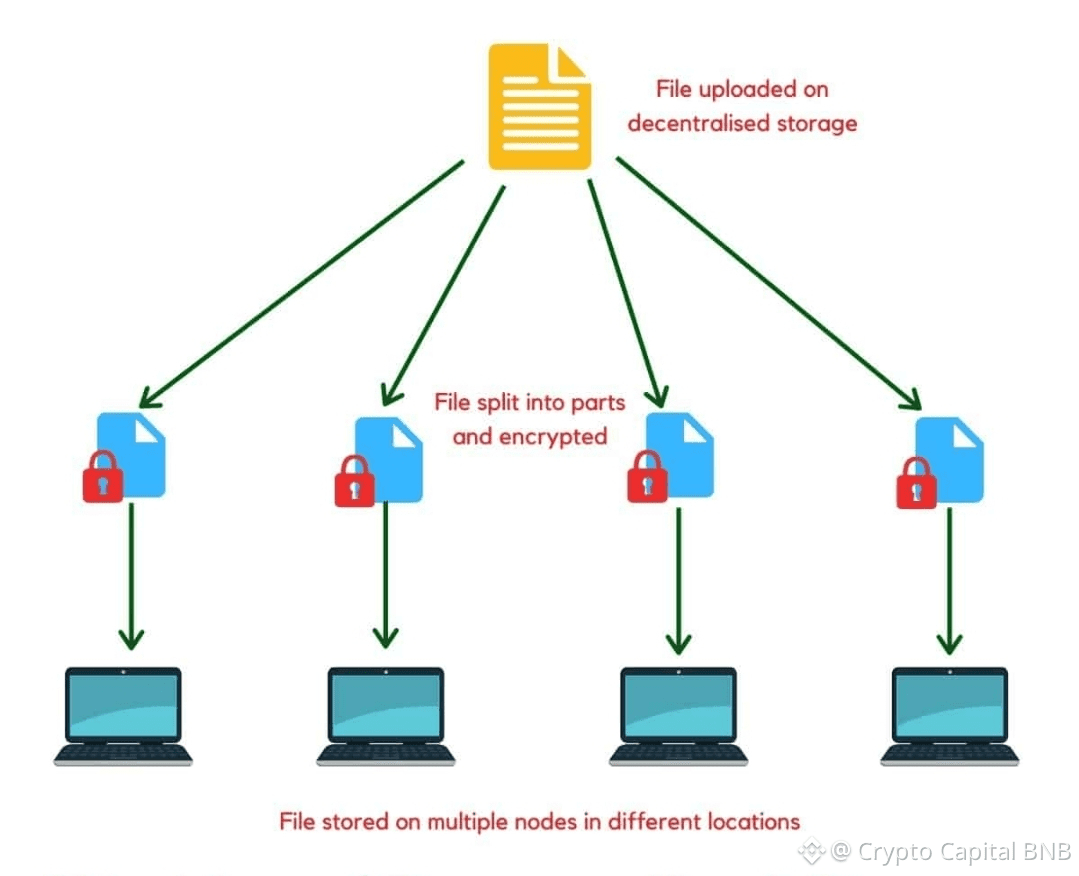
Not because someone hyped the token. Not because of price action. I think I saw it mentioned in passing, maybe in a technical thread, something about decentralized storage on Sui. Normally I scroll past things like that. “Decentralized” and “private” are words that get abused a lot in crypto. But this time, I slowed down and actually looked.After spending time reading, poking around, and trying to understand how Walrus Protocol works, I realized it’s not trying to be loud. And that alone makes it stand out.At its core, #Walrus is about storing data in a way that doesn’t rely on one central company or server. Instead of uploading a file and trusting a single provider, Walrus breaks data into pieces and spreads them across a decentralized network. No one node has everything. No single failure takes the whole thing down. It’s not magic, but it’s a very different mindset from traditional cloud storage.I won’t pretend I understood everything instantly. There’s erasure coding, blob storage, and a lot of backend mechanics that go way over the head of the average user. But the idea itself is simple enough: don’t put all your data in one basket, especially if you don’t own the basket.Walrus runs on the Sui blockchain, and honestly, that choice makes sense. Sui was built with performance and scalability in mind, especially for applications that deal with large amounts of data. I’ve used a few Sui-based apps before, and while the ecosystem is still young, the speed difference is noticeable. @Walrus 🦭/acc feels like it’s leaning into what Sui does well instead of forcing something that doesn’t fit.Then there’s the $WAL token. This is where I usually get skeptical. Too many projects slap a token on top of something just to have one. With Walrus, WAL actually has a role. It’s used for staking, governance, and paying for storage-related actions. That doesn’t mean the token is risk-free or perfectly designed, but it does mean it’s not just decorative.From what I’ve seen, governance is meant to matter here. WAL holders get a say in how the protocol evolves. In theory, that’s great. In practice… well, we’ve all seen how governance can drift when most holders don’t bother voting. That’s one of my real concerns. If only a small group stays active, decentralization becomes more of a label than a reality.Another doubt I have is adoption. Decentralized storage sounds great in crypto circles, but outside of that bubble, it’s still a hard sell. Enterprises like privacy until something goes wrong. Then they want customer support, guarantees, and someone to blame. Walrus will need solid tooling and a smooth user experience if it wants to go beyond developers who already believe in the idea.And competition is real. Walrus isn’t alone in this space. There are other decentralized storage projects with more funding, bigger names, and louder communities. Walrus feels almost intentionally quiet. I like that, personally, but crypto doesn’t always reward subtlety.Still, there’s something about it that feels… grounded. It doesn’t promise to replace the entire cloud overnight. It feels more like infrastructure—something you don’t think about every day, but that quietly does its job in the background. Those kinds of projects rarely get viral attention, but they tend to age better.From my own experience watching this space, the projects that survive aren’t always the flashiest ones. They’re the ones that solve a real problem and keep doing it without constantly changing their story. Walrus seems to fall into that category, at least so far.I’m not all-in. I’m not even close. I don’t think that’s necessary. But I am paying attention. I’m using it, following updates, and trying to understand where it fits in a broader decentralized future. In an industry full of noise, hype cycles, and empty narratives, anything that makes me stop and think is worth some time.Walrus might never be a household name. And honestly, it might not need to be. Sometimes the most important pieces of the system are the ones most people never notice—until the day they realize they don’t want their data living somewhere they don’t control anymore.