
There comes a point where the question around data changes. It is no longer about speed or convenience or even privacy. It becomes about time. About whether something you create today will still exist years from now when you are no longer thinking about it. That is the moment Walrus starts to make sense. Not as a reaction to fear but as an acceptance of responsibility.
Most digital systems are built for the present moment. They assume constant attention constant maintenance and constant oversight. Data survives as long as someone is actively paying for it watching it managing it. Walrus begins from a different place. It assumes that people move on. Projects change. Companies disappear. And yet some data still deserves to remain.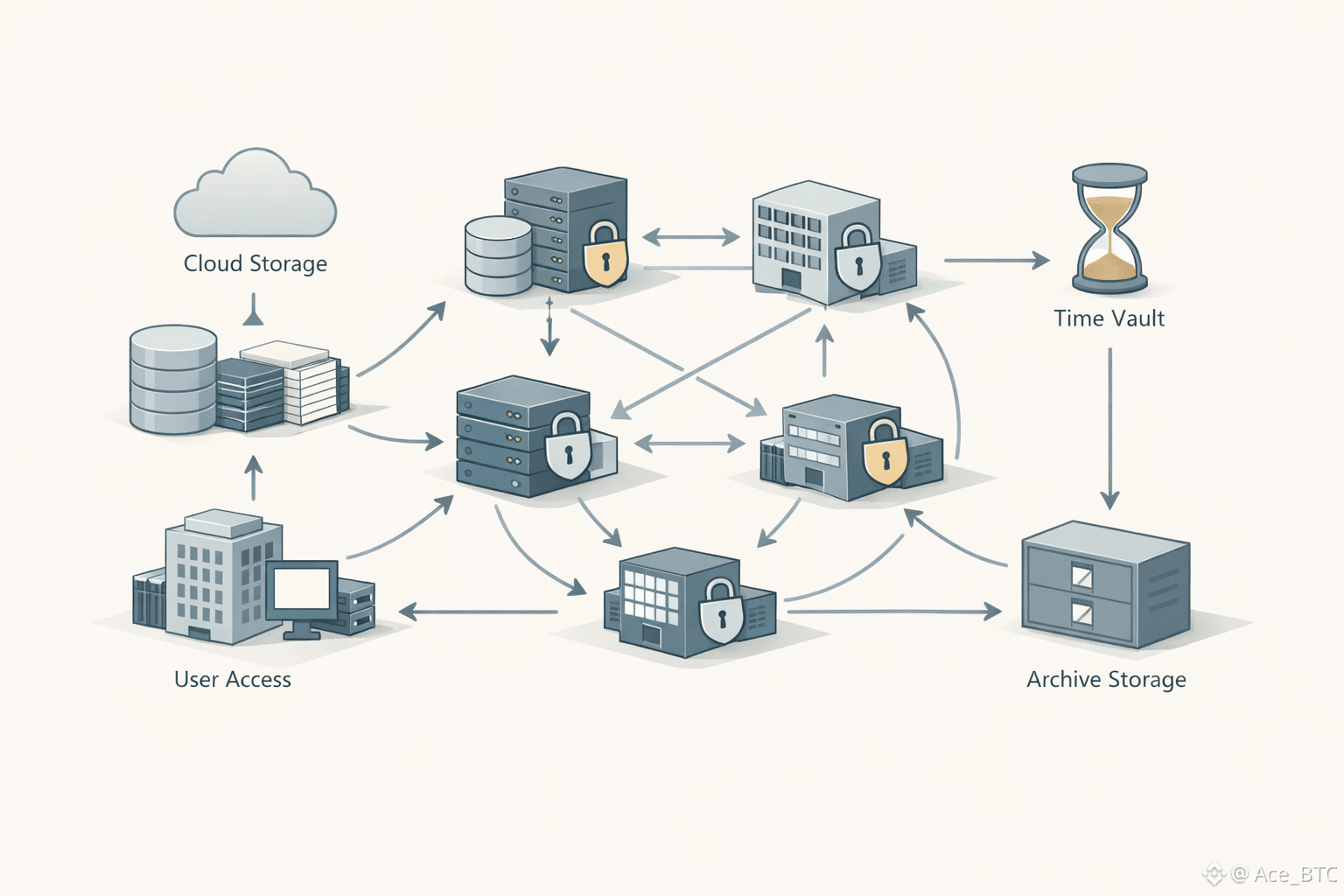
Walrus is a decentralized storage protocol built on the Sui blockchain designed to treat data as something meant to outlive its creators. WAL is the native token that quietly coordinates this responsibility. But Walrus is not built around speculation or urgency. It is built around the idea that long term systems should feel calm rather than demanding.
Instead of storing data as a single object in a single location Walrus breaks it into fragments using erasure coding. Those fragments are distributed across independent storage providers. Even if parts of the network go offline the data can still be reconstructed. Blob storage allows large files to exist efficiently without forcing everything directly on chain. The result is not speed for its own sake but durability over time.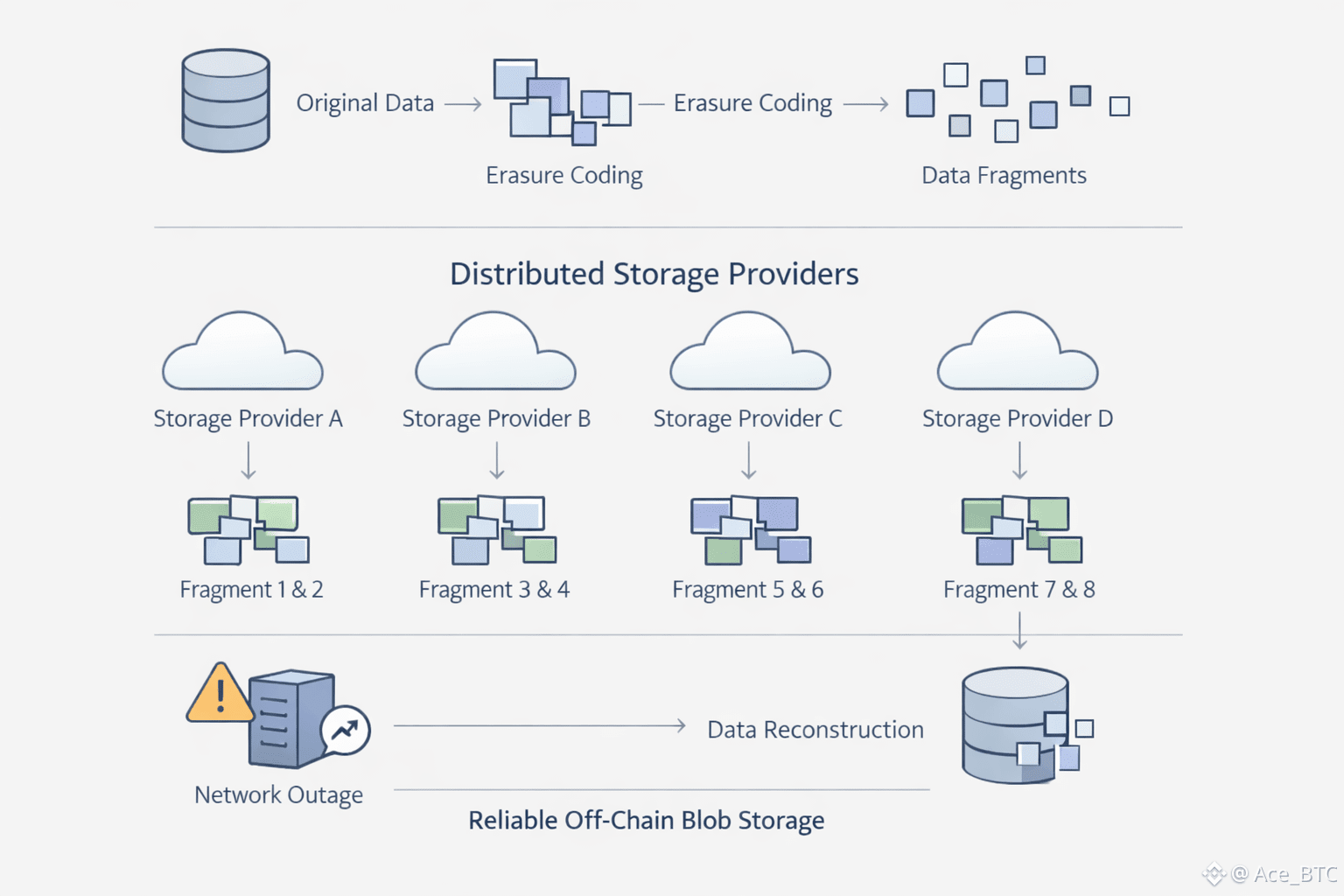
The decision to build on Sui reflects this thinking. Sui’s object based model and parallel execution make it suitable for systems that need to handle ongoing storage operations without congestion. Walrus does not need dramatic throughput spikes. It needs consistent reliability. When looking at these architectural choices they feel less like innovation chasing and more like infrastructure settling into maturity.
WAL plays a supporting role in keeping this system stable. Storage providers stake WAL which creates accountability over long periods. Governance uses WAL to guide protocol evolution slowly rather than reactively. Incentives are structured so that remaining available matters more than attracting attention. If it becomes anything more than this it will be because the system earned it through consistency.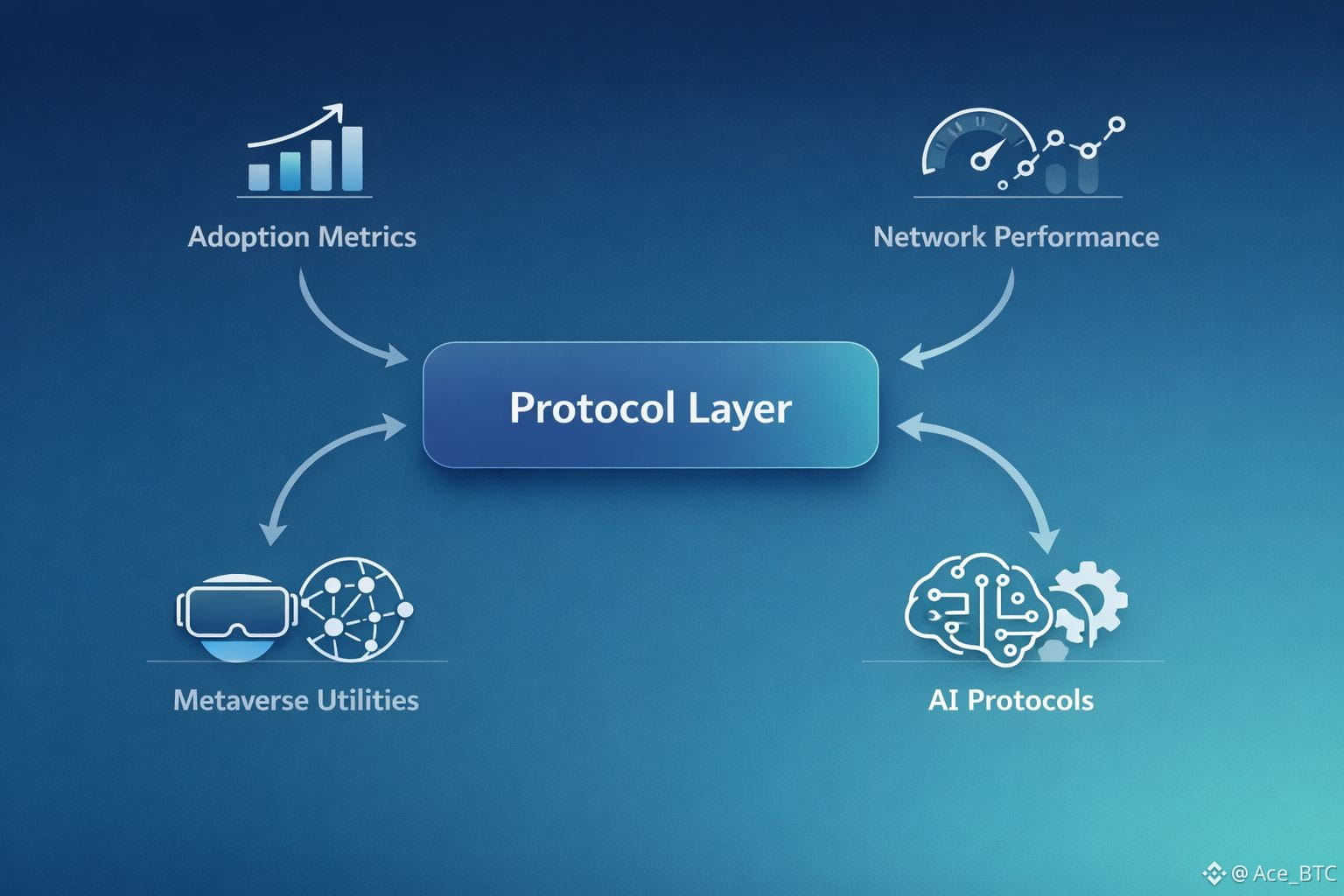
Walrus becomes easier to understand when you imagine data aging rather than disappearing. A developer storing application assets that should still be retrievable long after the original team has moved on. A creator preserving work without worrying about platform relevance. An organization archiving information that should remain accessible regardless of shifting policies. These users are not looking for excitement. They are looking for continuity.
What makes Walrus feel different is restraint. Fully centralized storage is efficient but dependent. Fully on chain storage is transparent but impractical at scale. Walrus sits between these extremes by using the blockchain for coordination truth and incentives while allowing data to live where it can be handled sensibly. This balance does not feel accidental. It feels like a response to how systems actually fail over time.
Growth within Walrus does not announce itself loudly. It appears through steady increases in stored data participation from independent operators and developers building real applications instead of demonstrations. Governance conversations slowly shift from possibility to responsibility. This is the kind of growth that suggests a system expecting to be around long enough for patience to matter.
There are risks and they deserve to be acknowledged. Storage incentives must remain sustainable. Decentralization must deepen with time rather than remain symbolic. Competition from other decentralized storage networks is real. Recognizing these risks early is part of treating infrastructure seriously rather than romantically.
Looking ahead the most meaningful future for Walrus is one where it is rarely discussed. Data simply remains where it was placed. Applications stop designing around impermanence. Storage becomes background infrastructure rather than a recurring concern. If Walrus succeeds it will not feel impressive. It will feel dependable.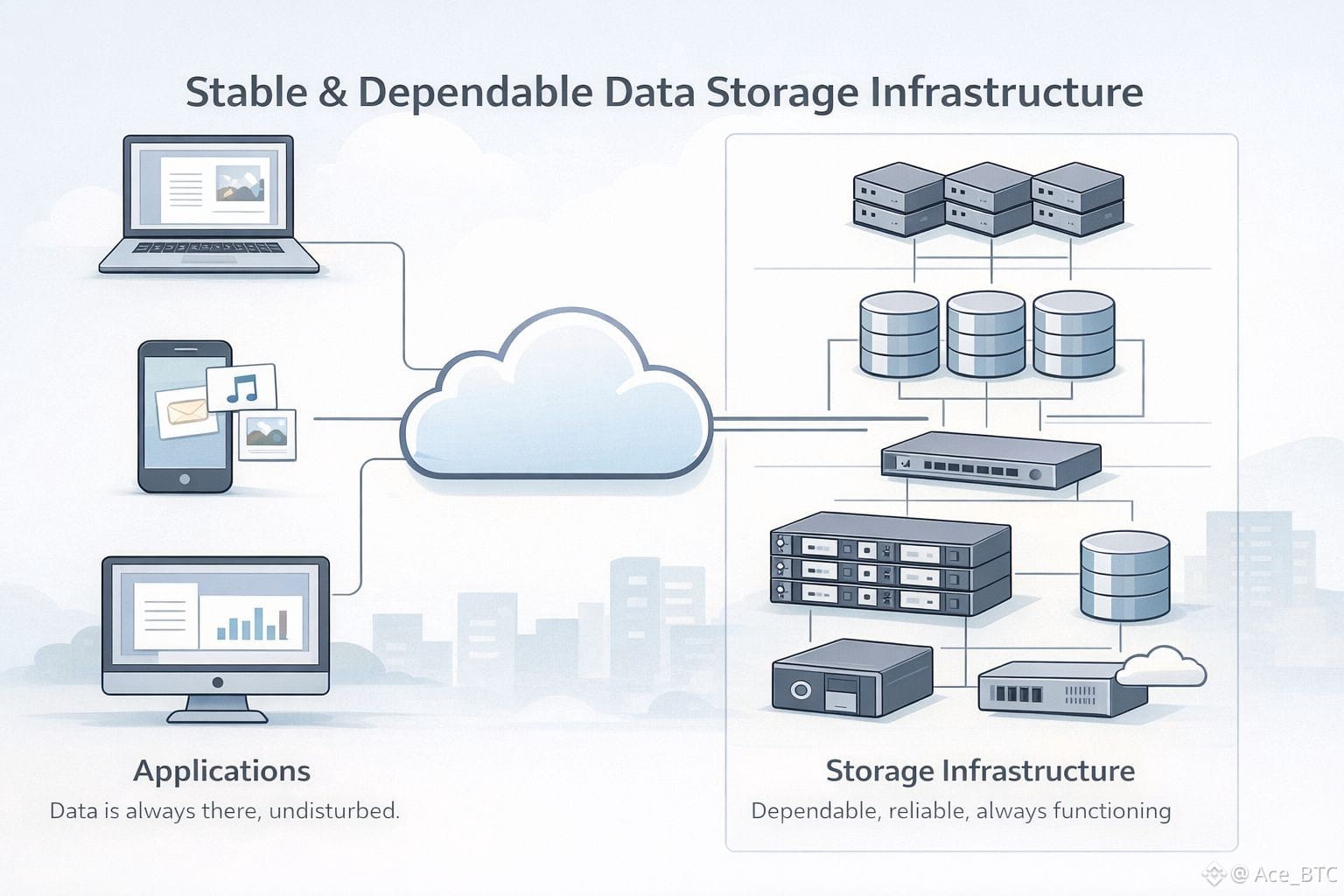
Some projects chase relevance. Others quietly accept responsibility. Walrus feels like it belongs to the second group. And if it continues building with patience it may become something people rely on long after they stop thinking about how it works.

