

In a world where our digital livesfrom cherished memories in photos to the massive datasets powering next generation intelligence are often locked behind the gates of a few massive entities, a quiet revolution is taking place. It isn’t loud or flashy, but it is as sturdy and resilient as its namesake. This is the story of Walrus ($WAL), a project that isn't just about storing bits and bytes; it is about redefining how we own, protect, and interact with the very fabric of our digital existence.
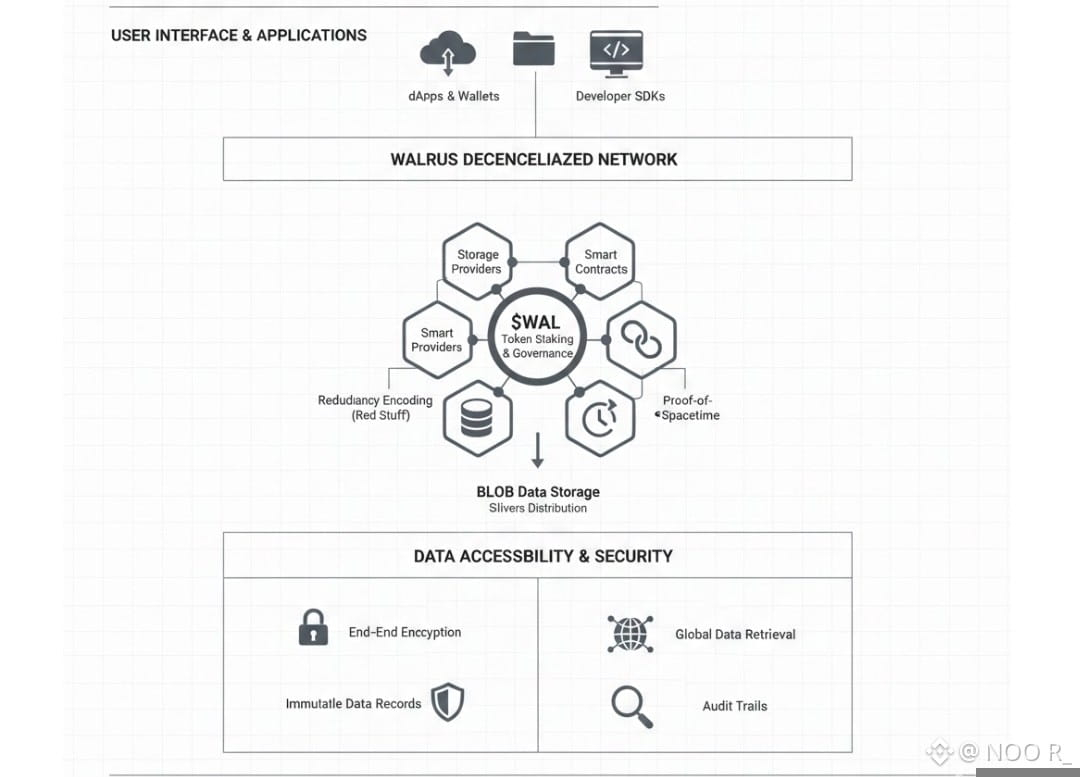
"Visualizing the backbone of $WAL. It's not just about storage; it's about the math behind 'Red Stuff' and how it scales for the AI era. Check out the architecture breakdown below."
A Vision Beyond the Clouds
The vision of Walrus is simple yet profound: to create a decentralized home for the world's data where reliability is guaranteed not by a corporate promise, but by the immutable laws of mathematics and community collaboration. For too long, "the cloud" has just been someone else’s computer. If that computer fails, or if the entity controlling it changes its mind, your data can vanish. Walrus seeks to change that narrative by turning storage into a public, programmable, and permanent resource.
As the project’s mission statement often reflects:
"True digital freedom begins when the data we create is no longer a guest on someone else's server, but a permanent citizen of a decentralized network."
The Utility of Resilience
What makes Walrus stand out in the vast sea of blockchain projects is its focus on "blobs" large binary objects. We aren't just talking about simple text files; we are talking about high definition videos, intricate 3D game assets, and the massive training sets required for AI.
The utility here is found in a unique technology called Red Stuff. Instead of simply making copies of a file (which is expensive and slow), Walrus uses advanced encoding to break data into tiny fragments called slivers. These are scattered across a global network of independent nodes. Even if a significant portion of the network goes offline, the data can be reconstructed perfectly. This creates a system that is:
Cost-Efficient: By avoiding massive replication, it lowers the barrier for developers to build data heavy applications.
Programmable: Data isn't just sitting there; it's an on-chain asset that smart contracts can interact with, move, or manage.
Censorship-Resistant: No single authority can "pull the plug" on a file once it is entrusted to the network.
A Community-First Ecosystem
At the heart of Walrus is a community of builders, node operators, and believers who understand that the future of the internet depends on decentralized infrastructure. The $WAL token is the lifeblood of this ecosystem, but its role is far more than a medium of exchange. It is a tool for Governance and Security.
When you participate in the Walrus ecosystem, you aren't just a user; you are a guardian of the network. Through a delegated proof-of-stake model, the community ensures that only the most reliable and honest operators are responsible for holding the world's data. This creates a circle of trust where participation is rewarded and excellence is the standard.
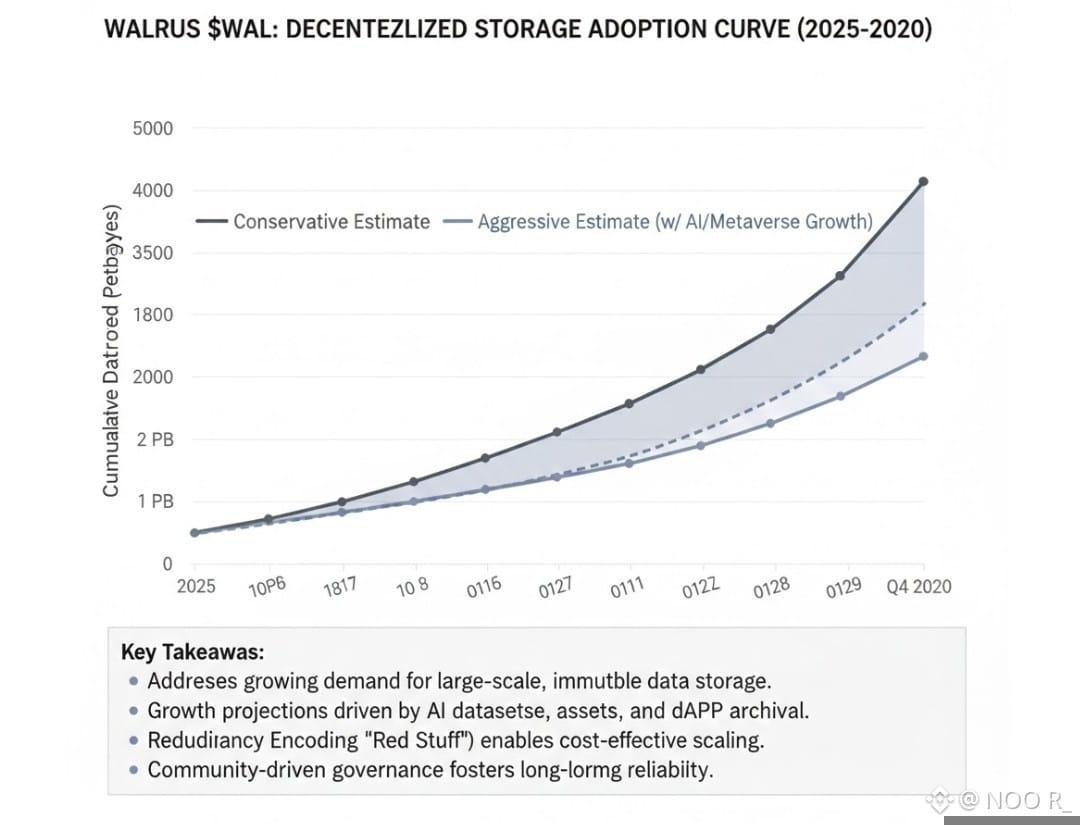
Why This Matters for You
You don't need to be a coding wizard or a data scientist to appreciate what is being built here. If you believe that your digital footprint should be yours to control, Walrus is building the infrastructure to make that a reality. It’s about building a web that doesn't forget, a web that doesn't discriminate, and a web that belongs to everyone.
The project is characterized by transparency and a long-term mindset. There are no shortcuts to building a global storage network, and the team’s commitment to open source development and steady, sustainable growth is a breath of fresh air. They aren't looking for a quick sprint; they are prepared for the marathon.
Closing Thoughts
Walrus is more than just a protocol; it’s a commitment to a more resilient digital future. By combining the speed of modern blockchain technology with the robustness of decentralized storage, it is solving the "big data" problem for the Web3 era. It is a project where human ingenuity meets mathematical certainty, all driven by a community that looks toward a future of true data sovereignty.
In the end, we aren't just storing data; we are preserving the history, creativity, and knowledge of a new digital age.