
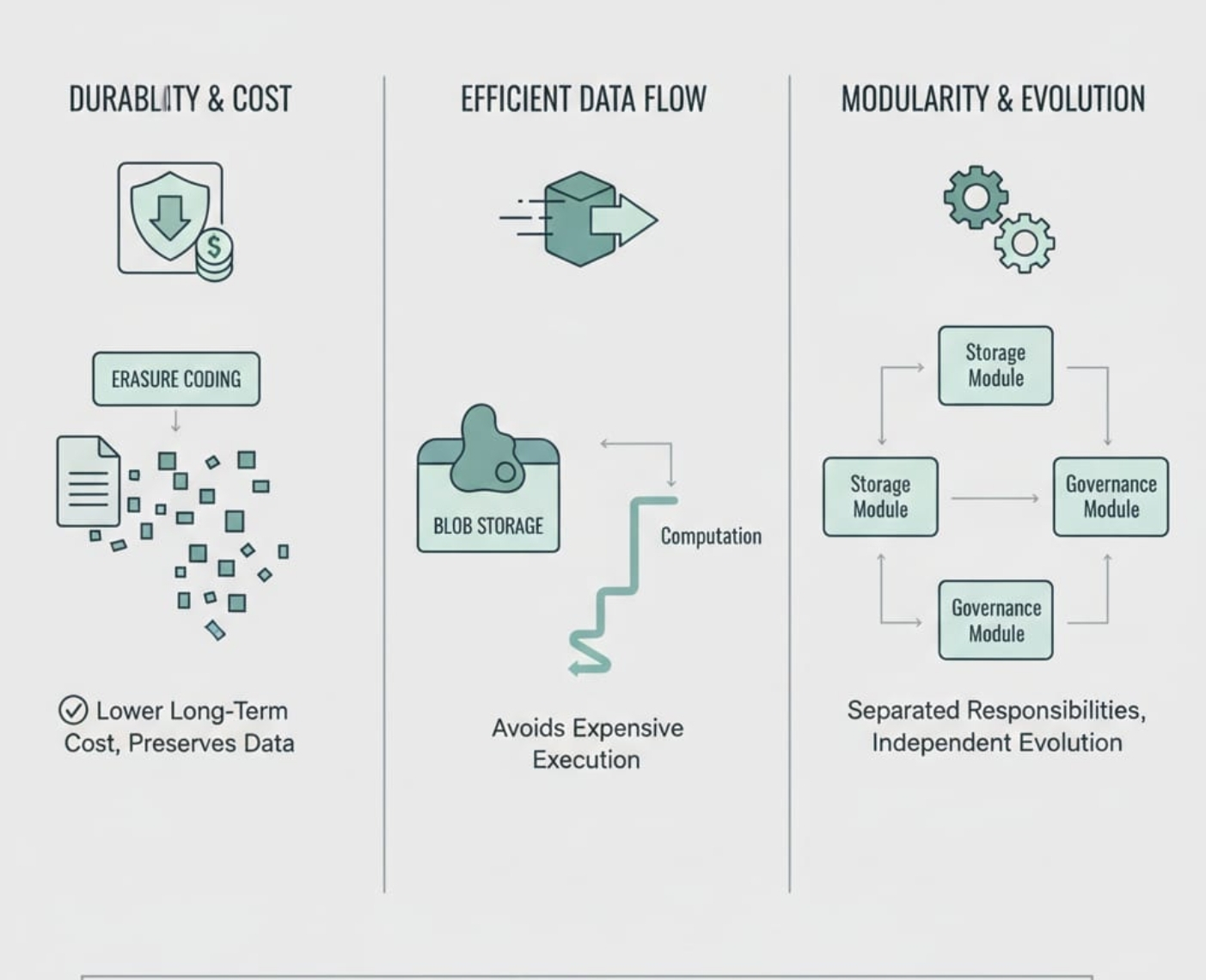
At its core Walrus Protocol begins with a quiet but powerful acceptance. Data is not fragile because people misuse it. It is fragile because the systems holding it were never designed for time. Walrus changes that starting at the foundation. Instead of storing files as single vulnerable objects it breaks them into many pieces using erasure coding and distributes those pieces across a decentralized network. No single location holds everything. No single failure ends the story. If parts of the network disappear the data does not collapse. It reconstructs itself calmly as if resilience was always expected.
I’m seeing a system that feels closer to how memory works than how servers usually do. Nothing is forced into permanence. Nothing is treated as disposable. Data exists in a state of shared responsibility where survival is a collective outcome rather than a centralized promise. This foundation matters because it removes fear from the act of storing something important.
That foundation becomes real in daily use. Developers build applications that rely on large data without worrying about sudden pricing changes or silent restrictions. Enterprises explore decentralized storage without risking operational instability. Individuals store personal archives without wondering who owns the infrastructure beneath them. They’re not asked to believe in decentralization as an idea. They experience it as reliability.
Walrus operates on Sui and that choice shapes everything. Storage and execution are allowed to coexist without fighting for space or speed. Large blobs move efficiently without burdening smart contracts. Computation stays clean. Data stays accessible. The system feels composed even under pressure. We’re seeing an environment where scale does not create panic and growth does not demand compromise.
The architectural choices reveal a certain mindset. Erasure coding lowers long term cost while preserving durability. Blob storage avoids pushing heavy data through expensive execution paths. Responsibilities are separated so each part of the system can evolve without breaking the rest. Nothing feels rushed. Nothing is built for applause. This is engineering shaped by patience rather than urgency.
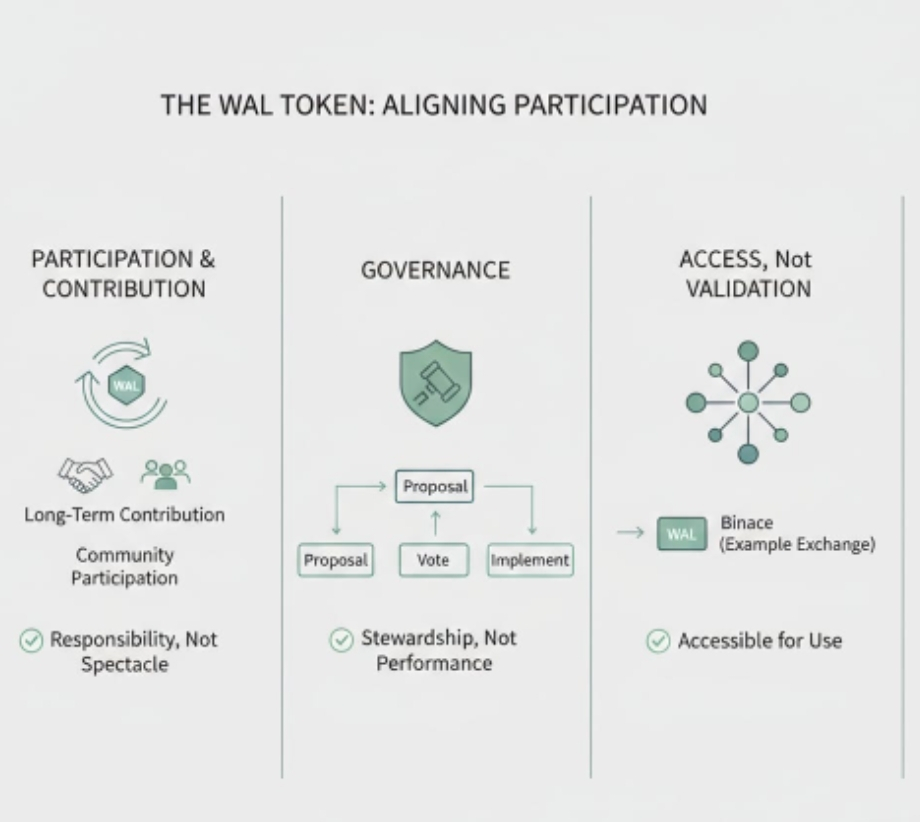
The WAL token fits into this design quietly. It exists to align participation governance and long term contribution rather than dominate attention. Staking feels like responsibility not spectacle. Governance feels like stewardship rather than performance. If it becomes accessible through an exchange like Binance that moment would simply be about access not validation.
Progress in Walrus does not announce itself loudly. It shows up in consistent retrieval speeds. In declining storage costs over time. In data availability during stress. In developers returning for second builds because the first experience held up. Metrics that matter are uptime redundancy health network diversity and governance participation. They’re watching how the system behaves when attention fades because that is where truth lives.
There are real risks and Walrus does not pretend otherwise. Storage providers could concentrate. Incentives could drift. Governance could slow if participation weakens. Ignoring these realities early is how long term systems fail quietly. Understanding them early allows adjustment without crisis. I’m encouraged by the awareness that durability requires constant care rather than blind optimism.
If Walrus succeeds it will not feel revolutionary. It will feel dependable. Applications will grow without renegotiating trust every year. Data will remain accessible long after trends move on. Users will age with their files still intact. It becomes less about technology and more about continuity. We’re seeing infrastructure designed to grow older alongside its users instead of burning bright and disappearing.
What stays with me most is the emotional weight of restraint. Walrus is not trying to win a moment. It is preparing for time. I’m left with a quiet confidence that comes from systems that understand what they are meant to protect. If it becomes part of everyday digital life most people may never speak its name. And that silence might be the strongest proof that it did its job well.