
I’ve learned that the most important shifts in crypto liquidity don’t arrive loudly. They show up quietly, in how capital behaves when incentives cool down. Right now, liquidity isn’t vanishing—it’s choosing where to stay. That detail matters more than price moves, because it tells you whether participants trust the structure they’re interacting with. Watching Dusk recently made that pattern easier to see.
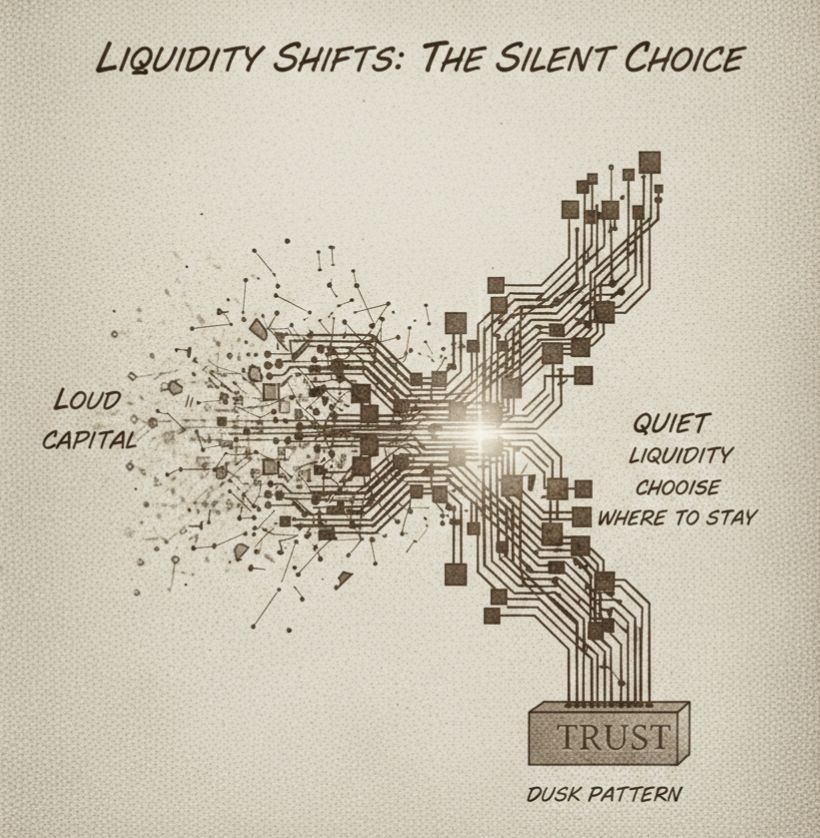
In late January 2026, on-chain activity revealed something interesting. Pool balances stayed relatively stable even as trading volume softened, and withdrawals didn’t spike the way they usually do during uncertainty. That kind of behavior suggests providers aren’t acting on impulse. Around the same time, updates within Dusk coincided with longer liquidity retention, which often signals that contributors are evaluating mechanics instead of reacting to short-term noise. When capital stops rushing for exits, it raises a simple but important question: is this patience earned by design, or by lack of better options?
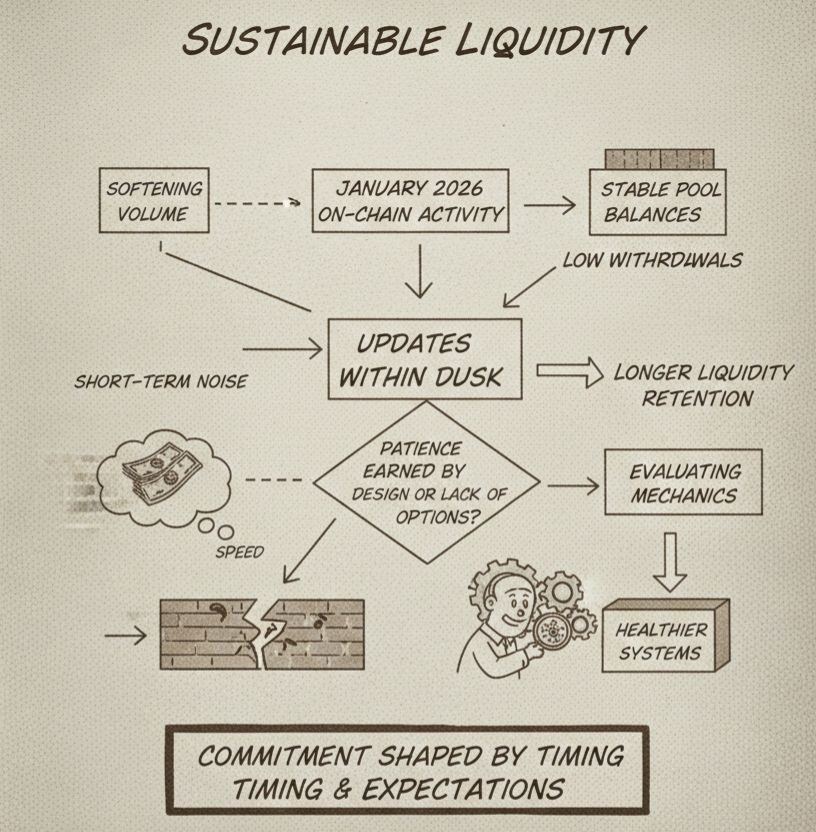
For anyone participating, this environment changes the mindset. Liquidity contribution now feels less like a quick opportunity and more like a commitment shaped by timing and expectations. Those who understand how long they’re willing to stay tend to shape healthier systems than those focused on speed. Observing Dusk through this lens has reinforced one quiet lesson for me: sustainable liquidity rarely announces itself—it settles in, and only moves when it has a reason to.
$PARTI $DUSK
#dusk #Dusk #WhenWillBTCRebound #TrumpEndsShutdown @Dusk #LearnWithFatima $RVV