
When I look at why crypto infrastructure fails in practice, it is rarely because the idea was wrong. It usually breaks when things get busy and nobody can clearly tell what is happening. Operators guess. Builders hope. Dashboards start contradicting each other. That is where trust quietly disappears. What Walrus is doing differently is aiming to make network health, availability, and performance something I can verify, not just glance at.
This piece is really about that angle. Walrus is already known as a storage and data availability network, but what feels more important to me is how it is adding the missing layer that turns a protocol into infrastructure people can depend on. That layer is reliable measurement.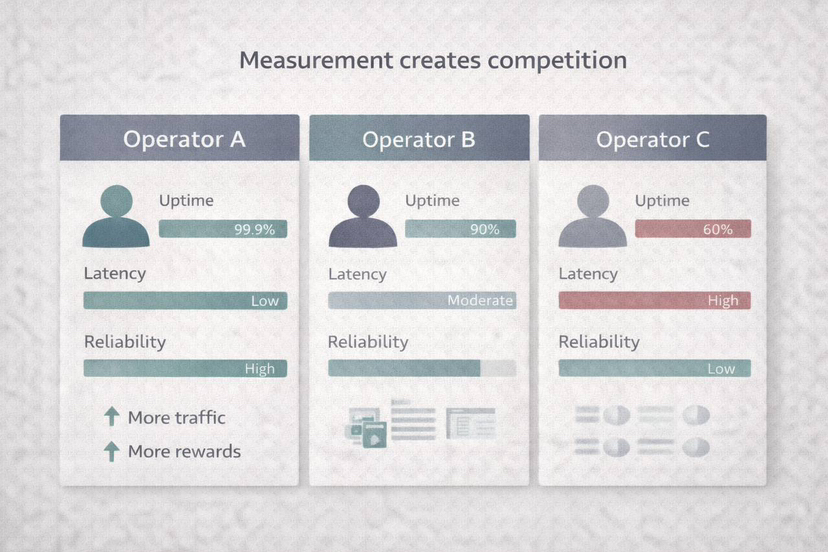
Why Visibility Is the Real Bottleneck for Adoption
In normal software systems, there is no debate about whether a service is up or down. Engineers look at metrics, logs, and traces and move on. In Web3, even when numbers exist, I still have to trust whoever is hosting the dashboard or shaping the query.
For decentralized storage, that gap is deadly. If I am building an app that depends on blobs being available, I need clear answers. Is the network healthy right now. Are certain regions failing. Is slow reading caused by overloaded caches or missing fragments on storage nodes. Are proofs being produced on schedule. Without those answers, serious products simply cannot run.
What stands out to me is that Walrus is not treating observability as an afterthought. It is being designed into the system. The ecosystem focus on operator tooling and monitoring reflects that. Walrus is a data layer where correctness and health are not just promised but can be checked.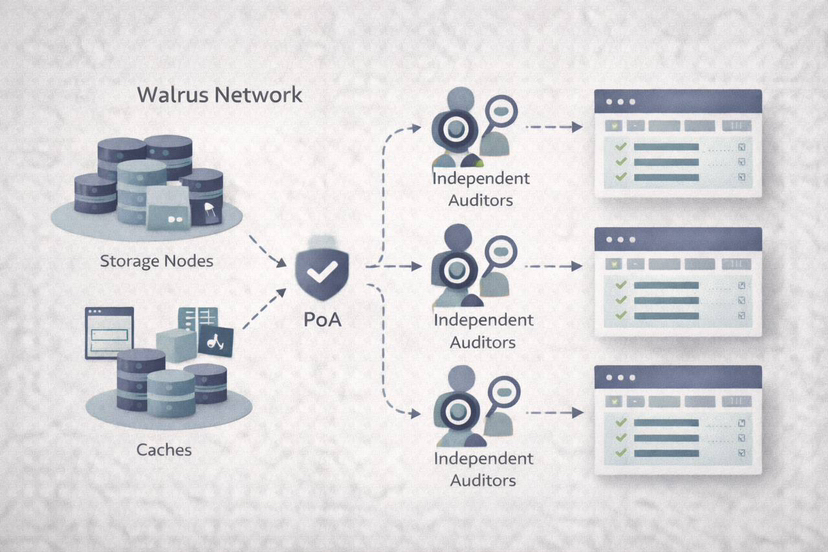
How the Architecture Makes Observation Possible
Walrus deliberately separates responsibilities. The data layer handles the heavy data work, while the control plane handles coordination, metadata, and critical events. That control plane lives on chain and acts like a shared source of truth.
This matters because it anchors facts. When a blob is certified or a proof is produced, that event is recorded in a place that is time stamped and extremely hard to fake. In contrast, traditional logs can be edited or selectively shown.
I do not find this exciting because it is on chain. I find it useful because it works like a public notebook that anyone can read without trusting a single operator.
Proof of Availability as an Operational Signal
Proof of Availability is often described as a security feature, and it is. But from my point of view, it is also an operational signal. When a proof is issued, it tells me storage work has actually started and met protocol conditions.
That changes how I think about building on the network. Instead of guessing whether storage is working, I can look at evidence. The system tells a consistent story about its own behavior.
This is what makes Walrus feel different. The proofs are not just about defending against attackers. They describe what the network is doing right now.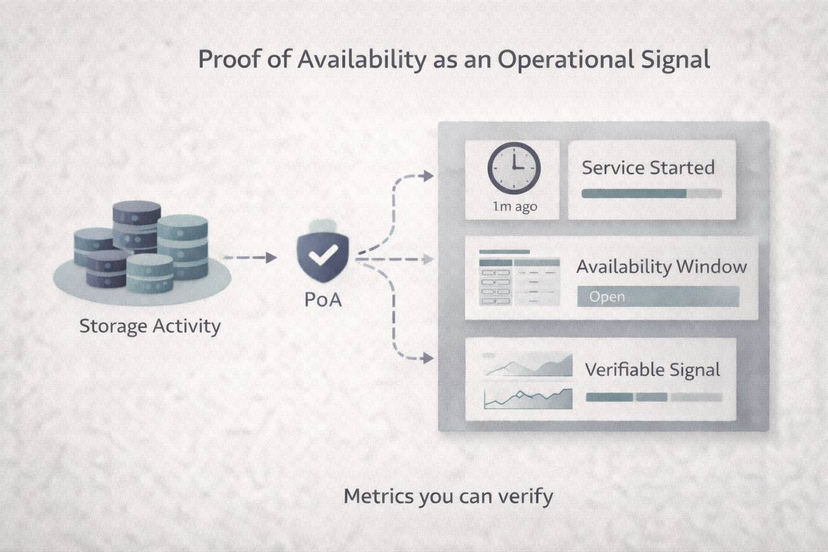
Verifiable Analytics Instead of Trusted Dashboards
One of the more interesting steps I have seen is the work around Walrus Explorer with Space and Time. Most explorers are just dashboards where I trust the backend. Here the idea is to let analytics be queried and verified.
Space and Time focuses on proven computation, often described as Proof of SQL. That means queries about network activity can come with stronger guarantees than a centralized analytics pipeline.
For storage networks, this is especially important. Trading activity is visible on chain. Storage performance is mostly off chain and harder to inspect. Walrus is trying to shine a light on that hidden layer.
From Trusting the Network to Auditing the Network
This approach changes the mindset for builders. Instead of assuming redundancy equals reliability, I can start auditing service quality. I can examine uptime trends, operator behavior, latency patterns, and proof activity. I can compare operators based on history, not promises.
That makes it possible to think in terms of service levels, routing decisions, and accountability, similar to how Web2 teams operate. This is not a small improvement. It is what makes decentralized storage usable for businesses.
Why High Visibility Improves the Network Itself
There is another effect people overlook. When performance is visible, operators cannot hide. Poor behavior shows up. Strong operators stand out. Competition shifts toward quality.
That is how content delivery networks evolved. Measurement became the battlefield. Walrus is setting up a similar dynamic by making performance claims verifiable rather than marketing statements.
From where I sit, that incentive shift is powerful. It rewards good behavior and naturally strengthens the network over time.
Quietly Solving Enterprise Style Problems Without the Label
I do not think Walrus is trying to brand itself as enterprise software. What I do see is it solving enterprise style problems quietly. Accountability. Auditing. Tracking. Safe upgrades.
The focus on documentation, structured deployments, and long term security programs shows a mindset that infrastructure must be measurable and improvable, not perfect on day one.
In the real world, people adopt systems when they can quantify risk. Observability is how risk becomes measurable.
How I Explain Walrus Without Buzzwords
If I had to explain Walrus to someone who does not care about crypto terms, I would say this. It lets me store large data off to the side while still knowing when storage started, whether it is being maintained, and whether the system is healthy. It gives me tools and proofs so I can monitor it like any serious backend service.
That is why familiar interfaces matter. Web style APIs make integration normal. The verification layer makes trust optional.
Where the Real Advantage Might Be
Most projects stop at storing data. Walrus is pushing into operations, monitoring, analytics, and visibility. That is where I think the real moat forms.
Teams do not choose infrastructure because of ideology. They choose what they can debug at three in the morning, what they can measure, and what does not require blind trust.
Walrus is moving toward that future. Not just storage you can verify, but a network you can inspect. That is the difference between a protocol with a token and infrastructure that earns mindshare over years.

