


The pattern followed by most new blockchains in the layer-one model is to raise substantial amounts of capital, aggressively market, ship subsequently, and hope that liquidity and hype keep it alive in the tumultuous initial months. Fogo was different when it decided to take the more difficult way. It embraced a community-first distribution strategy based on Flames and early involvement and maintained the sale component small. That choice is significant as the chain based on trading requires more than people; it requires constructors, liquidity providers, and individuals to actually test the network.
In this article, I will do a bare statement; distribution is product design. When you get distribution wrong, you fail to create a network, you simply create a chart.
The thesis: unsafe at any rate, market infrastructure cannot be made by using sell-pressure schedules.
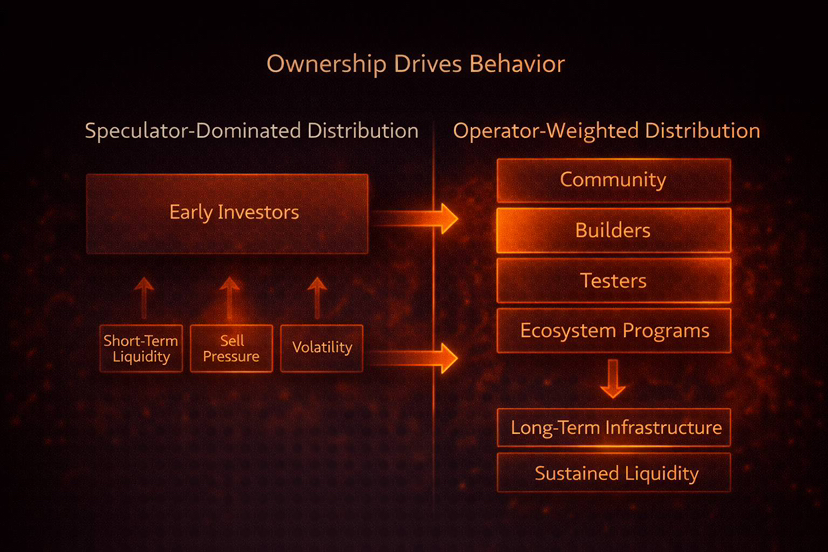
Fogo also seeks to be a layer-one, high-performance, single-validated-message (SVM) layer-one that is already a high bar technically. However, there is a second hurdle that is equally challenging making a believable token economy in which early adoption is not controlled by one short-term action dumping.
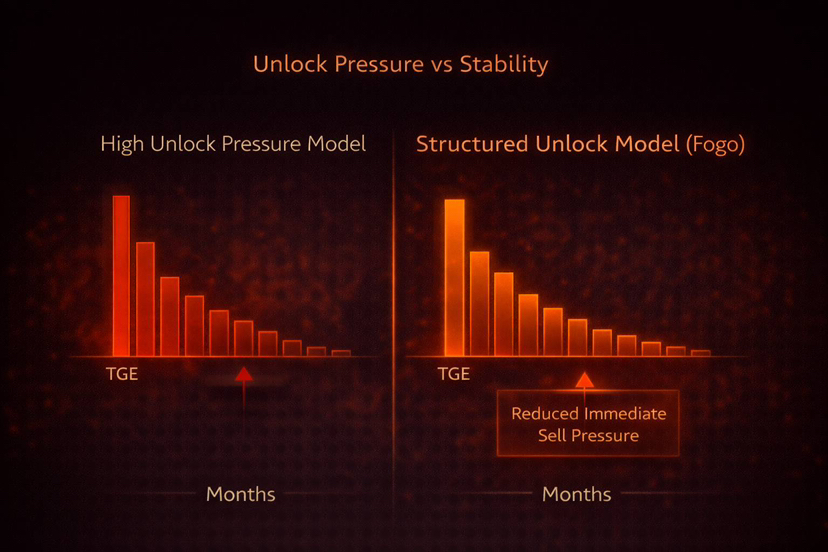
When your first year is largely spent in opening the doors of Calendars, your chain is a marketplace of exits, rather than a marketplace of trades. That is why I concentrate on the way in which teams organize the initial ownership: who gets the tokens and when and why.
The purpose of the tokenomics write-up by Fogo is quite clear: valuable distribution to community airdrops and community ownership, and big buckets such as core contributors are locked up under long vesting curves.
The reason why Flames is more important than airdrops as a concept.
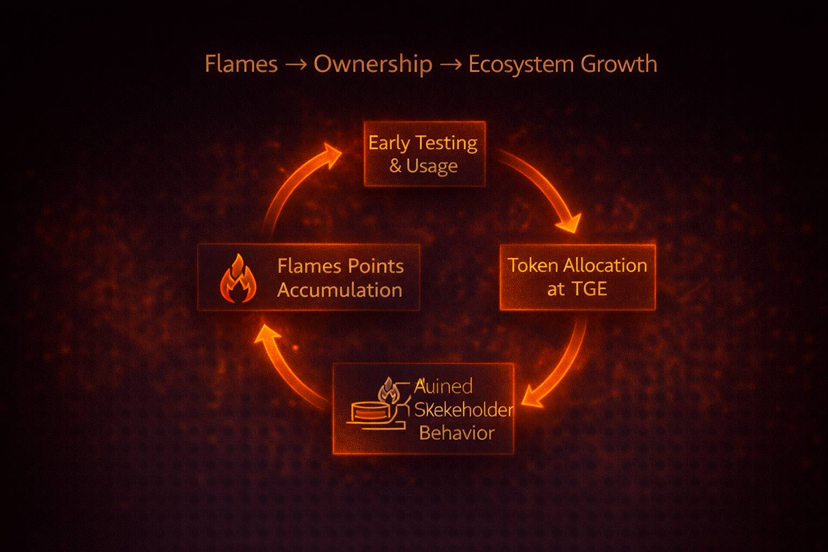
Airdrops are not difficult to promote, but not easy to do properly. It is not about giving out tokens, it is about whom to give them to.
The appeal of Fogo Flames program is that it is structured in the form of participation loop: it rewards people who actually attended early: use testnet, participate in the ecosystem, bridge activity, and other quantifiable behavior.
I do not merely read it and see that there are marketing points. I observe a team that is attempting to divide two groups:
- One group wants a token event.
- There is a group of people who want to develop and trade on a rapid chain.
The second group is more needed by a trading-first layer-one than the first one.
The underestimated indicator: Fogo was ready to cancel a presale.
Later in 2025 coverage, several outlets reported that Fogo eliminated an intended presale and transitioned its focus to community distribution via Flames and similar initiatives.
You love or hate token sales, but calling off one sends a strong message since it is the very reverse of the least path to an easy fund-raising. It also helps in diminishing I bought first, I sell first dynamism that can prevail during a launch.
To me, the point isn’t moral. It is mechanical: a market place cannot begin its existence as a liquidation event.
The term small sale can only have a sense when it is also small and well identified.
The official tokenomics listing on Fogo has a Binance Prime Sale (2%) and defines other buckets such as Community Airdrop (6%).
This matters for two reasons.
First, it creates a distinct boundary on what was sold, rather than allowing the strategic allocations to later expand into something bigger.
Second, it renders the story decipherable. When you are trusting, it has a characteristic of clarity: people can see what has taken place and what has not taken place.
Another form of community ownership is community ownership that is locked.
I like one aspect of the structure: not all of their own community ownership is liquid cash. The Echo fundraising allocation, as an example, is said to be locked at TGE and has a longer unlock schedule.
That forms an alternative set of behavior. The ones who purchased using community channels but are locked are more of long-term stakeholders than short-term sellers. That would suit a chain that would like to be infrastructure, since infrastructure must have patient capital--in particular, early.
The additional value of distribution to a trading-first chain.
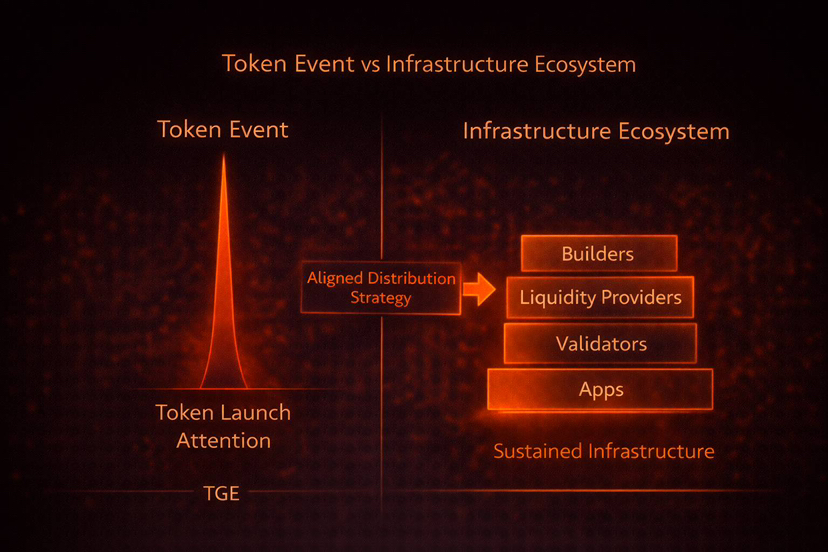
When you are creating a chain of apps, sometimes you can get away with a sloppy first year. However, when you are constructing a chain to markets, say order books, liquidations, real time risk systems, your reputation has been determined in the first few months.
Markets are concerned with dependability, availability, and stability. A token economy which generates perpetual sell and disorderly liquidity may leak into the perception of the chain.
And therefore when Fogo writes performance, I do not simply interpret it as engineering. I interpreted it as a stack level objective: chain performance and ecosystem behavior performance.
The Flames -Ownership loop is actually a coordination mechanism.
The most effective incentive programs do not simply pay individuals, they organize individuals.
Any good points program accomplishes three things:
1. It arouses action in a foregoing manner--people arrive early.
2. It concentrates on the right actions - testing, building, liquidity.
3. It forms a social identity in which participants are made to feel like stakeholders.
The Flame system The Flame framework, which are converted into tokens based on milestones on main-net, is a system of coordination: do the work early, own later.
That precisely is how you want to bootstrap a chain which is meant to be traded. You must be actually used before being on stage, not on.
What is profounder is that distribution defines the building.
This is a perspective that is not talked about because enough: token distribution does not only have an impact on price, it also defines product preferences.
Without the presence of early tokens becoming widely held, the results of hype cycles will be pursued by builders. When builders and operators have early tokens in their possession, the builders will aim at uptime, tooling, and real flows- since that is exactly what the token-holders require in order to win.
The strategies of Fogo encourage early involvement, which pour valuable sums into community buckets, and lock a few sizeable sums. This pushes the ecosystem towards being driven to operate the chain instead of trading the narrative.
The next thing I will observe is whether the incentives will cause good habits.
I have hope that everything is heading in the right direction; I am not naive about the risk. Farmers can be attracted to any points program. Mercenaries can be attracted through any airdrop. The true test is what is after launch: will those who participated remain and develop or will they fade away?
It is not possible to know only by looking at tweets. Look instead at whether:
1- Apps keep shipping.
Liquidity continues to come where it is required.
2- Rewards do not result in users returning to a product, just in case they have a better UX.
When Fogo is able to transform early participation in Flames to long-term operator behavior, distribution ceases to be a launch strategy, but it turns into culture.
The conclusion: I put more trust to the chain that will not go to easy hype rather it chooses hard alignment.
The performance thesis of Fogo is already grandiose. The thing that made me take more notice is its readiness to make distribution of tokens a product attribute: match those who test, construct, and utilize, and then restrict the section that is merely bought to sell.
Well, that is not an assurance of excellence. Nothing does.
However, it is the type of decision that provides a trading-first L1 its genuine opportunity to be more than just a rarity in crypto: a market infrastructure that does not begin by cannibalizing itself.