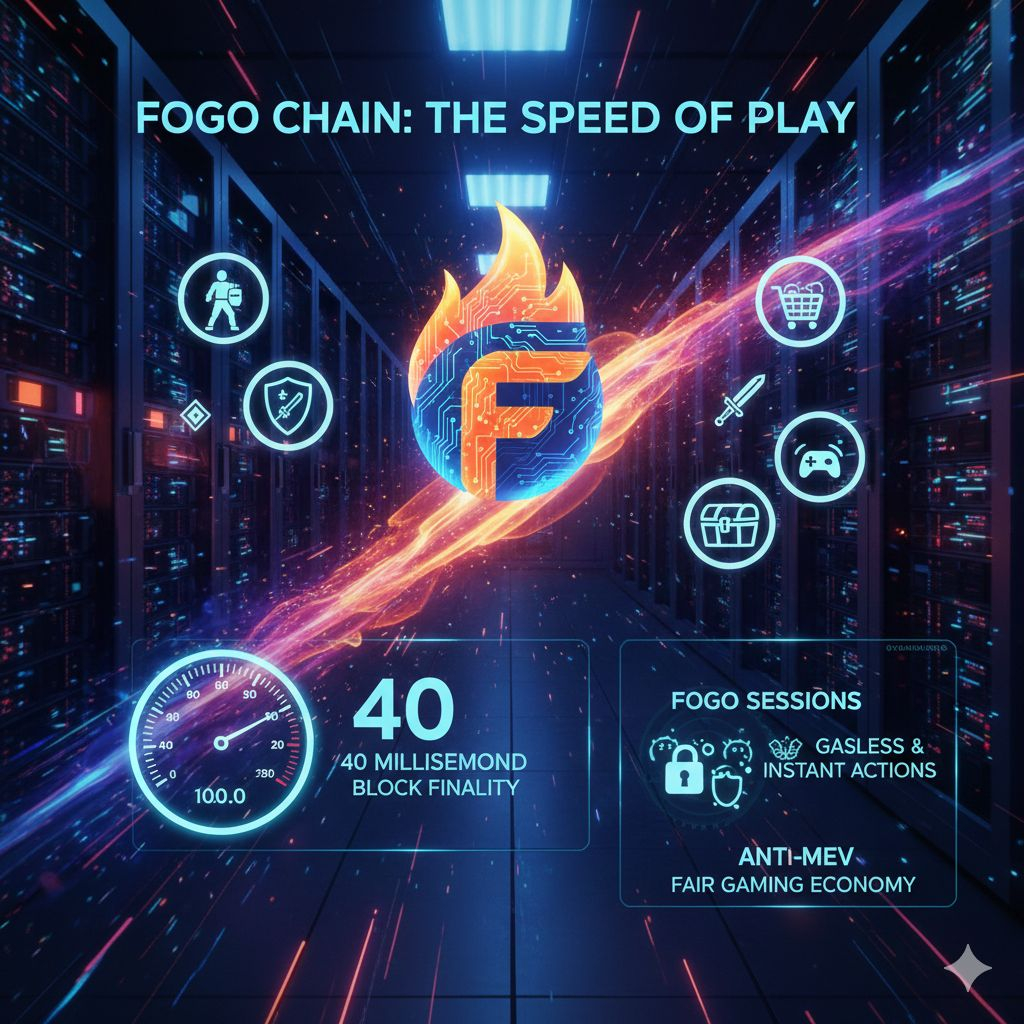
In The fast changing world of blockchain result has been become as much important as decentralization. Ordinary blockchains couldn't afford this speed and the immediate dealings like trading and high frequency markets. Here fogo chain takes a new and innovative solution which is called Multi Local Consensus.

Understanding Fogo Chain
Fogo is a next‑generation Layer‑1 blockchain built on the Solana Virtual Machine (SVM), designed specifically for performance‑sensitive use cases such as on‑chain trading, decentralized finance (DeFi), and real‑time financial applications. It aims to bring the speed and responsiveness of traditional financial markets to the decentralized world, without compromising security or decentralization.
At the heart of Fogo’s performance lies its architecture, which combines a high‑performance validator client based on Firedancer, ultra‑fast block times, and a Multi‑Local Consensus mechanism. This cmbination allows Fogo to deliver extremely low latency and high throughput, making it one of the most compelling Layer‑1 platforms for traders and developers.
What Is Multi‑Local Consensus?
Traditional blockchain networks rely on a global consensus model, where validators from around the world coordinate to agree on the state of the ledger. While this model ensures broad decentralization, it also introduces delays because data must travel across large geographic distances, increasing network latency.
Fogo takes a different approach with Multi‑Local Consensus. Instead of having all validators scattered globally, the network organizes them into geographically localized “zones”. These zones consist of validators that are **physically close to each other — often within the same data center or region — which drastically reduces communication delays and enables ultra‑fast consensus.
This design is inspired by the “follow‑the‑sun” concept used in traditional markets. Financial activity naturally shifts between Asia, Europe, and North America as markets open and close. Fogo applies this model to its consensus mechanism: when trading activity peaks in a region, the validators in that region take the lead in producing blocks and confirming transactions. This ensures that consensus happens close to where users and market activity are strongest, minimizing latency and improving performance.
Why This Matters
The Multi‑Local Consensus system offers several key benefits:
Ultra‑Low Latency: Because validators are physically close — and consensus happens locally block times and transaction confirmation are much faster compared to global consensus models.
Improved Performance: Localized consensus means fewer delays in communication, which boosts throughput and makes the network more responsive for real‑time applications.
Adaptable and Resilient: Fogo’s system includes mechanisms to rotate validator zones over time, preventing reliance on any single region and helping maintain decentralization and resilience.
Optimized for Real‑Time Finance: The model is built with financial markets in mind, where milliseconds can make the difference in trading outcomes.
Balancing Decentralization and Speed
A common criticism of localized or permissioned validator systems is that they might compromise decentralization. Fogo addresses this by combining Multi‑Local Consensus with rotating zones and a curated validator set that meets performance and reliability standards. Validators are chosen not just for their location but also for their ability to run high‑performance infrastructure — ensuring that the network remains both secure and fast.
Real‑World Impact
The adoption of Multi‑Local Consensus could redefine how blockchains support financial markets, decentralized exchanges, and high throughput applications.
By increasing latency and decreasing execution blockchain provides such an environment where fogo chain immediately updates orderbooks trade systems like centralized users and gave the benefit of trade decentralized performance.